
 E-Paper



A beginner's guide to meditation

 Prefer HTon Google


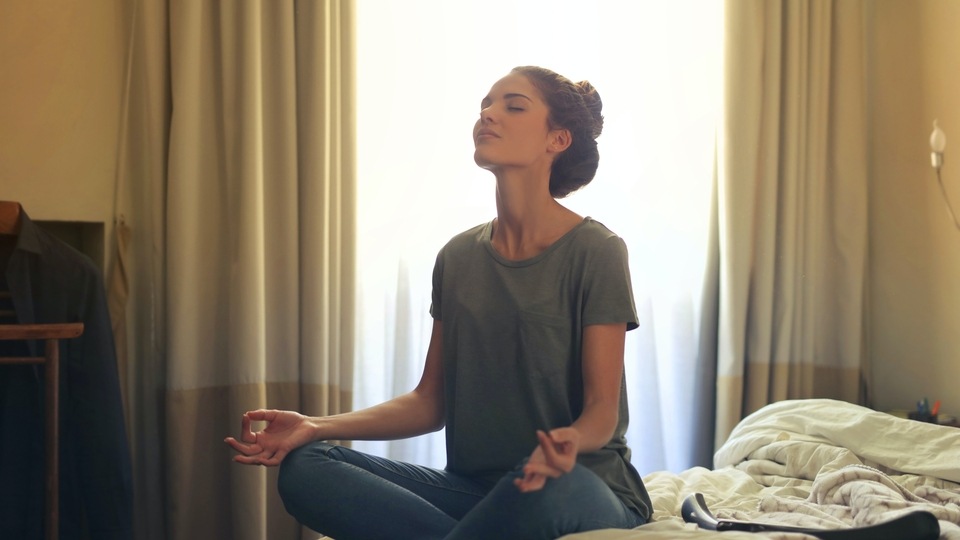
Meditation is very much about grounding with the earth below and connecting to the stars above through our breath. Tina Mukerji gives a beginner's guide to meditation.
Meditation has become such a trend, it is so “woke” to meditate! Silicon Valley billionaires are doing it and A-list celebrities are endorsing it! Hidden under this debris of mythification and disinformation, often the essence of meditation is lost. Coaches and Lifestyle Gurus swear by its benefits, athletes perform better with it, a million videos and articles have been created to commercialize this concept and push it on us, so you might feel compelled to check it out. Maybe you are even ready to begin, but now what? We have created a systematic way to approach meditation so you can touch base with the quintessential qualities underpinning the practice.
If this is your “first rodeo”, then you need to leave expectations outside, like you do with your trainers, outside your yoga studio. You may have decided to become a meditator because of the blissful memes you’ve seen on Facebook and Insta. Those beautiful beaches, the perfect yoga gear, the sun glimmering in the background while some influencer is holding the tree pose, the very epitome of serenity and tranquillity. Well, to begin with, it’s a photoshoot, which is why it's so perfect, so don’t judge yourself too harshly if expectations and reality clash. It’s okay to fidget in the beginning or feel discomfort, those picture-perfect Insta meditators would have you believe that their chakras are vibrating and pulsating and they’re totally grounded and connected to above and below at the same time, but we have to take that with a pinch of salt!
Meditation is very much about grounding with the earth below and connecting to the stars above through our breath. Deep breathing with inhalation, retention, exhalation and suspension provides a feeling of wholeness and completeness. The present moment is demanding to be acknowledged, but here we are trying to chase the ghosts of the past or run behind an uncertain future. By refusing to be present in the "now", we miss out the potential of the experiences we’re having moment to moment. Meditation is a way to focus and train the mind and with regular practice your mind knows not to fool around and in turn trains the body.
In the beginning we’re distracted in an instance, but as we build practice, these diversions fade away. There is so much going on within our minds, ideas, creativity, psychic capabilities and we’re unable to use them because of all the junk thoughts we carry around with us. Will it be easy to purge the junk in our minds? The thoughts will still keep coming, but we will not react to those thoughts with either fascination or fear. We will allow those thoughts to pass through the skies of our minds without trying to hold onto them. The thoughts and feelings will become like metaphoric waves, crashing and then inevitably merging back with the seas of awareness.
Not only does this practice instil a calm demeanor, it lets you evaluate your emotional responses. Would you give that thought so much attention because it is making you feel hopeless? A mind that meditates will know how to delete those thoughts instantaneously and will push one to return to their inherent inner goodness. As the Dalai Lama said, “If every eight-year-old was taught meditation in school, within two generations, we’ll eradicate wars…”
KEY POINTS
1. Select a quiet and tranquil place for meditation. For example, don’t try to meditate in your drawing room when your whole family is bustling around. Instead choose a time after they’ve slept for the day and then sit down to meditate.
2. Sit on a comfortable surface. The best option is on the floor or on the yoga mat, but if that is not possible then sit on the sofa or on a cushion.
3. Fix a time when you begin practice and this time is to be followed every single day. You also have to set aside the amount of time you’ll be dedicating to the practice. Stick with it and I suggest, start small and build up practice. 11 minutes should do the trick for a rookie meditator.
4. Wear loose clothes without restrictive undergarments and make sure they’re pure cotton. Best colour to wear is white.
5. Be consistent and motivate yourself daily with the self-affirmation MEDITATION HEALS ME.
6. Make sure that your back/spine is straight. Even if you’re on a chair or a sofa, check your posture.
7. Don’t hold any tension in your shoulders, neck or face. Make sure those jaws are unclenched. You can run your fingers gently through the face down to your whole body before you meditate and ask your body to slip into relaxation.
8. Talk to your body. When the body is refusing to sit still closed eyed, then talk to your body. Especially talk to the parts that feel unsettled or in discomfort. Bring awareness to those parts.
9. You can use EFT, the tapping technique which activates certain targeted parts of the body. Tapping softly with mindfulness can greatly alleviate the discomfort. Start tapping only after the meditation session has concluded.
10. Now comes the most important part, your breath. Breathe deeply and retain the breath inside your chest for as long as you can and when you simply cannot hold on any longer, exhale. But exhale very slowly and do it through the nose. The mouth must be closed and completely relaxed.
11. If you feel physical tensions in muscles, nerves or ligaments you can focus your mind on those areas. You can mentally request those areas to soften and relax.
12. Using switchwords RELEASE-RESISTANCE by holding down your thumbs with the other fingers making a fist, can make you prepare for the practice of meditation, if somehow, you’re unable to start and find yourself making excuses to get on with it.
13. Each time your mind wanders during meditation, let it. Follow it for a while and then try to connect it with your breath. The breath is the best way to control the wavering mind.
14. If you’d like to deepen your practice, then bring focus in between your eyebrows, in the third eye. If you can remain looking at your third eye during a session and breathing deeply, you’re less likely to be assaulted by thoughts and emotions.
15. Once you’ve meditated for the allotted time, gently palm your eyes and open them. Thank the Universe and thank yourself before getting up. You can decide to stretch after this if you like and then resume your everyday busy schedule. The only difference is that now you are in a blissful state after rebooting from toxic experiences and volatile situations through the ancient practice of meditation.
The article has been authored by Tina Mukerji, a soul guide working with Astrology, Tarot, Psychism, Yoga, Tantra, Breathwork and Mantras. She works to discover the inherent archetypes, by studying astrological charts.


