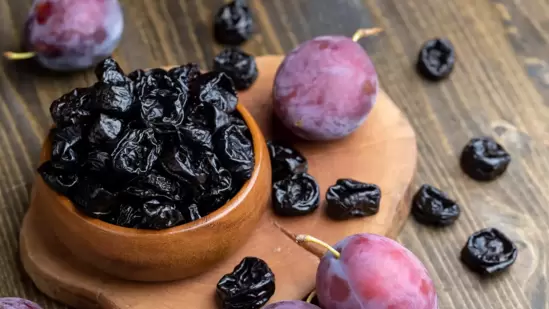
If you find it hard to poop every morning or if you go fewer than three times a week, you may be constipated. Eating more fiber through fruits, whole grains, legumes, and vegetables can improve your bowel movements. Specifically, prunes are known for helping relieve constipation. These dried plums are high in fiber and act as a natural laxative. You can eat them directly or make them into a tasty juice for better gut health.
Why are prunes good for gut health?
If you're looking for relief from constipation, dried fruits like prunes might be helpful. Prunes, which are dried plums, are full of nutrients that can help your digestive system. “Prunes contain a high amount of dietary fiber and sorbitol. Both of these help your body have regular bowel movements,” dietician Ekta Singhwal tells Health Shots.
“A 100-gram serving of prunes has about 7.1 grams of fiber, which can improve your digestion”, says the dietician. Fibre adds bulk to your stools, making them easier to move through your intestines. Sorbitol, a natural laxative in prunes, draws water into the intestines. This softens stools and helps them pass more easily.
What is the chemical composition of prunes?
Prunes are not just high in fiber and sorbitol; they also contain beneficial compounds called phenolic compounds, including neochlorogenic and chlorogenic acids. “These compounds have antioxidant properties and help stimulate the gut, supporting better digestion”, says the expert. As a result, eating prunes can lead to more regular bowel movements. A 2014 review in Alimentary Pharmacology & Therapeutics supports the idea that prunes can improve how often and well people go to the bathroom.
What is the healthiest way to eat prunes?
Wondering how to add prunes to your daily routine? There are many ways to do this:
- Whole dried plums: You can easily snack on them whole. A handful is perfect for a midday snack or as a treat after dinner.
- Soaked prunes: If you want prunes to be softer, soak them in warm water overnight. This can make them easier to chew and digest.
- Prune juice: If you don't like chewing, try drinking prune juice. It can help with constipation. A recent study in The American Journal of Gastroenterology found that people who drank prune juice had less constipation and stomach discomfort.
- Add to meals: Get creative! You can blend prunes into smoothies with yoghurt or milk. “Mix chopped prunes into your morning oatmeal," suggests Singhwal. Use pureed prunes as a sugar substitute in baked goods for extra fibre.
- Timing matters: You can enjoy prunes anytime, but eating them in the morning is best. This helps your digestive system process their fibre throughout the day.
Do prunes or prune juice work better?
The discussion about whether to eat whole prunes or drink prune juice is common. While prune juice has its benefits, whole prunes offer better digestive advantages. “Prune juice loses some fibre during processing”, shares the expert. In contrast, entire prunes have both soluble and insoluble fibre, which are necessary for good gut health.
How many prunes should you eat per day for constipation?
{{/usCountry}}The discussion about whether to eat whole prunes or drink prune juice is common. While prune juice has its benefits, whole prunes offer better digestive advantages. “Prune juice loses some fibre during processing”, shares the expert. In contrast, entire prunes have both soluble and insoluble fibre, which are necessary for good gut health.
How many prunes should you eat per day for constipation?
{{/usCountry}}Moderation is important. “For adults, eating 4 to 6 prunes a day (about 30 grams each) is enough to support regular bowel movements. Children usually do well with 1 to 2 prunes each day,” says the dietician.
Can I eat prunes during pregnancy?
Pregnant women often have constipation due to hormonal changes and iron supplements. A good natural remedy is prunes. Singhwal says that “prunes contain fiber, sorbitol, and antioxidants, which can help with digestion without harming the baby. New mothers should start with 3 to 4 prunes each day.” They can increase this amount if needed, but should always check with a healthcare professional first.
What happens if you eat too many prunes?
Prunes are healthy and safe, but it’s important to eat them in moderation. Eating too many prunes can have side effects, like causing too much water to enter the intestines. “This can lead to loose stools or diarrhea,” shares Singhal. Sorbitol, found in prunes, can act as a laxative and may cause discomfort if you eat too many at once.
If you increase your fiber intake, you may experience bloating and gas, especially if you're not used to it. Introduce prunes into your diet slowly and pay attention to how your body responds. Eating too many prunes can cause weight gain because they have natural sugars. This is another reason to watch your portion sizes.
(Note to readers: This article is for informational purposes only and not a substitute for professional medical advice. Always seek the advice of your doctor with any questions about a medical condition.)
Catch your daily dose of Fashion, Taylor Swift, Health, Festivals, Travel, Relationship, Recipe and all the other Latest Lifestyle News on Hindustan Times Website and APPs.
Catch your daily dose of Fashion, Taylor Swift, Health, Festivals, Travel, Relationship, Recipe and all the other Latest Lifestyle News on Hindustan Times Website and APPs.