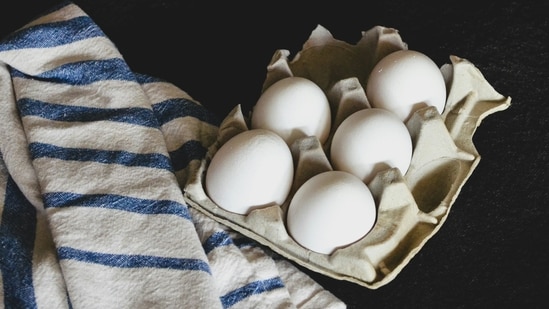
Dr Cyriac Abby Philips, a certified hepatologist popularly known as The Liver Doc, took to Instagram on May 30 to talk about eggs and how ‘eating eggs really helps the liver’.
Per The Liver Doc, a Framingham Heart study showed that eating fewer than two whole eggs a week, one egg a day, or even skipping eggs altogether made no measurable difference in who went on to develop non-alcoholic fatty liver disease (NAFLD) during six years of follow-up.
Also Read | Thinking about adding eggs to your diet? Dietician shares full nutrient profile of this popular protein
Why? According to Dr Cyriac, it is because the real protector was dietary choline, and eggs happened to be its richest source. “People who consumed the highest level of choline (approximately 400 mg per day) had a 31% lower NAFLD risk than those who consumed much less,” he added.
Dr Cyriac also stated in the post that whole eggs do not increase liver fat. Additionally, eating up to 1 egg per day (maximum 7 per week) is not associated with more heart disease. “In fact, studies show an 8 percent lower risk of heart disease in the Asian population,” he added.
How many eggs a day are safe?
- ≤7 eggs per week
Dr Cyriac also stated in the post that whole eggs do not increase liver fat. Additionally, eating up to 1 egg per day (maximum 7 per week) is not associated with more heart disease. “In fact, studies show an 8 percent lower risk of heart disease in the Asian population,” he added.
How many eggs a day are safe?
- ≤7 eggs per week
- Safe for the 'general' public.
- Neutral for heart disease and type 2 diabetes; no rise in death risk; may lower heart disease in Asian diets.
- 8-12 eggs per week
- Neutral effect in many cohorts, but in USA studies, there is an increased risk of diabetes or all-cause death.
- Caution if you have diabetes, very high LDL-C or familial high cholesterol disorder.
- > 12 eggs per week (2+ per day)
- Small but measurable rises in all-cause and cancer death and in heart disease, but mostly within the USA studies.
- Potentially unsafe long-term, especially when clubbed with Western diets high in processed meat & saturated fat.
Eggs are the best, cheapest protein source
- One large egg = Total 6.3 g protein (3.6 g in white and 2.6 g in yolk)
- Egg protein is exceptionally complete and absorbable.
- It has all nine essential amino acids.
- Most important is the leucine amino acid that triggers muscle-protein synthesis.
- Eggs are liver-friendly.
- Egg protein outperforms plant proteins in stimulating muscle growth and is as effective as whey protein.
- Keeping yolk matters. It is rich in vitamins, minerals, and a compound called choline.
Why is choline important?
According to The Liver Doc, choline is a super compound in egg yolk that helps the liver. It is a vitamin B-like nutrient which is critical for brain development and liver function.
He further explained, “In both animal and human studies, a choline-deficient diet was associated with the development of severe fatty liver. So, contrary to current beliefs, egg yolks are good for the liver and help prevent fatty liver and do not cause or worsen it.”
Note to readers: This article is for informational purposes only and not a substitute for professional medical advice. Always seek the advice of your doctor with any questions about a medical condition
Catch your daily dose of Fashion, Taylor Swift, Health, Festivals, Travel, Relationship, Recipe and all the other Latest Lifestyle News on Hindustan Times Website and APPs.
Catch your daily dose of Fashion, Taylor Swift, Health, Festivals, Travel, Relationship, Recipe and all the other Latest Lifestyle News on Hindustan Times Website and APPs.