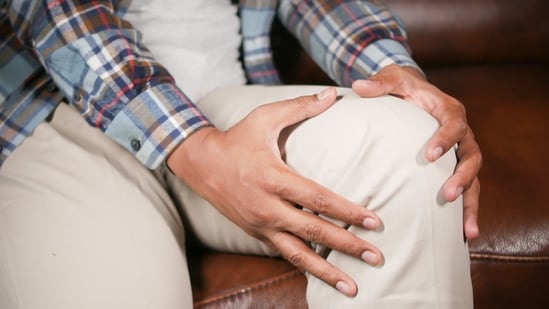
Joint pain is one of the most common ailments that individuals experience with age. However, according to orthopaedic surgeon Dr Pushkar Chawla, they should not always be dismissed as a normal part of ageing or something that will disappear on its own.
“Occasional discomfort after strenuous activity may settle with rest, but persistent, recurrent or worsening pain can sometimes indicate an underlying issue such as osteoarthritis, inflammatory arthritis, an old injury, muscle weakness or excessive strain on the joints,” he shared with HT Lifestyle.
Dr Chawla highlighted that paying attention to the early signs and making simple lifestyle changes can help protect joint health and maintain mobility. He went on to share five healthy lifestyle habits that can help, which are presented as follows.
1. Stay physically active
One of the most important habits to avoid joint pain is to stay physically active, but Dr Chawla suggested choosing low-impact exercises that do not unnecessarily stress the joints.
{{/usCountry}}One of the most important habits to avoid joint pain is to stay physically active, but Dr Chawla suggested choosing low-impact exercises that do not unnecessarily stress the joints.
{{/usCountry}}“Walking, swimming, cycling, stretching, and strength-training exercises can help improve muscle strength, flexibility and joint stability,” he stated. “Avoid suddenly increasing the intensity or duration of exercise, particularly if you are already experiencing pain. A gradual approach is safer and more sustainable.”
2. Maintain a healthy body weight
According to the orthopaedic surgeon, maintaining a healthy weight is equally important, especially for the knees, hips and ankles.
“Excess body weight increases the mechanical load on weight-bearing joints and may contribute to faster wear and greater discomfort. A balanced diet containing adequate protein, vegetables, fruits, whole grains and healthy fats can support overall musculoskeletal health,” he explained.
3. Have a good posture
In the words of Dr Chawla, “Good posture and proper body mechanics should also become part of your daily routine. Avoid sitting in one position for prolonged periods, take regular movement breaks and use correct techniques when lifting objects. Wearing comfortable, supportive footwear can also reduce unnecessary stress on the knees, ankles and feet.”
4. Get sufficient rest
When it comes to keeping the joints healthy, the contribution of adequate sleep and recovery should not be overlooked.
“Poor sleep can affect pain perception and make it harder to cope with discomfort. Give your body sufficient time to recover after exercise and avoid repeatedly pushing through significant pain,” noted Dr Chawla.
5. Do not self-medicate
Most importantly, one should not self-medicate regularly with painkillers without medical advice, cautioned Dr Chawla.
“If joint pain persists for several weeks, causes swelling or stiffness, limits movement, follows an injury, or is accompanied by redness, warmth or fever, consult a doctor or orthopaedic specialist,” he advised. “Early evaluation can help identify the cause and prevent a manageable joint problem from becoming a long-term limitation.”
Note to readers: This article is for informational purposes only and not a substitute for professional medical advice. Always seek the advice of your doctor with any questions about a medical condition.
Dr Pushkar Chawla, MBBS, MS, FNB, is the director and unit head in the department of Orthopaedics at ShardaCare- Healthcity, with over 25 years of clinical experience.
Catch your daily dose of Fashion, Taylor Swift, Health, Festivals, Travel, Relationship, Recipe and all the other Latest Lifestyle News on Hindustan Times Website and APPs.
Catch your daily dose of Fashion, Taylor Swift, Health, Festivals, Travel, Relationship, Recipe and all the other Latest Lifestyle News on Hindustan Times Website and APPs.