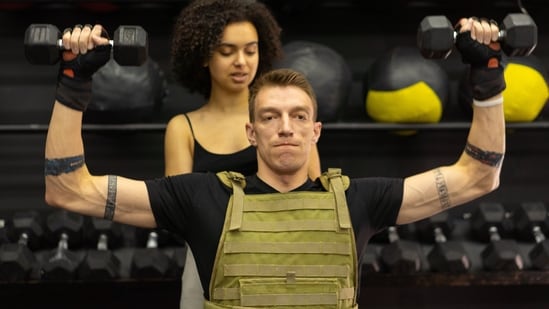
The shoulder is one of the most injured joints among people who lift. Poor form, too much weight and training through sharp pain are the usual reasons. These figures vary with the sport and with how injury is defined. They do show that the shoulder takes a lot of load. They do not show that any one exercise is the culprit. In an interview with HT Lifestyle, Dr Naman Wahal, senior consultant and unit head, orthopaedics at Fortis Escorts, New Delhi, shared workout moves that might be harming your shoulders.
Also read | From joint stiffness to posture changes: How sitting cross-legged for long hours may affect your body
No exercise is bad for everyone
According to Dr Wahal, bench presses, push-ups and overhead presses can be very useful. Whether they suit a person depends on the shoulder's condition, body weight, range of movement and how it responds to training.
Some people with partial or full-thickness rotator cuff tears enjoy bench presses and push-ups without trouble. Some people with a SLAP tear, a tear in the upper rim of cartilage around the shoulder socket, feel pain during the bench press. Some with subtle instability at the back of the shoulder tolerate push-ups comfortably. So the exercise that hurts does not, by itself, tell which part is injured.
Technique changes the load
“Technique still matters. Grip width, shoulder blade position, weight and depth all change how much force the shoulder takes,” highlights Dr Wahal. When pain appears, these are the first things to look at.
{{/usCountry}}“Technique still matters. Grip width, shoulder blade position, weight and depth all change how much force the shoulder takes,” highlights Dr Wahal. When pain appears, these are the first things to look at.
{{/usCountry}}Research shows that technique changes forces around the shoulder. It does not show that one technique prevents rotator cuff tears. A narrower grip, a slight tuck of the elbows and shoulder blades pulled back against the bench are sensible starting points. They are adjustments to the test, not rules that guarantee safety.
Overhead work is normal
“Raising the arm overhead is a normal shoulder movement. It should not be ruled out by default in the gym, in swimming, in badminton or in cricket,” said Dr Wahal. What causes trouble is repeated overhead work without enough recovery, or a sudden jump in load. Gradual progress is different. The demands should match the person's strength, mobility and current shoulder condition.
When to stop, when to adjust
Shoulder pain is not a target to push through. During ordinary gym training, a movement that repeatedly provokes shoulder pain should be stopped or modified. That is different from mild, monitored discomfort during a rehabilitation programme prescribed by a clinician.
Some signs need assessment. They include sharp pain, sudden weakness, inability to lift the arm and a feeling that the shoulder is slipping. Pain that wakes someone at night or lasts several weeks also needs a check.
A better plan
According to Dr Wahal, warm-ups help. A few minutes on a treadmill raises the heart rate. It does little for the shoulder. Band pull-aparts, controlled arm circles and a few light sets of the lift itself prepare the joint better. Weight can then go up in steps.
Note to readers: This article is for informational purposes only and not a substitute for professional medical advice. Always seek the advice of your doctor with any questions about a medical condition.
Catch your daily dose of Fashion, Taylor Swift, Health, Festivals, Travel, Relationship, Recipe and all the other Latest Lifestyle News on Hindustan Times Website and APPs.
Catch your daily dose of Fashion, Taylor Swift, Health, Festivals, Travel, Relationship, Recipe and all the other Latest Lifestyle News on Hindustan Times Website and APPs.