
 E-Paper



Struggling with constant headaches and neck pain? Physician explains why ‘misaligned screen height’ can be the cause

 Prefer HTon Google


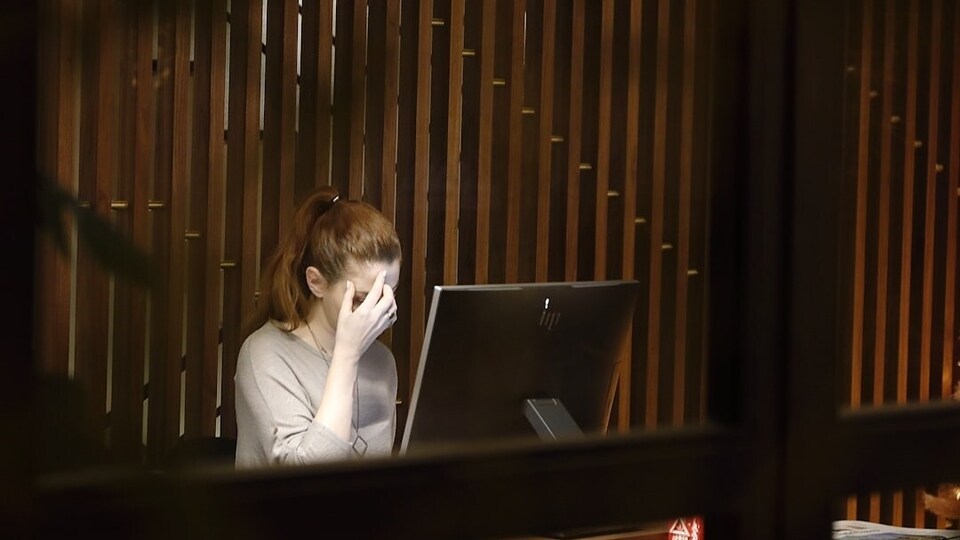
If you're struggling with persistant headaches everyday, accompanied by neck pain, you might want to improve your screen height. Dr Sood explains why.
If you deal with neck pain or headaches almost every day, pop a painkiller, feel better for a few hours - only for the discomfort to return after another long workday - you are not alone. While stress is often blamed, doctors say the real culprit may be hiding in plain sight. Your posture, especially how you look at your phone or laptop for hours on end, could be silently fuelling the cycle of pain you keep treating but never truly fixing.
Also Read | Struggling with anxiety? US doctor shares 6 daily habit changes that help manage stress and improve mood
Dr Kunal Sood, double board-certified physician in Anesthesiology and Interventional Pain Medicine, has revealed a surprisingly common underlying cause of persistent neck pain and headaches - poorly aligned screen height. In an Instagram video shared on February 1, the physician explains how constantly looking down at your phone or laptop significantly increases the load on the neck, triggering muscle tension that can ultimately lead to persistent aches and headaches.
Looking down multiplies neck load
According to Dr Sood, looking down at your phone or laptop dramatically increases the load on the cervical spine, placing exponentially more strain on the neck compared to maintaining a neutral posture. He explains, “In a neutral position, the human head weighs about 10 to 12 lb. As the neck bends forward to look at a phone or laptop, the effective load on the cervical spine rises sharply. At roughly 45 to 60 degrees of neck flexion, the neck may experience forces equivalent to 40 to 60 lb, a three to five-fold increase compared with neutral posture.”
Why does this cause headaches?
Maintaining a forward, stooped posture for prolonged periods places excessive strain on the neck muscles, leading to muscle fatigue over time and potentially triggering tension-type or cervicogenic headaches. Dr Sood highlights, “Sustained forward head posture increases strain on the cervical extensor muscles, upper trapezius, and levator scapulae. Over time, this leads to muscle fatigue, trigger points, and altered cervical joint mechanics. These changes are strongly linked to tension-type headaches and cervicogenic headaches, where pain starts in the neck but is felt in the head.”
Upper back and neck tightness
The physician emphasises that prolonged screen use with the head stooping forward is associated with increased neck pain, shoulder tightness and reduced cervical range of motion. He adds, “Chronic muscle co-contraction and elevated baseline muscle tone can persist even when you are not actively using a device, perpetuating discomfort.”
Mechanical pain trigger amplified by stress
According to Dr Sood, muscle tension and pain sensitivity caused by poor screen height and a forward head posture can be further amplified by stress. He explains, “Stress can increase muscle tension and pain sensitivity, but poor screen height and forward head posture are often the mechanical trigger that starts the pain cycle. Addressing posture reduces the underlying load that stress then worsens.”
How to prevent this?
Dr Sood outlines the following four ways you can reduce cervical load and ease both neck pain and tension-type headaches:
- Raising screens closer to eye level
- Taking frequent breaks
- Changing positions
- Strengthening postural muscles
He concludes, “If your neck hurts and your head aches, it may not be ‘just stress’. Screen height and posture matter more than most people realise.”
Note to readers: This article is for informational purposes only and not a substitute for professional medical advice. It is based on user-generated content from social media. HT.com has not independently verified the claims and does not endorse them.


Catch your daily dose of Fashion, Taylor Swift, Health, Festivals, Travel, Relationship, Recipe and all the other Latest Lifestyle News on Hindustan Times Website and APPs.


