Lacy spindles of silver and gold have been used to make jewellery in the isolated northern Colombian town of Mompox since the time of the Spanish conquest. Built on an island on the wide Magdalena river, the town’s colonial beauty inspired Gabriel Garcia Marquez, the Colombian magic-realist partly setting his “General in his Labyrinth” there. However, tourists make their way here -- four hours upriver by boat, an hour’s droning by small aircraft -- for the magic realism of handcrafted jewels. “It’s an Arab tradition, and the Arabs taught it to the Spaniards who, when they conquered us, brought this art to America, and especially to Mompox,” Daniel Alfonso Garrido told AFP.
Here, at a counter in his workshop, the 53-year-old goldsmith creates jewels mostly inspired by nature, weaving filigree animals and flowers from precious metals as his father and grandfather did before him. The skill has been handed down here through the generations, as is the case with several families across Mompox, and the town boasts 170 goldsmiths working in 13 jewelries, according to the Institute of Culture and Tourism of the Department of Bolivar (Iculture).
“We have goldsmithing in our blood,” said Garrido, the best known goldsmith here, with a hint of pride. The filigree graces the windows of the 23 jewelers of Mompox, a city founded in 1540 and listed as a World Heritage Site by UNESCO in 1995 for its traditions and colonial style. Its relatively isolated location far from the densely populated Caribbean coast, 250 kilometers (155 miles) away, has helped Mompox preserve its culture over the years and become a jewel of Colombian architecture. “I love the drawing of their filigree pieces,” said Viviana Devia, 42, a visitor from the capital Bogota. “When we go to the workshop, we realize the work that this represents and it has a real value.”
The “Tito” workshop is classically styled with a patio blending wooden beams and wrought iron, reminiscent of an era when the conquistador’s gold was first hauled into the town. The share to be shipped back to the Spanish crown was then calculated in the river port of Mompox. Although its goldsmiths are world famous, Mompox is not located in a gold mining area. The locals got their skills with precious metals from its importance as a coin-minting centre. “Our added value is the tradition, the time, the fragility in our hands, the patience we have to put in,” said Garrido . “Because if a silversmith is not patient, it does not work.”
{{/usCountry}}The “Tito” workshop is classically styled with a patio blending wooden beams and wrought iron, reminiscent of an era when the conquistador’s gold was first hauled into the town. The share to be shipped back to the Spanish crown was then calculated in the river port of Mompox. Although its goldsmiths are world famous, Mompox is not located in a gold mining area. The locals got their skills with precious metals from its importance as a coin-minting centre. “Our added value is the tradition, the time, the fragility in our hands, the patience we have to put in,” said Garrido . “Because if a silversmith is not patient, it does not work.”
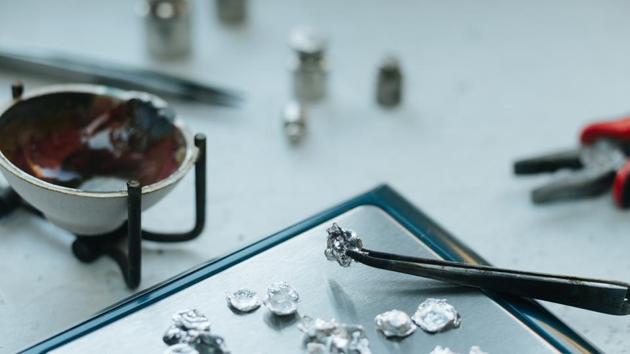
{{/usCountry}}A piece of filigree jewelry can sell here at anything up to several hundred dollars, and Mompox “yields a total of close to 2.5 million pesos (around 867,000 dollars) a year to the 23 jeweller workshops here,” Iculture director Lucy Espinosa Diaz told AFP. The creation of a filigree piece takes anywhere between half a day and two weeks, depending on the size and complexity of the design, says Jaime Florez, 27. After first defining the style of the bracelet he wanted to create, and then calculating its weight, he melted a chunk of silver and started at dawn to craft a bracelet that he hoped to finish before sunset. In Mompox, aloof from the tourist hordes, the blows of a hammer mingle with the noise of the silversmith’s welding, while the great wide waters of the Magdalena murmur in the distance.
Follow @htlifeandstyle for more