Contrary to the common impression, rain has little to do with the flood that is currently wreaking havoc in around two dozen districts of eastern UP, killing around 70 people and affecting more than 20 lakh others so far.
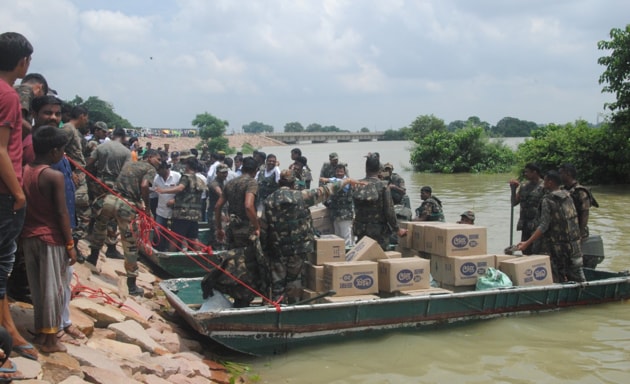
This is the release of excess water from the Nepal’s overflowing rivers into the rivers in Uttar Pradesh that is to be blamed for the situation. Otherwise, the state has received less rainfall this year as compared to that of the previous year which was declared a drought year.
“We are being hit by Nepal and not rain because a large part of the state is still battling a deficit monsoon,” Bhupendra Sharma, engineer-in-chief, irrigation, told HT explaining the reason for the current flood in the state.
He, however, ruled out the possibility of China’s rivers having their share in the flood. “The water released by China into the Brahmaputra affects state like Assam and other adjoining states but not UP,” Sharma said.
While the state received only 76.4% of the normal rainfall from June to August this year as against the 99.8% during the corresponding period last year, relief to farmers has come in many ways saving them from the drought-like situation.
“First, the pattern of rain this year has been such as there was not a long gap between two rainfalls and second the power supply to private tube wells has been very good this year lessening farmers’ dependence on the monsoon in the rain deficit districts,” agriculture director Gyan Singh said.
A report prepared by the agriculture department shows that 44 of 75 districts in UP have received below normal rainfall between June and August (till August 20).
{{/usCountry}}A report prepared by the agriculture department shows that 44 of 75 districts in UP have received below normal rainfall between June and August (till August 20).
{{/usCountry}}Three districts namely Pilibhit, GB Nagar and Ghaziabad have received the least rainfall, that is below 40% of the normal and the farmers there are said to be meeting their irrigation needs with the help of private tube wells.
Another 19 districts have received only between 40%-60% of the normal rainfall coming under the highly deficit category. Interestingly, among them also comes the over-flooded Gonda district. As many as 22 districts, including Lucknow, have been categorised as deficit ones as they have received rainfall between 60%-80% of the normal. Only 29 districts, including marooned Gorakhpur, have received normal rainfall, that is, 80%-120% of the normal.
Only Shravasti and Azamgarh districts have received excess rainfall above 120% of the normal against 24 districts that received excess rainfall during the corresponding period last year.
This is why the deficit monsoon leading to intense humidity and heat has increased the electricity demand to more than 20,000 MW these days.
The agriculture department does claim to have achieved the sowing targets despite the deficit monsoon but worries for the irrigation of the crops if the monsoon further weakens.
“We are keeping our fingers crossed hoping the monsoon does not weaken further during the next one month, otherwise there may be some problem,” the agriculture director said.