Managers and principals of schools and the Uttar Pradesh Board of Secondary Education (UPBSE), also known as UP Board, are at loggerheads these days— all over Rs 10.
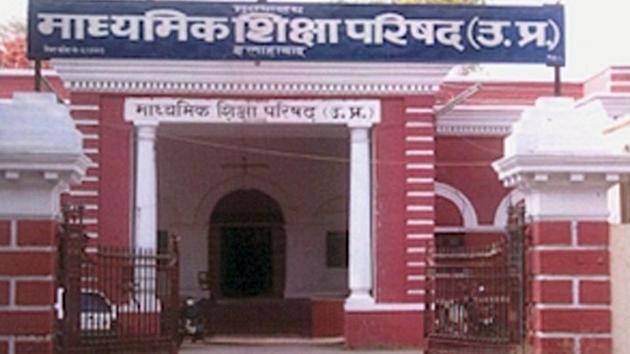
The stand-off is for the advance registration fee of Rs 50 each taken from students of class 9 and class 11 of 2016-17 session for their forthcoming board exams the next year. The board wants the schools to deposit the entire sum collected from the students with the state treasury while the managers and principals of the schools are not ready for it. They want to retain Rs 10 per student for expenses incurred as assured earlier and are ready for a ‘battle’.
The disagreement stems from last year but came to the fore when UP Board secretary on May 17 sent a missive to all district inspectors of schools (DIoS) instructing them to ensure that the advance fee collected from students during the last academic session gets directly deposited into the treasury on priority.
The UP Board on April 12, 2016 had hiked the advance registration fee for each class 9 and class 11 student for their 2018 board exam from Rs 20 to Rs 50. Out of this, Rs 10 was to go to the school for the expenses incurred in the online registration process, Rs 20 was to be deposited in the state treasury and the remaining Rs 20 was to be deposited in the official account of UP Board secretary for creating funds for improving the board’s own functioning.
The schools in compliance deposited Rs 20 in the treasury as required and were awaiting instructions regarding bank account details for the other Rs 20 per student that was to be deposited for the UP Board.
{{/usCountry}}The schools in compliance deposited Rs 20 in the treasury as required and were awaiting instructions regarding bank account details for the other Rs 20 per student that was to be deposited for the UP Board.
{{/usCountry}}But the state government on May 11, 2017 denied permission to the board secretary to open a separate bank account for the purpose. This led to the UP Board secretary ordering that the remaining Rs 30 also be deposited in the government treasury.
However, this greatly upset the school managers and principals who reminded the board of its earlier instructions and claimed that they had already incurred expenses and for which the Rs 10 per students should be left for them.
This led to a stand-off between the board and the schools and finally a delegation of school principals and managers led by MLC Yagya Dutt Sharma met the UP Board secretary Shail Yadav on May 26 and reiterated their demand and also provided the justification of already having spent the money behind it.
The delegation demanded that they be allowed to deposit Rs 20 and not Rs 30 as ordered in the treasury and for that too the last date be extended from May 27 to July 15.
But before one dismisses the stand-off as something trivial, the amount involved needs to be understood. UP Board has around 25,000 schools affiliated to it and witnessed around 60 lakh students registering for its class 12 and class 10 exams in 2017-18 academic session. If this number is taken in account at a rate of Rs 50 per student as advance registration fee, sum involved is of a whopping Rs 30 crore and the Rs 10 per student that the schools want to retain in turn accounts for an impressive around Rs 6 crore.
Wishing to bring this face off to an end, the UP Board secretary Shail Yadav has decided to seek guidance from the state government in this regard.
“We will be seeking views of the state government on the demands of the schools for being allowed to retain Rs 10 per student against expenses incurred and be allowed to deposit the remaining Rs 20 per student in the treasury after being given some additional time,” he said.
Read more: UP Board students to get lessons in banking, cashless transactions