A company or an individual will no longer be able to exploit rural bio-resources or the knowledge of locals for commercial or scientific use without the consent of and benefits going to the village panchayats holding the resources.
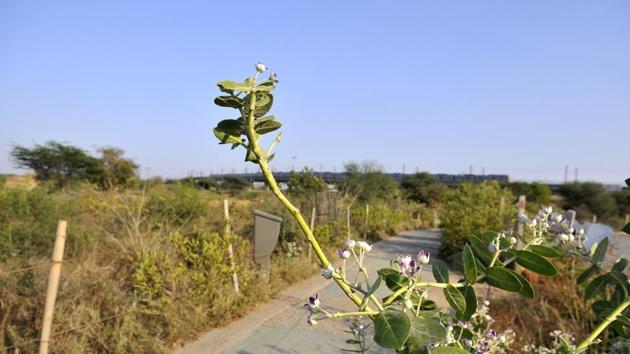
Almost 15 years after the Biological Diversity Act came into force in the country in 2003, Uttar Pradesh has finally notified the constitution of biodiversity management committees in villages.
Gram Panchayat Biodiversity Management Committees (GPBMCs) have been empowered under the law to ensure conservation and documentation of bio-resources, and levy charges as fee on any person for accessing or collecting any bio-resources for commercial purposes from areas falling under their territorial rights.
They can also grant permission or refuse access to any individual or company.
Additional chief secretary, panchayati raj, Chanchal Kumar Tiwari issued a government order (GO) on October 3 mandating the constitution of GPBMCs in the state in keeping with the requirement of the Biodiversity Rules, 2004.
As per the GO, each GPBMC will comprise six elected panchayat members of whom two will be women and one each from SC/ST and OBC categories. The panchayat will elect the members from among themselves.
According to the GO, a GPBMC can name an outsider, including a representative of a company that wants to use local resources for making a product, medicine etc, as special invitee but any such member will not have the right to vote.
{{/usCountry}}According to the GO, a GPBMC can name an outsider, including a representative of a company that wants to use local resources for making a product, medicine etc, as special invitee but any such member will not have the right to vote.
{{/usCountry}}The committees are supposed to act in accordance with the directions issued to them by the state Bio-diversity Board.
Former additional director, panchayati raj, Sudan Chandola said the constitution of GPBMCs was an important step.
“Based on the knowledge and raw material available in a particular area and findings of the researches, the product is developed, manufactured, marketed and sold by the MNCs to the consumers at huge profits,” he said.
“From researcher to the seller of the product, everyone in the chain makes profit. However, the locality, community or the person from whom the basic knowledge is gathered gets nothing. GPBMCs can play an important role in not letting that happen,” Chandola added.
Way back in 1992, the United Nations passed a convention on biological diversity at Rio de Janeiro in Brazil with India being a signatory to it. The convention gave local communities the right over bio-resources on their sustainable use and sharing of benefits arising out of their scientific and commercial use.
“The Central government enacted the Biodiversity Act, 2002, as a result of the UN Convention,” Chandola said.
“It is unfortunate that even after more than one-and-a-half decade of the enactment of the Act, the Gram Panchayat Biodiversity Management Committees were not constituted in UP’s gram panchayats,” he said.