An entry in the British-era Bombay Police records states that a total of 939 women had been arrested in the city between January 1932 and April 1933 for their activities in the salt satyagraha and thousands of women let off with stern warnings. It remains an indication of the massive participation of women in the freedom movement – a theme glossed over in popular narratives.
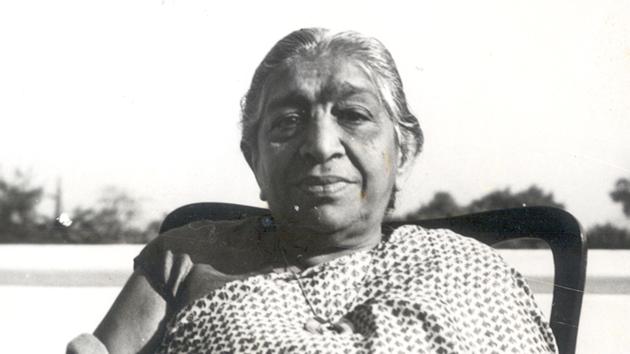
Women, initially from the upper classes and then from working classes, contributed in many creative ways, in cash and kind, with their time and presence to strengthen the movement at various stages. Yet, except a few familiar names which can be counted on fingers of a hand like Sarojini Naidu and Kasturba Gandhi, their stories remain obscure and their impact mostly unknown.
The earliest fighters such as Bhimabai Holkar, Rani Lakshmibai of Jhansi and Rani Chennamma of Kittur in the 19th century had left behind rich legacies. The social reform movement had led to progressive legislations for abolishing Sati, remarrying of widows and restraint on child marriage. Bombay’s Bhikaji Cama had unfurled the early version of the tri-colour at a conference in Stuttgart in August 1907. Annie Besant and the Home Rule League had sparked off interest. But women’s participation in public life was limited. It was the call for non-cooperation in 1920 which motivated a large number of women to step out of their homes into political space.
Through the 1920s, women led and participated in processions across Bombay propagating the boycott of foreign goods and the use of swadeshi. Women from well-to-do homes stopped wearing foreign saris and championed khadi. When the Tilak Swaraj Fund was launched, women donated their jewellery and small savings. They attended many swaraj meetings addressed by Mahatma Gandhi where they often gave away the ornaments on their person. Associations such as the Bhagini Samaj and Rashtriya Stree Sabha were among dozens which gave women a political identity.
{{/usCountry}}Through the 1920s, women led and participated in processions across Bombay propagating the boycott of foreign goods and the use of swadeshi. Women from well-to-do homes stopped wearing foreign saris and championed khadi. When the Tilak Swaraj Fund was launched, women donated their jewellery and small savings. They attended many swaraj meetings addressed by Mahatma Gandhi where they often gave away the ornaments on their person. Associations such as the Bhagini Samaj and Rashtriya Stree Sabha were among dozens which gave women a political identity.
{{/usCountry}}Bombay’s women picketed against shops which sold foreign cloth and liquor; organised flag salutation meetings and prabhat pheris across the city; many learned the alphabet, compiled or wrote freedom-related material and organised readings at home; they distributed leaflets and handbills at busy junctions, students raised slogans at college gates and railway stations.
Women from the Congress and Desh Sevika Sangh picketed to disrupt the voting for legislatures in September 1930; nearly 380 women were arrested. When the Sangh was banned, 5,000 women marched in protest to Azad Maidan. During the salt satyagraha, bands of women brought sea water and made salt by boiling it on cement chullahs at Congress House and dozens of other locations every day, sold the contraband salt, and faced arrest. More than 1,000 women were in the rally at Chowpatty on April 13, 1930.
Kamaladevi Chattopadhyay’s role in the movement, especially salt satyagraha, was unparalleled. In the frontline, she braved the police to make salt. She then auctioned it in the Bombay share market and the Bombay high court to raise funds. Later, she led thousands to the Wadala salt depot in defiance of administrative orders and was arrested. Avantikabai Gokhale, Chattopadhyay’s friend, organised salt making at multiple locations. A staunch Gandhian, she even taught at a school in Champaran. She led many rallies in Bombay including one in October 1930 when she and her group of women volunteers raised the Indian flag at Azad Maidan. She was arrested and jailed for a year.
Hansa Mehta led many processions against prohibitory orders through the 30s, was president of the Bombay War Council, and formed the Desh Sevika Sangh with Gokhale and Perin Captain. Lilavati Mushi worked as vice-president of the Bombay Provincial Congress Committee. Ramibai Kamdar published Congress bulletins and was arrested for it. Usha Mehta, Maniben Nanavati, Champutai Ganpatrao, Aruna Asaf Ali and Fatima Ali were among Bombay’s women ought not to be forgotten.
Indeed, women in the movement focussed more on the cause - that too, drawing upon stereotypical attributes of self-sacrifice and so on -- than on women’s issues but, as historians have pointed out, the latter were to an extent subsumed into the struggle for independence.
Stay updated with all the Breaking News and Latest News from Mumbai. Click here for comprehensive coverage of top Cities including Bengaluru, Delhi, Hyderabad, and more across India along with Stay informed on the latest happenings in World News.
Stay updated with all the Breaking News and Latest News from Mumbai. Click here for comprehensive coverage of top Cities including Bengaluru, Delhi, Hyderabad, and more across India along with Stay informed on the latest happenings in World News.