The Bay of Bengal was once dotted with islands similar to the Maldives in the Indian Ocean or Hawaii islands in the Pacific Ocean. The chain of islands that existed above sea level for 12 million years — from 80 million years to 68 million years — today lie buried under the world’s largest bay, a study led by the CSIR-National Institute of Oceanography (NIO) has revealed.
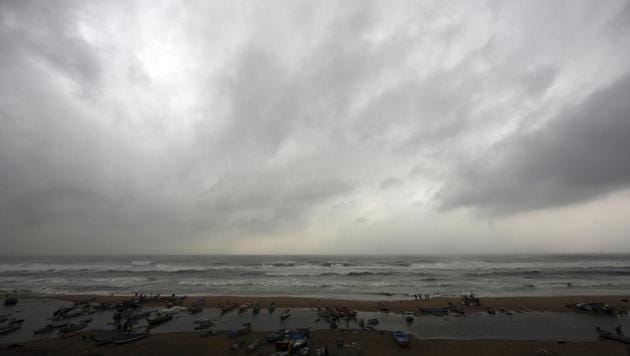
“A series of natural processes that connected each other in the geological past caused the island chain to go first below sea level, then into the water, and finally below the sea floor,” KS Krishna, CSIR-NIO, Goa, told HT. “These islands are submerged under thick sediments discharged from the Ganges and Brahmaputra river systems.”
If the islands were present, a sea voyage from Chennai would have meant passing this chain before reaching the Andaman Islands.
What’s more important, said researchers was these islands would have protected the Indian mainland from tsunamis on the east coast of India.
“Intensive tsunami waves, as witnessed in 2004, are being occasionally generated as a result of high-magnitude earthquakes near the region of Andaman and Sumatra islands, which travel towards the east coast of India,” said Krishna. “These island chains would have served as a geo-wall to the main land by pushing the waves back. The entire east coast would have been a safe zone from these hazardous waves, and that’s a big benefit indeed we have lost.”
Another advantage that the country has lost is economic in nature. “The area surrounding islands would have been India’s EEZ (exclusive economic zone), and could have been potential for natural resources. But we lost the opportunities to natural processes,” said Krishna.
{{/usCountry}}Another advantage that the country has lost is economic in nature. “The area surrounding islands would have been India’s EEZ (exclusive economic zone), and could have been potential for natural resources. But we lost the opportunities to natural processes,” said Krishna.
{{/usCountry}}It was in 1982 that experiments carried out by researchers from various countries identified this specific structure as a massive structure completely buried under three to four kilometre of sediments. This led to the question on evolution of the structure with many hypotheses, which could not convince the scientific community.
Over the past five years, NIO, a premier institution of Council of Scientific and Industrial Research, intensified its investigations on cross-sections of this structure by studying high quality geo-physical datasets generated by the international and national petroleum and oil industries.
The researchers said these present day buried structures ran as a chain of mountains above sea level in the Bay of Bengal 80 million years ago, with elevations ranging approximately from 500 to 1000 metres — like today’s Maldives and Hawaii islands. These mountains were rested on a solid surface that was formed nearly 120 million years ago beneath the Bay of Bengal.
Owing to their weight and thermal cooloing, these massive mountains on a solid surface and went below the sea level 68 million years ago said K. Srinivas, CSIR-NIO, regional centre, Visakhapatnam.
Alongside, major river systems in the Indian sub-continent such as the Cauvery, Krishna-Godavari and Mahanadi carried sediments from the continent that got deposited — though at a very low rate — into the Bay of Bengal. This process continued till 23 million years, said researchers.
“We have a situation where on one hand the mountains were subsiding; on the other hand, the sediments were getting deposited on the sides of these structures. So, at 23 million years, the deposited sediments covered the mountains,” said M. Ismaiel, CSIR-NIO, Goa.
This was also the time when the Indian sub-continent collided with the Asian continent at 40 million years, and pushing towards the north that led to the formation of the mighty Himalayas. Having reached their maximum elevation during this period, the Himalayan mountains started interacting with the atmosphere which eventually led to the onset of the monsoon in Asia. With monsoons, eroded sediments from the Himalayan mountains were carried by the Ganga and the Brahmaputra through Bangladesh to the Bay of Bengal.
“The deposited material was four times more than the sediments deposited by the peninsular rivers. As a result, three to four km of sediments sat on top of the mountains, causing them to subside further. This is how the mountains went below the sea floor, and today lies buried,” said Srinivas.
The island chain stretched from Odisha coast to middle of Bay of Bengal, Sri Lanka and close to the equatorial region. “We are confident that at least in the Bay of Bengal, these mountains may have survived as islands,” said Krishna.
In a recent paper published in January, the team investigated the internal structure of the mountain to find its origin. “We found some evidence of volcanic activity, making it one of the most possible explanations of the evolution of this mountain,” said Krishna.
The study was released in Current Science, published by the Current Science Association in collaboration with the Indian Academy of Sciences.
READ
Gone in 50 years: Climate change engulfs Bangladesh island
Stay updated with all the Breaking News and Latest News from Mumbai. Click here for comprehensive coverage of top Cities including Bengaluru, Delhi, Hyderabad, and more across India along with Stay informed on the latest happenings in World News.
Stay updated with all the Breaking News and Latest News from Mumbai. Click here for comprehensive coverage of top Cities including Bengaluru, Delhi, Hyderabad, and more across India along with Stay informed on the latest happenings in World News.