The city’s troublesome and never-ending commute to work may get better in the coming years – this is the dream the year gave to Mumbaiites.
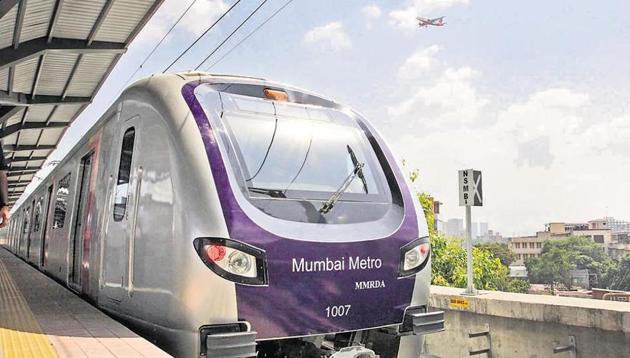
In 2017, the Maharashtra government gave a major boost to several pending infrastructure projects to support the crumbling transport system of the city.
Three Metro lines got a push from CM Devendra Fadnavis. While the construction of three Metro corridors --Metro-3 (Colaba-Bandra-Seepz), Metro-7 (Andheri East-Dahisar East) and Metro-2A (Dahisar-DN Nagar) is on -- two more corridors got a sanction from the Maharashtra cabinet. These include the Metro-5 (Thane-Bhiwandi-Kalyan) and Metro-6 (Swami Samarth Nagar-Jogeshwari-Kanjurmarg). The Metro-6 will be only the second Metro line for the city’s east-west connectivity.
The project will make Metro a mass transport system, in addition to the existing suburban train network.
Ashwini Bhide, managing director, Mumbai Metro Rail Corporation (MMRC), said, “Metro lines will help in significant reduction of traffic and boost the local transit facility. Along with comfort, ease and convenience, with its high-tech technologies, Metros in the city will also help in reducing carbon footprint and pollution.”
The railways, often called Mumbai’s lifeline, received a major boost this year with the introduction of Tejas and Anubhuti coaches.
{{/usCountry}}The railways, often called Mumbai’s lifeline, received a major boost this year with the introduction of Tejas and Anubhuti coaches.
{{/usCountry}}The trains revamped short-distance, high-speed rail travel in the country along with state-of-the-art infrastructure. Railways also offered a year-end gift to Mumbaiites – air-conditioned local trains.
Amid its financial crisis, the Brihanmumbai Electric Supply and Transport Undertaking (BEST) did its bit by introducing electric buses on Mumbai roads after 45 years. These six single-decker buses are eco-friendly and battery-operated, offering a noiseless ride in the chaotic city. Before phasing it out, BEST ran electric buses in the city between 1962 and 1971.
For road transport, the Mumbai Trans-harbour link -- a project that was on paper for two decades -- got a major boost. The MMRDA appointed three contractors to build the sea link from Mumbai to Navi Mumbai and the project is expected to take-off soon.
The Brihanmumbai Municipal Corporation’s (BMC) coastal road is also expected to take off in April.
The Maharashtra government also approved the tail-end of the project -- the Versova-Bandra sea link (VBSL) -- in December. The contractors for VBSL are expected to be appointed in January.
Once the project is completed, the coastal road will reduce the travel time between south Mumbai and the western suburbs. The commute currently takes more than three hours for motorists.
Ashok Datar, transport expert, said, “This year, the progress on Metro lines has been the biggest activity, a boost to public transport. The key factor, however, will play out in 2019-20, when most of the projects will near completion.”
The construction of the Navi Mumbai international airport, too, may be put on track as the construction is expected to start in early 2018.
Stay updated with all the Breaking News and Latest News from Mumbai. Click here for comprehensive coverage of top Cities including Bengaluru, Delhi, Hyderabad, and more across India along with Stay informed on the latest happenings in World News.
Stay updated with all the Breaking News and Latest News from Mumbai. Click here for comprehensive coverage of top Cities including Bengaluru, Delhi, Hyderabad, and more across India along with Stay informed on the latest happenings in World News.