Three city scientists have won prestigious Indian National Science Academy (INSA) Young Scientists Awards this year.
INSA Young Scientists Award is considered the highest recognition of promise, creativity and excellence in a young scientist in India. The academy began distributing this award in 1974.
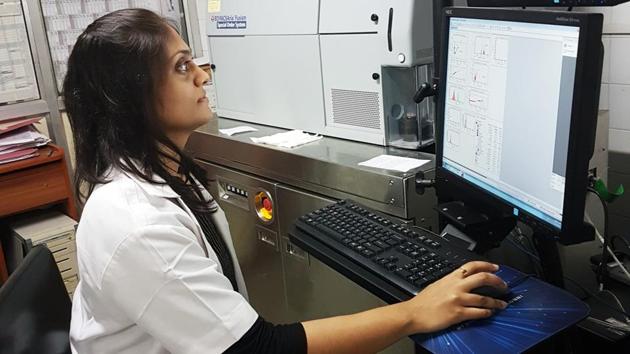
Rucha Patil, 31, a scientist at The National Institute of Immunohaematology Centre run by the Indian Council of Medical Research (ICMR), Srishti Dar, 30, a scientist at the Tata Institute of Fundamental Research and Dr Vikram Vishal, 31, from Indian institute of Technology, Bombay (IIT-B) were among the 22 winners this year.
A thrilled Patil told HT that she was nominated for the award by her research guides Dr Shrimati Shetty and Kanjaksha Ghosh. “It feels great when your work is recognised at a national level,” said Patil. Dar too was happy on winning the award. “It feels humbling as we were up against scientists from Cambridge and Harvard where they do cutting-edge research. Every year the winners are shortlisted from some 2,000 applications,” she said.
Dr Vishal said, “The recognition makes me feel more responsible and committed to my research.”
{{/usCountry}}Dr Vishal said, “The recognition makes me feel more responsible and committed to my research.”
{{/usCountry}}The winners will get a bronze medal, a cash price of Rs 25,000 and an initial funding for their research projects.
THEIR RESEARCH PROJECTS
Dr Rucha Patil
She worked in the field of health science and identified novel roles of ‘cell-derived micro particles’which are important in understanding and treating clinical conditions such as recurrent loss of pregnancy.
“I found that levels of these ‘cell-derived microparticles’ are elevated in women with unexplained recurrent pregnancy loss. We know that these microparticles are essential in clot formation, so we started with some women who were a part of the study, on ‘anti –coagulants’ and 70% of them responded and delivered babies,” she said.
Dr Srishti Dar
Her work was essential in understanding how cell division happens.
“In my work, I tried to understand how a protein called ‘Dynamin’ catalyses membrane fission (cuts in the cell membrane). This is an important player in many centro-nuclear myopathies such as Alzheimer’s. Using similar approaches we can now understand our cell division,” she said.
Dr Vikram Vishal
He worked on reducing greenhouse emissions which may help combat global warming.
“About 75% of India’s energy requirements are met by burning coal. But this, releases carbon-di-oxide (CO2) in the environment which is a greenhouse gas. My work tries to capture CO2 from the air and compress it to the underground rocks,” he said.
Stay updated with all the Breaking News and Latest News from Mumbai. Click here for comprehensive coverage of top Cities including Bengaluru, Delhi, Hyderabad, and more across India along with Stay informed on the latest happenings in World News.
Stay updated with all the Breaking News and Latest News from Mumbai. Click here for comprehensive coverage of top Cities including Bengaluru, Delhi, Hyderabad, and more across India along with Stay informed on the latest happenings in World News.