For Mumbaiites, the monsoon is synonymous with potholes. Every year, the first few heavy showers convert the city’s roads into adventure sport tracks, putting motorists’ driving skills, health and patience to ultimate test. But according to experts, this can easily be prevented. How? By following the scientific procedure to repair the existing potholes.
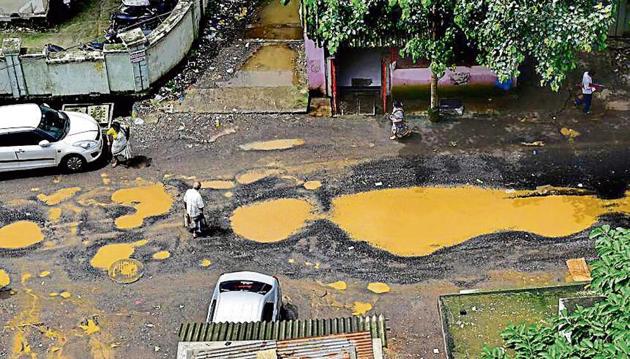
Experts claim both the Brihanmumbai Municipal Corporation (BMC) as well as public works department (PWD) don’t follow the prescribed steps while fixing potholes. The result is for all to see – BMC has recorded more than 1,400 complaints of potholes in June and July, with some on roads that were repaired recently.
CLAIM AND THE COUNTER
Civic officials blame potholes on waterlogging, and a bad drainage system. “Immediate action is taken against contractors found guilty of shoddy work. The city’s drainage system is old and seepage is common. This weakens the roads. Wherever there is waterlogging, there are potholes,” said a BMC official.
This may not be entirely true. Sanjay Singh Gaharwal, from the research wing of Central Road Research Institute (CRRI), said, “Potholes are mainly a result of poor quality road construction and unscientific method of repairing them. This, combined with waterlogging, causes roads to lose their durability.”
According to Gaharwal, the standard operating procedure to fix a pothole involves cutting out the area around the pothole in a rectangle, removing loose gravel and cleaning it. The portion has to be dried and then refilled with the mix.
{{/usCountry}}According to Gaharwal, the standard operating procedure to fix a pothole involves cutting out the area around the pothole in a rectangle, removing loose gravel and cleaning it. The portion has to be dried and then refilled with the mix.
{{/usCountry}}“Potholes can’t be wet during repairs. Even a small quantity of water is enough to unsettle the mix,” Gaharwal said. “Also, cutting out the area is important to fix that part of the road.”
Under pressure with heavy vehicular traffic, BMC officials hardly follow the entire procedure. “Some potholes are repaired as they are, without cutting out the edges, as the method is quicker. As potholes surface during the monsoon, there is hardly a long spell of no rain to let the crater dry.”
EXPLANATION AND EXPERT SPEAK
While your ride remains bumpy, BMC believes the cold mix is working well. Municipal commissioner Ajoy Mehta said, “BMC has recorded fewer potholes this year in comparison to the previous years. Our response time is shorter. The new cold mix is showing good results. We have seen it work on wet patches too.”
Explaining why they can’t wait for a pothole to dry, CP Joshi, secretary (roads), PWD, said, “The prescribed scientific method for filling potholes is essentially for work after the monsoon. During the rains, we can’t use anything other than the cold mix. That too is mostly a temporary measure for three-four months. While repairing potholes during the monsoon, we sometimes adopt a quick method to fill the pothole for convenience of motorists.”
Proper categorisation and study of potholes could help. Ashok Datar, a transport expert, said, “Mumbai is more vulnerable to potholes because of intensive rainfall and heavy traffic. The civic body needs to have a measurement mechanism to map, compare, analyse and measure potholes. This is presently not done. For instance, a 500m stretch having eight-nine potholes is a serious concern. It should be studied and such potholes should be categorised, similar to the study of waterlogging spots in the city.”
Stay updated with all the Breaking News and Latest News from Mumbai. Click here for comprehensive coverage of top Cities including Bengaluru, Delhi, Hyderabad, and more across India along with Stay informed on the latest happenings in World News.
Stay updated with all the Breaking News and Latest News from Mumbai. Click here for comprehensive coverage of top Cities including Bengaluru, Delhi, Hyderabad, and more across India along with Stay informed on the latest happenings in World News.