A doctor checks a prescription with artificial intelligence (AI): Could medicines interact; has anything been missed? At home, their patient asks AI whether the diagnosis is correct and prescribed medicines necessary. A doctor and their patient may consult the same third participant, often unaware of the other’s actions. Ideally, a “second opinion” should help. But, what happens when AI disagrees with the doctor or with another AI programme? And if its advice causes harm, who is responsible?
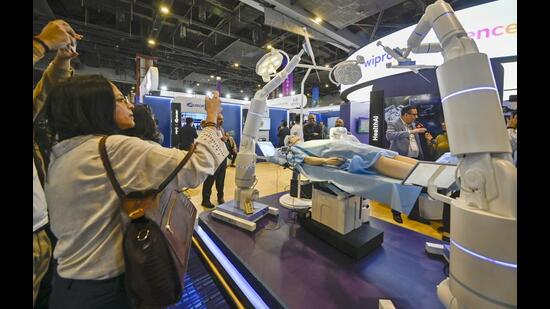
The question now is: “How much care should AI be allowed to perform?”
An expert article in JAMA predicts autonomous AI may eventually outperform doctors on some cognitive tasks. And a 2026 study published in Nature that tested an autonomous system, MIRA, with simulated electronic health records shows that across 311 cases, AI’s diagnostic accuracy was 87.8% versus 78.1% among physicians. So, there is capability, and the promise of future AI autonomy, but not significant readiness just yet.
The near-term model can be limited autonomy, within clinician-set boundaries. In 2025, the US FDA cleared UpDoc, which provides insulin-dose instructions to adults with type-2 diabetes. Clinicians set targets and limits; the system may withhold advice or direct patients to seek help. Yet, keeping a doctor in a process does not necessarily produce the best result. An analysis of 52 studies found that clinicians using AI performed seven percentage points better than clinicians alone, but fewer than half of human-AI teams beat both working separately; some did worse. A 2026 Kenyan trial found that AI improved diagnoses but did not significantly reduce treatment failure. Medicine is more than a likely diagnosis: Illnesses coexist, drugs interact, and patients value different outcomes.
There is also a bigger paradox. Dhruv Khullar asks in The New England Journal of Medicine whether AI efficiency will reduce health care workers. AI may detect more abnormalities and prompt follow-up, shortening tasks while expanding care. Ultimately, automating diagnosis cannot decide whether treatment is affordable, tolerable, or even wanted.
{{/usCountry}}There is also a bigger paradox. Dhruv Khullar asks in The New England Journal of Medicine whether AI efficiency will reduce health care workers. AI may detect more abnormalities and prompt follow-up, shortening tasks while expanding care. Ultimately, automating diagnosis cannot decide whether treatment is affordable, tolerable, or even wanted.
{{/usCountry}}What, then, are the opportunities for India? To begin with, AI in health care could explain health information in familiar languages, track glucose or blood pressure, reduce paperwork, and extend primary care where specialists are sparse. But India must avoid AI-only care for those unable to afford a doctor: WHO, too, warns against “technological solutionism”— overestimating AI at the cost of safety, efficacy and utility. Systems validated elsewhere may not fit Indian context. We need graded autonomy: Automate low-risk administration, and expand clinical tasks only after testing and audit in the Indian patient pool. This requires serious data protection and accountability.
Doctors must learn to question AI: Experienced clinicians may dismiss it, and younger ones, due to a lack of quality education and real-world exposure, may accept it uncritically. Doctors can’t compete with computers in recalling facts. Their value lies in recognising when a machine may be wrong, understanding the person behind the data, and turning information into care patients can understand, afford, and accept. AI will replace some medical tasks but it must make us define clearly the role doctors play. Better clinical decisions matter; the real question is whether patients actually do better. A technically correct recommendation must still be care appropriate for the person in front of the doctor.
Rajiva Gupta, senior consultant, internal medicine, CK Birla Hospital, Gurgaon. The views expressed are personal