When Iran closed the Strait of Hormuz in February 2026, oil and petroleum product prices responded almost immediately. Germans suddenly had to pay unprecedented prices for petrol. Indians paid more for cooking and driving as LPG and fuel prices surged. A conflict that neither of our countries is part of continues to hurt our economies.
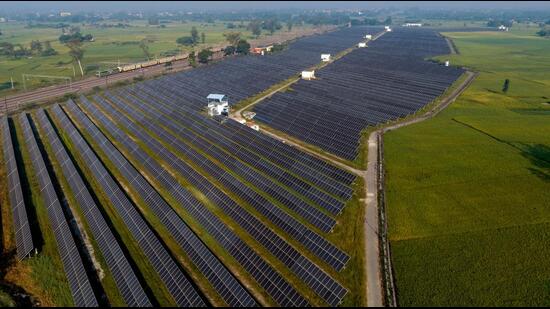
The lesson is clear: Dependencies in energy supply pose a security challenge. However, the more we harness our renewable energy potential — solar, wind, biogas, green hydrogen — at home, the less reliant we are on oil and gas shipping through maritime choke points in distant regions. In times of great power competition and the weaponisation of trade, energy transition makes our countries more resilient and secure.
By launching the Indo-German Energy Forum (IGEF) 20 years ago — almost 10 years before the Paris Climate Agreement was signed — Germany and India were ahead of their time. The aim was to reduce carbon emissions and increase energy efficiency. It was Germany’s first international renewable energy partnership.
What initially was just a government-led dialogue turned into a true success story. Over the past 20 years, India has increased its renewable energy generation capacity from less than 10 GW to more than 300 GW. IGEF’s Green Energy Corridors have strengthened India’s renewable energy grid, backed by German loans. Coal plants are operating more flexibly, working alongside renewables. IGEF also played a key role in developing the Indo-German Green Hydrogen Roadmap in 2024 to build a green hydrogen market together. Germany expects to import around 1.5-3 million tonnes of green hydrogen by 2030, a huge business opportunity for Indian companies.
Today, our joint push for a green economy within the IGEF is closely linked to our bilateral Green and Sustainable Development Partnership, launched four years ago. Within this partnership, Germany and India are pursuing development cooperation projects amounting today to 5.7 billion euros in the energy sector and 12 billion euros in total, complemented by scientific collaboration and business partnerships. India has proven to be an outstanding partner with full ownership of what we are trying to achieve together.
{{/usCountry}}Today, our joint push for a green economy within the IGEF is closely linked to our bilateral Green and Sustainable Development Partnership, launched four years ago. Within this partnership, Germany and India are pursuing development cooperation projects amounting today to 5.7 billion euros in the energy sector and 12 billion euros in total, complemented by scientific collaboration and business partnerships. India has proven to be an outstanding partner with full ownership of what we are trying to achieve together.
{{/usCountry}}Yet the most important achievement of the IGEF is the mutual trust, strong networks, and proven ability to get things done together that this energy partnership has established over time. Taking stock of our energy cooperation on the 20th anniversary of IGEF, in the wider context of celebrating 75 years of Indo-German relations this year, I am proud of our achievements.
But the most exciting chapters of our energy partnership are still ahead of us. Because when transitioning from fossil to renewable energy, we must avoid replacing old dependencies with new ones. Therefore, our ambition is to support our Indian partners in building up their own renewable energy industry and value chains of the future.
The energy transition is equally about clean energy and energy security. Germany has much to offer, from technology and engineering to investment, research and industrial expertise. Together, we have the experience, the institutions and, most importantly, the people to make this happen.
Jasper Wieck is Germany’s ambassador to India. The views are personal