The national Capital is marred annually by a persistent issue — ambient air pollution during the onset of the winter season. One of the most noticeable consequences of this problem is the widespread occurrence of respiratory problems. Schools are forced to shut their activities to reduce the exposure of children to pollution. Regular commuters in the metro and buses begin to cough, attendance falls in offices in Delhi during this period and there is, reportedly, an increase in the number of patients in hospitals and local clinics who report breathing issues. Doctors from the All India Institute of Medical Sciences have warned that children are more likely to get airway disorders like asthma and upper respiratory allergies. Even obstructive airway diseases are going to increase in adults who are exposed to air pollution for a long time. In the long run, many of them can be predisposed to diseases like lung cancer.
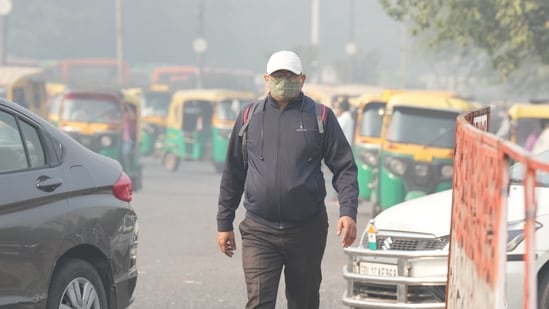
At the onset of winter, a combination of factors leads to the formation of a thick layer of smoke in the ambient air in Delhi throughout the day. The contributors to this hazardous smoke include vehicular emissions, industrial pollution, construction activities, and the burning of crop residues in nearby states, particularly Punjab and Haryana. Several customary Indian festivals take place during this period — Dussehra, Karwa Chauth, Diwali, Chhath Puja — during which firecrackers are used. All these together contribute to the poor air quality in Delhi during the season. The temperature in Delhi during this period remains around 15 to 25 degree Celsius, which is not enough to form a thick fog in the lower troposphere. However, low wind velocity and lower atmospheric mixing height over Delhi restrict the dispersion and dilution of the smoke generated from the said activities to form a dense smoke blanket over the city. To make the smoke more dangerous to human health, chemicals in this non-dispersing smoke react with one another in the atmosphere and generate more dangerous secondary chemical particles.
A 2018 study by The Energy and Resources Institute, New Delhi and Automotive Research Association of India attributed about 65% of atmospheric PM2.5 and 60% of atmospheric PM10 concentration in Delhi to sources from outside the National Capital Territory. With as many as 3,182 industries located across the Delhi-National Capital Region (NCR), industrial pollution adds about 18% to the poor air quality. Emissions in the order of 200-1000 tonnes per year are found over industrial zones next to the most used arterial roads. Compounding the situation is the federal government’s inefficient carbon tax policy. Since carbon tax is levied exclusively on coal, major industries have switched to cheaper fossil fuel-based alternatives to avoid such levies. Since last decade, post-harvest rice crop residue burning in Punjab, Haryana, and western Uttar Pradesh has been the focus of Delhi’s yearly air pollution incident. Despite spending several crores to manage the stubble, the problem continues to exist.
{{/usCountry}}A 2018 study by The Energy and Resources Institute, New Delhi and Automotive Research Association of India attributed about 65% of atmospheric PM2.5 and 60% of atmospheric PM10 concentration in Delhi to sources from outside the National Capital Territory. With as many as 3,182 industries located across the Delhi-National Capital Region (NCR), industrial pollution adds about 18% to the poor air quality. Emissions in the order of 200-1000 tonnes per year are found over industrial zones next to the most used arterial roads. Compounding the situation is the federal government’s inefficient carbon tax policy. Since carbon tax is levied exclusively on coal, major industries have switched to cheaper fossil fuel-based alternatives to avoid such levies. Since last decade, post-harvest rice crop residue burning in Punjab, Haryana, and western Uttar Pradesh has been the focus of Delhi’s yearly air pollution incident. Despite spending several crores to manage the stubble, the problem continues to exist.
{{/usCountry}}Encouraging people to use public transport is considered one of the rational steps to reduce air pollution in metropolises around the world. However, despite hosting the largest metro rail route in the country, Delhi ranks as the second worst among cities in India in terms of availability of public transport modes per lakh population (1,688.50 per lakh). Road dust and construction dust remains a primary source of atmospheric PM2.5 (17%) and PM10 (31%) in winter months. These are attributed to poor management of dust in the National Capital Territory. Both the Central and NCT governments have taken many initiatives in recent years to implement the National Clean Air Programme (NCAP) recommendations framed by research institutes across the country. The government of NCT had initiated a state-of-the-art real-time air pollution source management network (R-AASMAN) in Delhi to undertake scientific information-driven decisions. However, the current air emergency in Delhi is mostly linked to a lack of public knowledge, ineffective regional cooperation, an ineffective regulatory execution system, and, most importantly, a lack of honest political will to manage the city’s atmospheric pollution. The most regrettable aspect of this crisis is that national political parties are exploiting the annual airpocalypse only to bolster their electoral campaigns.
Some pollution reduction measures might have economic implications and face resistance from industries, businesses and Opposition parties. Striking a balance between environmental protection and economic growth is always a delicate challenge for policymakers. Addressing air quality issues in Delhi requires a comprehensive, apolitical and integrated approach that involves the active participation of various stakeholders, from the governments to the general public. The general populace learned about recent G20 events, Mission Life, and Swachh Bharat Mission through the distribution of messages in every corner of the city, through government documents and media coverage. However, for unclear reasons, the National Clean Air Programme (NCAP) has never been highlighted in public. Sustained political efforts across party lines, robust legal enforcement, honest commitment to addressing the root causes of air pollution, strict accountability across the governments and round-the-year awareness drives among the general public are essential to clean Delhi’s polluted atmosphere.
Arindam Datta is a senior fellow and Prabhat Sharma is a research associate at The Energy and Resources Institute. The views expressed are personal