
 E-Paper



In 1905 Bengal partition, the making of Bangladesh
The communal identities it created eventually culminated in the end of British rule and the partition of India in 1947

 Prefer HTon Google


The roots of Bangladesh go back in the 1905 partition of Bengal. Ostensibly an administrative measure to provide relief to an overburdened state, it laid down the footprint of a longer partition that changed the history of the subcontinent.
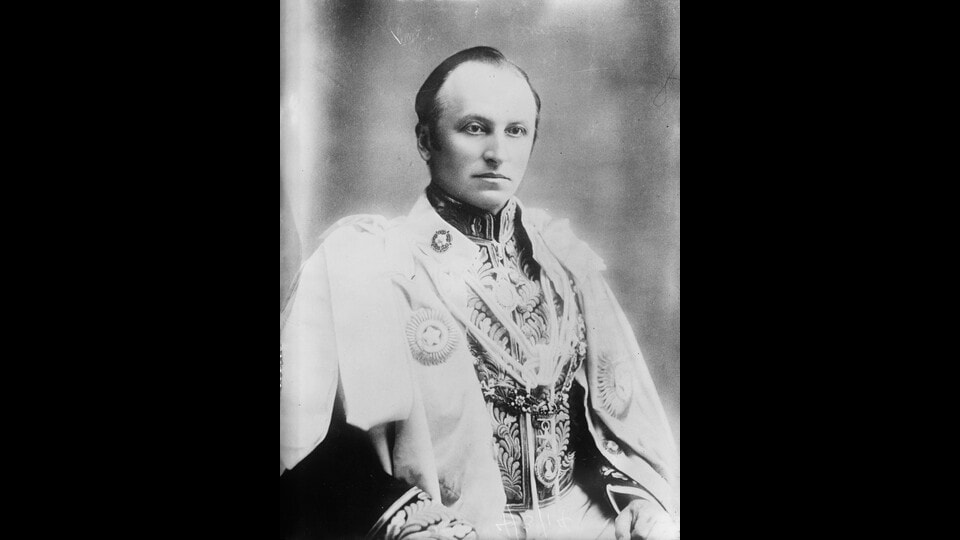
The idea of partitioning Bengal was neither new nor Lord Curzon’s idea (Viceroy of India from 1899 to 1905), as is generally believed to be. Nor was it part of a sinister plot to solidify British rule. For more than a quarter of a century before Curzon’s arrival, there prevailed a belief that Bengal was too large under a single administration. In 1874, the province of Assam was stripped off from Bengal. The idea of transferring the Chittagong Division and giving a port to the Eastern province constantly cropped up but was never implemented.
When the scheme was suggested to Curzon’s predecessor Lord Elgin, he had sat on it, preferring to let sleeping dogs lie. But the ever-energetic Curzon was quick to pick it up, debating whether he should transfer out from Bengal parts of Orissa and the Ganjam districts of Madras. To his surprise, he found that the bureaucrats in his department had diametrically opposite plans.
Theirs was to leave Orissa within Bengal but find a way to divide the province in a way that would “weaken a solid body of opponents to our rule”. The rise of the bhadralok had begun to cause apprehensions. Police commissioner Andrew Fraser reported that Dhaka and Mymensingh had become “hot beds of purely Bengali movement that was seditious in character”, and he instigated Curzon towards their amputation from Bengal.
There was widespread protest through the country that the partition was politically motivated, public opinion had not missed the contradiction of Bengal being divided while the Oriya-speaking districts were united and retained under a truncated Bengal.
While the Hindu landowners objected to this transfer, the largest Muslim landowner, the Nawab Salimullah of Dhaka, became alert to the new opportunities. In 1904, the Viceroy visited East Bengal, “ostensibly with the object of ascertaining public opinion, but really to overcome it”.
In Dhaka, the nawab laid out a red carpet. In his desire to woo Muslim support, the viceroy talked enthusiastically of how the new province with Dhaka as its capital would invest the Mohammedans of eastern Bengal with a unity, which they had not enjoyed since the days of the old Muslim viceroys and kings. Then, as a special concession to the nawab, a loan of £100,000 was offered and after that there was little difficulty in gathering a large crowd of Muslims to set the seal of approval on the viceroy‘s plan.
October 16, 1905, the day of partition, became a turning point in British India’s history. The legendary belief in the ultimate fairness of the British was shattered. People felt they had been insulted, humiliated, and tricked. In the new province of Eastern Bengal and Assam, the lieutenant governor, Bampfylde Fuller was busy igniting the fires of separatism. When Fuller declared, “I was like a man who was married to two wives, one a Hindu, the other a Mohammedan, both young and charming, but was forced into the arms of one of them by the rudeness of the other”, angry Hindu agitators threatened to tie a garland of old shoes around his neck.
The severity of the agitation aggravated the growing divide, drawing the nawab of Dhaka into cooperation with Aligarh group of Syed Ahmed Khan, who had sought a separate platform for Muslims as early as in 1869. Pakistani historian Professor S M Ikram in his book Modern Muslim India and the birth of Pakistan (1950) was prophetic when he said, “The nawab’s invitation brought the Aligarh leadership to the heart of Muslim Bengal, which marked the turning point in the history of the subcontinent. This was the genesis of Pakistan.” And, later, Bangladesh!
A year later, the Muslim League was founded in 1906 with the blessings of the new viceroy, Lord Minto, with Nawab Salimullah playing the lead role. That evening Lady Minto smugly recorded in her diary that her husband’s endorsement to the League had prevented “62 million people from joining the ranks of the seditious opposition”!
But the chain of political assassinations continued unabated. Lord Minto, like his predecessor had upheld the partition, convinced its revocation would lead to loss of prestige for the Raj. But when the revolutionaries exploded the first ingenuously produced bomb, the government recognised it as a wake-up call. The Mintos had a narrow escape when their carriage was bombed in Ahmedabad. So did the next viceroy, Lord Hardinge, when he made a state entry into Delhi in 1912.
The British were now deeply conscious of the increasing threat posed by the aggressive new militancy in the land. Finally, at the glittering Durbar of Delhi in 1911, the visiting British monarch King George V made a royal proclamation in the form of a boon. It was as to announce the reunification of Bengal but also the transference of the government of India from Calcutta to Delhi.
But the damage was done. The partition had opened a Pandora’s Box. The communal identities it created eventually culminated into the end of British rule, the partition of India in 1947, with Bengal being divided into West Bengal and East Pakistan, and finally, into Bangladesh in 1971.
Nayana Goradia is the author of Lord Curzon: The last of the British Moghuls. The views expressed are personal


