
 E-Paper



India isn’t the freeloader the US makes it out to be
The US takes India’s brightest students, trained in our best institutions that are often subsidised, charges them hefty fees, and keeps the smartest.

 Prefer HTon Google


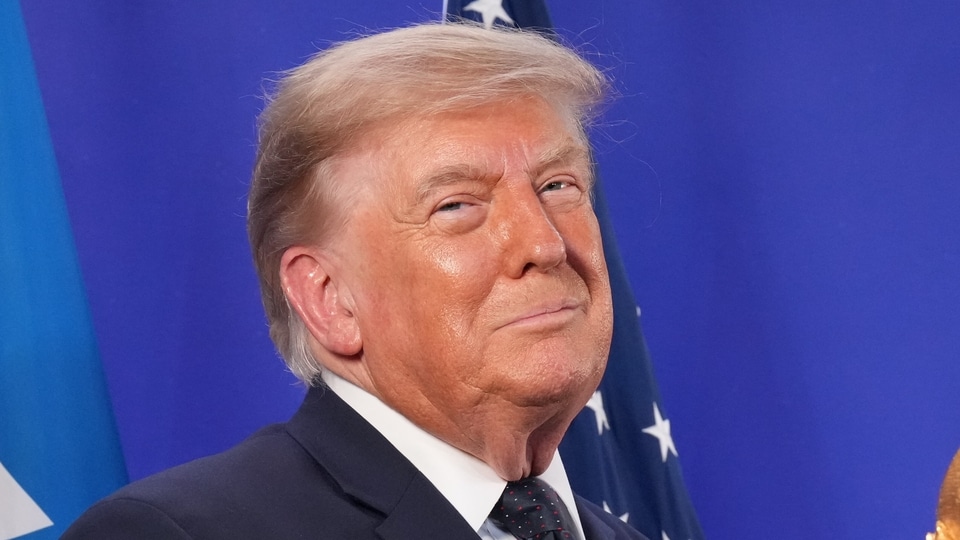
US President Donald Trump never tires of calling India the “tariff king”, a country that taxes US goods heavily, sells far more to the US than it buys, and gives little back in return. His grievances — and the tariff drama these keep feeding — have revived an old question in our own commentary: What does India really get from its relationship with the world, and what does the world, particularly the US, get from us? Much of that stays trapped in the language of trade, tariffs, and surplus.
To get the full picture, we must widen the analytical lens. Let’s first take a look at the numbers. India received around $135 billion in remittances in FY25, more than any country has ever received. But this number hides more than it reveals.
To put the India-US economic exchange in perspective, let us consider the Gulf region because it is a clear contrast to the American case. Close to nine million Indians work in the six Gulf States, remitting $51 billion a year — roughly 38% of the total we receive. What makes this arrangement uncomplicated is this: Money comes in from the Gulf, and little of that goes back, barring what Indian tourists now spend in Dubai. The Gulf offers no citizenship, no permanence, no path to settle, and the workers are expected to leave in the end, and they do. Not that this arrangement is problem-free: This is mostly blue-collar work in construction and hospitality, the first sectors that crumble when the region goes to war.
The US, at the other extreme, is a complicated bargain, even if it flatters us since Indian-origin people are doing very well there. Consider the argument that now dominates every India-US conversation: trade and tariffs. Washington complains — and it is not entirely wrong — that India taxes American goods heavily and sells America more products than it buys. In goods, we do run a surplus, of around $41 billion.
So, if you look at the balance sheet in goods trade, we get more than the US does. But to judge this relationship by that single measure is wrong. So the question is: What is US getting out of its relationship with India? The money moves both ways with the US — a surprising amount of it moves towards the US itself, not towards India.
Here’s why. More than 360,000 Indians now study in American universities — the largest single group of foreign students in that country — and their fees and living costs form a big part of a significant flow. India now ranks second in the world for total visitor spending, with Indian travellers generating $24.4 billion in the US in 2024, according to Brand USA. That number counts our tourists and our students together. Americans travel to India, too, but the roughly 1.75 million who came spent far less.
Also Read: India engages US over stricter visa rules affecting Indian students, visitors
So, who does more for whose economy? The answer is complicated. Even in services, the two are now roughly even, and America’s single-largest service sold to India is “travel”.
Actually, it gets trickier if you think about it further. The US takes the brightest of our students, trained in our best institutions that are very often subsidised by the State, charges them hefty fees, and keeps the smartest once they graduate. The visa becomes a Green Card, the Green Card a passport, and the children become Americans.
To put that in perspective, the Gulf pays us in wages and sends the worker home; America pays us in remittances, charges it back in tuition and tourism, and keeps the best of Indian minds. Does this hurt us? Yes, because as a developing country, we subsidise the institutions where our brightest study and graduate, and then we hand them over to America.
Then, there is the Indian talent that never leaves India but still works for America. India now hosts more than 1,700 global capability centres (GCCs) — over half the world’s total — employing close to two million people. Our engineers sit in Bengaluru and Hyderabad and work for companies headquartered abroad, not for Indian firms. The American investment is only a fraction of the value created/added at these GCCs. We are renting out our talent rather than putting it to work for India. The real problem is not that the US takes our best minds, but that we are not able to use them for ourselves. That, of course, is on us.
All this goes against the “one way” story now told loudly by Washington — especially by Trump and his followers — and repeated increasingly often here, that India is a taker and America merely a benefactor. The persistent deficit in goods trade is waved around as definitive proof. But that one number is insufficient to give us the full picture. We send the US our bright students and their fees, and our well-heeled tourists and the money they spend. Some of this can be counted in dollars, but the most valuable part cannot.
Also Read: US is reassessing India’s place with an eye on China
What is the price of a lifetime of a scientist’s work or the firm she will build in California rather than in Bengaluru? So, who exactly is the taker here? You might argue that Indians working in the US send remittances back home. While that is true, remittances tend to thin out over a generation, as families reunite abroad and ties to home loosen. So, India gives as much as it gets from the US perhaps more. It is time we dispelled the myth that we have been freeloading off the Americans.
Happymon Jacob is founder and director, Council for Strategic and Defense Research. and editor, INDIA’S WORLD magazine. The views expressed are personal


