As I leave India after more than two years as British high commissioner to this extraordinary country, I do so with mixed emotions. I am extremely proud of everything we have achieved but equally it is so difficult to say goodbye to a country that has welcomed me so warmly, challenged me intellectually, and left me with memories that will last a lifetime.
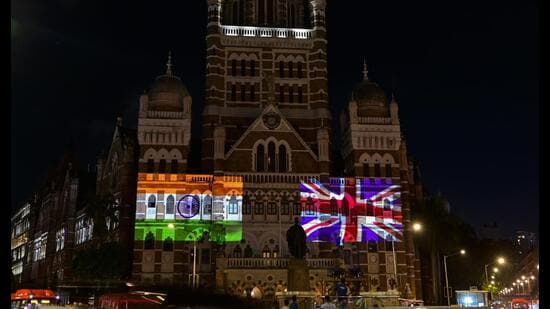
We have a lot of history, but this recent chapter has been all about looking ahead.
The signing of Vision 2035 and the entry into force of our landmark Free Trade Agreement (FTA) have signalled a new era of cooperation between two of the world’s largest and most innovative economies. More than just words on paper, these represent a shared recognition that a future facing, mutually beneficial partnership creates enormous opportunities for Indians and Brits alike.
The FTA will increase India’s and the UK’s GDP by nearly 5 billion pounds annually, and we have already seen deals worth nearly 12 billion pounds announced since it was signed last year, supporting thousands of jobs across both countries. This week, three UK Cabinet ministers, eight mayors and local government leaders from northern England, and a major delegation of over 100 British businesses, universities, investors and innovators travelled to India to deepen partnerships here and take advantage of the trade deal. Their visit is recognition that India matters to the whole of the UK.
I have heard India described as the most optimistic country in the world, and I couldn’t agree more. From major metropolitan centres to emerging regional hubs, I have witnessed the energy of a nation defining its future with confidence and ambition. Fantastic startups, world-class research institutions and an exceptionally talented young population are driving growth on a scale few countries can match.
{{/usCountry}}I have heard India described as the most optimistic country in the world, and I couldn’t agree more. From major metropolitan centres to emerging regional hubs, I have witnessed the energy of a nation defining its future with confidence and ambition. Fantastic startups, world-class research institutions and an exceptionally talented young population are driving growth on a scale few countries can match.
{{/usCountry}}I, too, am extremely optimistic about the future of India, as well as where the UK’s partnership with India is headed next. Through our Technology Security Initiative, we are working together on shaping and securing the technologies of tomorrow, including artificial intelligence and critical minerals.
In education, it’s truly been thrilling to see nine world-leading UK universities announce plans to open campuses across the country, growing opportunities and access for thousands more students and researchers. And I know, there are just as many waiting in the wings.
One of the most promising opportunities ahead, I believe, lies in defence collaboration, with Rolls-Royce announcing their intent to partner with Reliance Industries to develop indigenous combat engine for India’s Advanced Medium Combat Aircraft programme. It is a genuinely ground-breaking opportunity to bring world-leading British engine capability to India, and to move our partnership toward co-development and co-production.
What gives me greatest optimism, however, is not any single agreement or initiative. It is the spirit in which this partnership has evolved during my time here. There is genuine warmth between our governments, businesses, institutions and people. There is a shared recognition that our economies are complementary, our interests increasingly aligned and our ambitions mutually reinforcing. Most importantly, there is a belief that the best years of the UK-India story still lie ahead.
The future of this partnership, too, will not be shaped by our governments alone. It will be shaped by our people. It will be built by entrepreneurs creating new businesses, researchers developing new technologies, universities educating future leaders, and cities and regions forging closer connections with one another.
The tragic Air India crash in Ahmedabad last year brought home the deep personal connections between the UK and India. Families in both our countries mourned together, and our shared grief reflected the closeness of a relationship built on people, family and friendship. This was a tragedy that touched both the UK and India profoundly. In grief, as in so many other moments, our countries stood together in support of the families and loved ones affected.
I leave immensely grateful for the friendships I have received in India, the journeys I’ve made across the breadth of this beautiful country, and the lessons I have learned along the way. India is truly amazing and there’s no doubt loads more to understand, but I leave knowing that the relationship between our countries has never been more confident, more ambitious or more future-focussed.
India will remain central to the UK’s economic and strategic future. Equally, the UK is determined to be a trusted, long-term partner in India’s continued success. Much like the rest of the world, the UK has a massive interest in India being the biggest, best version of itself, and of being part of that journey.
As I bid goodbye, I am sad to leave but excited about the next chapter. I leave convinced of two things: I’ll most certainly be back. And that the next chapter in the UK-India partnership will be even more significant than the one we have just begun to write. Because the opportunities ahead are truly immense.
Lindy Cameron is British high commissioner to India. The views expressed are personal