A striking feature of global surveys on democracy is the disconnect between how democracy is viewed in theory and in practice. In its 2023 survey of 24 countries, Pew found that the median share of respondents who considered representative democracy to be a “good system” was 77%, while the median share dissatisfied with the way it was functioning was 59%.
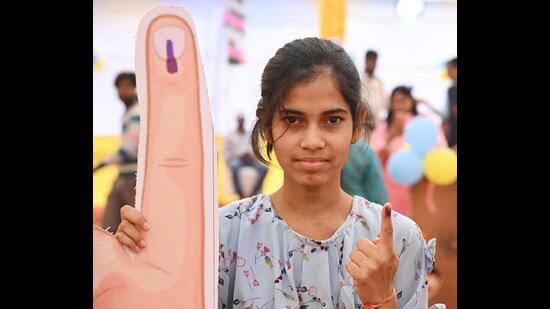
India has bucked this trend. In Pew’s 2025 survey, 74% of Indian respondents said they were satisfied with how democracy was working — the second-highest share among the countries surveyed. But this is not how “experts” consulted by organisations like V-Dem and Freedom House see it. Citing concerns about press freedom, the treatment of Opposition figures, and the independence of investigative agencies, they argue that an excessive concentration of power has transformed Indian democracy into an “electoral autocracy”. The discrepancy between the views of ordinary citizens and those of experts offers a useful illustration of why people disagree so sharply about democracy in practice.
This disagreement can be traced to four paradoxes in democracy. The first concerns mandates. Citizens must rely on some method to make collective decisions. Since democracy assumes that individuals are equal, this method usually takes the form of voting in elections. This entitles the winner of an election to say that they have a mandate to govern. But no selection procedure is beyond question. For instance, money may give a party an unfair advantage over its rivals. Consequently, when individuals and groups dislike a policy that is being enacted by an elected government, they can question whether it “truly” embodies the will of the people. Meanwhile, elected officials take the opposite view — that the mandate they have been given is being “sabotaged” by those who have lost the election, or worse still, by unelected bodies beholden to private or sectional interests.
The second paradox concerns authority. Because unrestricted authority can lead to the abuse of power, democratic governments are subject to checks and balances.
{{/usCountry}}The second paradox concerns authority. Because unrestricted authority can lead to the abuse of power, democratic governments are subject to checks and balances.
{{/usCountry}}The idea is to compel even a government elected by a sizeable majority to slow down and build broad consensus. But this arrangement generates a dilemma. A government that fails to deliver what most voters want runs the risk of losing their support. Seeking to satisfy them, it will press against the limits of its authority, leading to accusations of overreach. The end result is disenchantment — either of the majority, if the government dithers, or the minority, if it acts decisively.
A third paradox relates to institutions. In the modern era, governance is conducted through a range of independent institutions. These institutions, such as universities, central banks, and regulators, are granted autonomy to insulate them from political interference. However, because they are staffed by people with ideas and interests of their own, their impartiality cannot be taken for granted. They are, therefore, subject to political oversight by elected officials. Consider what happens when a university offers a class on a topic, such as the “occupation” of Kashmir, that most of the electorate considers wildly improper. Elected officials may demand investigations to rule out “systemic bias” or insist upon a change of personnel to secure suitably “diverse perspectives”. They will see this as holding institutions accountable; their opponents will see it as undermining institutional autonomy.
Conversely, should the university agree to incorporate the alternative perspective held by the majority, the government’s opponents will complain that it is being “politicised”. The problem, in short, is that when divisions are acute, whatever an institution does, one side will complain that it has been captured.
The fourth paradox concerns competence. A premise of democracy is that every individual deserves an equal vote because they have equal worth. Yet, because false or misleading information can prevent individuals from discerning and defending their interests, democracy requires public debate and discussion. But once we accept that individuals can be misinformed, then we open the door to doubting one another’s competence. When a person who votes for the NDA is described as a bhakt, the implication is that they are incapable of reason. If such a person must be “re-educated” to become tolerable, then we are in the province of revolution.
To summarise: Democracy uses elections to confer mandates but allows doubt about whether they are genuine; it grants a majority the right to rule but limits the power it may exercise; it insulates institutions from political interference but asks that they be accountable; it views citizens as judges but permits questions about whether they are competent. Together, these paradoxes create a grave dilemma: Democracy promises responsiveness and restraint, but it cannot always provide one without compromising the other.
This leaves democracy vulnerable to breaking down. The majority asks what the point of democracy is when its representatives cannot rule; the minority asks what the point of democracy is when its complaints go unheard. Each side questions the competence of the other and fears that their opponents will seize control of public institutions.
This destructive tendency can only be restrained by a sense of decorum — a reluctance to push claims too far. It is easier to maintain such modesty when disputes are over the distribution of material benefits. When we are debating who gets what, it is possible to compromise or take turns. But the prospects of maintaining such decorum fade when disputes arise over matters — such as enacting a uniform civil code — where only one side can have its way. When the persistence of the majority or the obstructiveness of the minority exhausts patience, a trial of strength looms. It is this foreboding — that one is never far from open conflict — that makes democracy less pleasant in practice than in theory.
These paradoxes help explain the marked discrepancy between the views of ordinary citizens and those of experts when it comes to democracy in India. Citizens vote in the expectation that their representatives will make good their promises. When their representatives do the needful — for instance, by abrogating Article 370 — supporters see the fulfilment of a commitment, while critics see an abuse of power.
Thus what appears a quintessentially democratic act to one side appears wholly undemocratic to the other. The difference boils down to what each side expects democracy to do. To the expert, democracy is more than a means of selecting rulers or resolving disagreements; it is also a means of managing power. The idea is that the government must accommodate competing interests and respect institutional autonomy.
But, in a deeply polarised society, these requirements can appear to the governing majority as a demand for ineffectuality — as giving the minority a constant veto over the majority. And so, a government that wants tobe responsive will emphasise its mandate, while the expert will emphasise the restraints on its freedom. Neither sees the other as standing up for democracy.
Rahul Sagar is a Global Network professor at NYU Abu Dhabi. His latest book is The Birth of Indian Liberalism. The views expressed are personal