On a pleasant September morning in 1982, as I was returning home in Allahabad (now Prayagraj), I noticed a posse of Provincial Armed Constabulary (PAC) and local police standing guard in George Town. Recognising the officer in charge, I inquired about the sudden deployment. He replied, “Don’t you know? The Prime Minister is coming.”
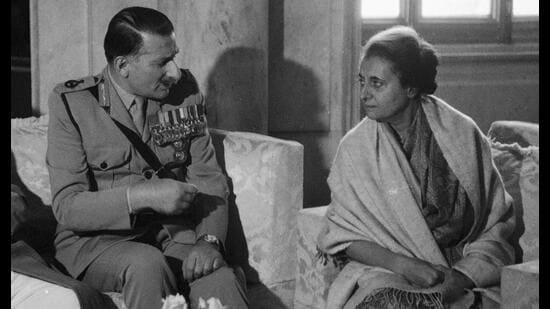
Prime Minister (PM) Indira Gandhi visiting Allahabad, unannounced? What was the purpose of this sudden visit?
Across the road I could see the bungalow of Raj Dulari Nehru, wife of Shridhara Nehru, a prominent Indian Civil Service (ICS) officer and first cousin to Jawaharlal Nehru. He was also India’s first High Commissioner to Britain. Given the close kinship, the PM visiting her aunt was, by no means, unprecedented. Still, the flurry of activities left me with questions, considering the PM had to leave for an important trip to the Soviet Union within a couple of days.
Upon asking a senior administrative official at the scene, I was told that Raj Dulari Nehru was indisposed, prompting the PM to visit her before the Soviet trip. The explanation rang hollow, but it was hardly the time for an elaborate cross-examination. Soon enough, two fellow journalists arrived. They were passing by and were unaware of the PM’s visit.
The PM’s motorcade arrived, accompanied by then Uttar Pradesh chief minister, Sripati Mishra, and his minister Vishwanath Pratap Singh. While the PM remained indoors for an extended period, a visibly anxious Mishra paced up and down the veranda. We repeatedly called out to him to draw his attention. He finally approached us, visibly displeased and asked us why we were making a ruckus. I urged him that the three of us were journalists seeking an audience with the PM. He walked away.
{{/usCountry}}The PM’s motorcade arrived, accompanied by then Uttar Pradesh chief minister, Sripati Mishra, and his minister Vishwanath Pratap Singh. While the PM remained indoors for an extended period, a visibly anxious Mishra paced up and down the veranda. We repeatedly called out to him to draw his attention. He finally approached us, visibly displeased and asked us why we were making a ruckus. I urged him that the three of us were journalists seeking an audience with the PM. He walked away.
{{/usCountry}}When Gandhi emerged a short while later, an aide whispered in her ear, and she turned towards us and gestured for us to approach. The three of us walked to her.
She attributed her sudden visit to the floods in the State. After a three-minute interaction, she turned towards me and asked, “Are you really a journalist? You look like a college student.”
I was quick to present my credentials. She smiled, patted my shoulder gently, and remarked, “If you are a journalist, read a bit. Panditji and PD used to be journalists in this very city. She was, of course, talking about her father Jawaharlal Nehru and his friend-turned-rival PD Tandon. With those parting words, she stepped into her car and drove off.
On the eve of her 42nd death anniversary, I would like to examine Indira Gandhi’s political legacy with the benefit of hindsight.
She had been PM for close to 14 years when we unexpectedly met. During this period, she had declared the Emergency, suffered a crushing electoral defeat, and fought political isolation. The Janata Party administration committed a fatal political blunder by detaining her in Delhi’s Tihar Jail in late 1978. The day she was released, her return to power became inevitable.
In the 1980 Lok Sabha elections, the Congress (I) came back to power with 353 seats, granting her a decisive mandate for her third term. To her fans, she was an embodiment of Durga, and to her critics, she remained an unabashed dictator.
Those who called her Iron Lady would point to her decisive leadership during the 1971 war, the creation of Bangladesh, the integration of Sikkim into the Indian Union, the spread of the Green Revolution, and her willingness to lock horns with the US President Richard Nixon and create diplomatic elbow room for India with an astute alignment with the Soviet Union. She remains the only PM under whose watch the geopolitical map of the subcontinent was redrawn twice.
Yet, that’s only one side of her ledger. She repeatedly weakened democratic norms, dismissing nine state governments and forcing out Opposition-appointed governors. Her tenure witnessed unprecedented internal fractures within the Congress party, institutionalising a culture of centralisation at the expense of regional leadership.
The Punjab problem escalated under her watch, ending with the deployment of forces inside the Golden Temple. This ill-fated decision led to her assassination on October 31, 1984. Meanwhile, ethnic fires raged across Assam and the entire North-East. Though the Kashmir insurgency was still some years away, she, despite her Kashmiri roots, failed to forge a lasting framework to stem the rising tide of separatism in the valley.
Regardless of how history assesses her domestic record, Indira Gandhi’s legacy of strategic assertiveness in Indian statecraft is undeniable. She had left an indelible mark on the face of time.
Shashi Shekhar is editor-in-chief, Hindustan. The views expressed are personal