Recent debates around the working and functioning of the Election Commission of India (ECI) have once again stirred a debate around the role of autonomous bodies as elements of constitutional governance. Often, however, this debate suffers from a lack of clarity as its terms are loosely defined.
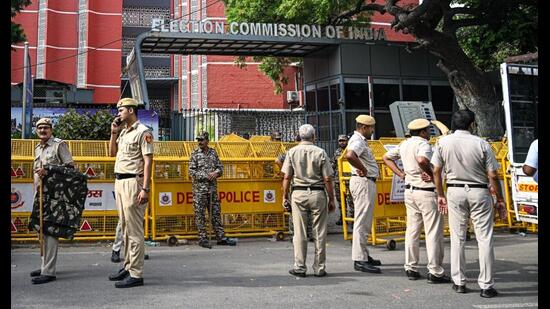
The modern regulatory and administrative State performs a vast range of functions, which are carried out through a number of bodies. Some of these are of a specialised and technical nature, such as the Securities and Exchange Board of India (SEBI). Others, such as the ECI — the subject of ongoing controversy — have the task of actualising democratic processes. And then there are bodies that fit uneasily between these two kinds, such as the Reserve Bank of India (RBI).
The relationship that these bodies have to the elected government — or the political executive — remains the primary subject of debate. Consider, for example, RBI. The status of RBI came under sharp scrutiny during the demonetisation exercise of 2016. The central bank was accused of having rubber-stamped the government’s decision to demonetise the currency without any independent application of mind.
Underlying this argument, however, was the assumption that a country’s central bank should — in some sense — be independent of the government when it comes to questions of policy within its regulatory remit.
{{/usCountry}}Underlying this argument, however, was the assumption that a country’s central bank should — in some sense — be independent of the government when it comes to questions of policy within its regulatory remit.
{{/usCountry}}As scholars such as Canadian historian Quinn Slobodian note, the independence of central banks has long been an essential element of modern neoliberal dogma, according to which certain decisions about the economy should be insulated and separated from democratic contestation.
While this argument is treated as self-evident, it is by no means clear that it is indeed self-evident, as it rests upon what is often argued to be an artificial separation between the economic and the political. At the same time, however, direct executive control over the central bank appears to throw up problems of its own, especially in a polity such as India’s, where Parliament has long been subordinated to the political executive.
This dilemma was evident in the judgment of the Supreme Court that — six years after the fact — upheld demonetisation. The Court went back and forth on central bank independence, claiming to endorse it as a principle, but simultaneously undermining it by also endorsing a vague doctrine of consultation between the central bank and the government. This led to an incoherent approach, which this author has previously called Schrodinger’s independence.
The dissenting opinion of Justice Nagarathna was, at least, consistent in endorsing the principle of independence, and then applying it to the facts to hold that independence had been violated.
The story of demonetisation and RBI suggests that the starting point of the debate needs to be about the relationship between a so-called autonomous body and the larger democratic context in which it operates, which — in turn — should inform the nature, scope, and degree of “autonomy” that the body should enjoy.
If we think, for example, that decisions about the economy are not merely technocratic in nature, but should be subject to democratic oversight, then the central bank ought not to be made independent of representative organs, but — in some way — accountable to the larger polity. What form this accountability may take is a different question.
Similarly, when we think of ECI, there are calls to turn the body into a purely technocratic commission, shorn of political commission. This would make sense if we think of elections purely as matters of administration.
However, if we think of elections as expressions of democratic will, then the regulatory body should also be structured in a way that renders it impartial but accountable (for reasons cited here, the simple remedy of having its actions scrutinised by Parliament would not suffice).
So, this may take the form, for example, of a multi-partisan structure instead of a non-partisan one, where all major contesting parties have an equal say in how the commission is appointed (a model followed in several countries).
The point about citing the examples of RBI and ECI is to warn that the rhetoric of autonomy and independence can easily slip into a call for technocratic bodies where all that matters is instrumental expertise.
In other words, what is needed is a form of functioning that is free of executive control, but nonetheless answerable and responsive to democratic oversight.
Models of independence and accountability, therefore, must take these principles into account, and steer between the Scylla of executive dominance and the Charybdis of an autonomy that ossifies into an end in itself, rather than as a means to deepening democracy.
Gautam Bhatia, a Delhi-based advocate, is the author of Offend, Shock or Disturb: Free Speech Under the Indian Constitution. The views expressed are personal