For a fortnight now, the gangrape-cum-murder of a Class 10 girl in in Shimla has caused an unprecedented turmoil among the peace-loving Paharis. But the “conscious-keepers” in Delhi have been unmoved by the sheer brutality of the crime and the shoddy investigation that followed. The silence of the activists and the political class is all the more glaring given the Congress-led government’s inept handling of the case and a huge social media uproar against the botched probe.
According to police, 16-year-old Gudiya (the name given to the victim by locals) was allegedly waylaid by six people while she was returning home from school. They injected the girl with intoxicants before taking turns to rape her, strangling her at the same time. The marks on her body bear witness to the fact that she was bitten savagely by her captors. Then the six dragged her body away from the road and dumped it in a forested area near her home at Kotkhai tehsil’s Halaila village. When Gudiya’s body was finally discovered on July 6, two days after she went missing, it was crawling with maggots.
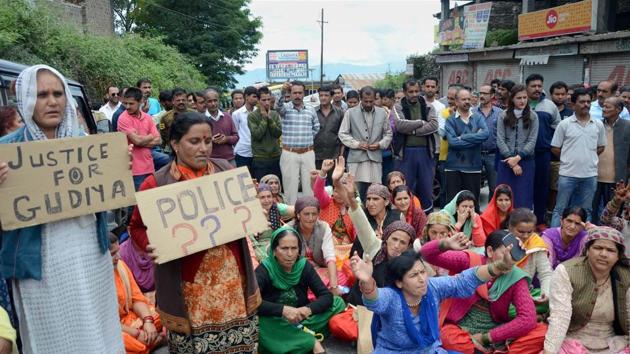
The police, as usual, were slow to react. It was only when pictures of the girl’s naked body, her legs horribly twisted, went viral that the government began taking the case seriously. Public anger swept through Shimla, and people from all walks of life – students, housewives and commoners – took out candlelight marches to demand swift action against the guilty.
A special investigation team was constituted under inspector general of police Zahur Zaidi, who “cracked” the case nine days later with the arrest of six people – including Ashish Chauhan, an engineering graduate, and 32-year-old Rajendra Singh, a local resident. The other accused were non-Himachalis, and strangely enough, they hadn’t fled after allegedly committing the crime.
{{/usCountry}}A special investigation team was constituted under inspector general of police Zahur Zaidi, who “cracked” the case nine days later with the arrest of six people – including Ashish Chauhan, an engineering graduate, and 32-year-old Rajendra Singh, a local resident. The other accused were non-Himachalis, and strangely enough, they hadn’t fled after allegedly committing the crime.
{{/usCountry}}Zaidi’s version of the crime further infuriated the people, who alleged that the six were framed by police to protect rich and influential locals closely linked to the ruling dispensation. Chief minister Virbhadra Singh initially resisted calls for a CBI investigation, stating that the police probe was fair, but buckled when an unruly crowd burnt police vans and blocked highways last week.
The crisis reached a tipping point on Wednesday, when Suraj Singh – a Nepalese national accused in the case – was reportedly strangled by another suspect, 32-year-old Rajender Singh, at the Kotkhai police station. What happened at the police station remains a mystery because the two were housed in adjacent cells with minimal security.
While 83-year-old Virbhadra blamed the BJP for causing the unrest, he failed to read the sentiments of a population that has traditionally supported him in electoral contests. The Opposition party, for its part, accused the chief minister of camping in Delhi to deal with corruption cases against him while Shimla simmered with anger.
Making things worse on the social media as well as the streets was Virbhadra’s apparent disinterest in the worst crime to be reported from the hills in a long time. He has not visited the victim’s family yet.
Another factor that has angered most Himachalis is the failure of liberal voices in Delhi to take note of Gudiya’s rape-cum-murder despite all the online campaigns and petitions. They believe this crime was no less brutal than the 2012 Delhi gang rape case, and the only reason for the lack of outrage among liberals was Himachal Pradesh accounting for just four Lok Sabha seats – making it less politically significant than other states like West Bengal, Uttar Pradesh and Bihar.