
 E-Paper



Stakes are high for India if Iran, US sign nuclear pact
Although its precise terms are yet to be unveiled, the revival of the nuclear deal would have profound implications — particularly on nuclear non-proliferation, gulf geopolitics and the global oil and gas market.

 Prefer HTon Google


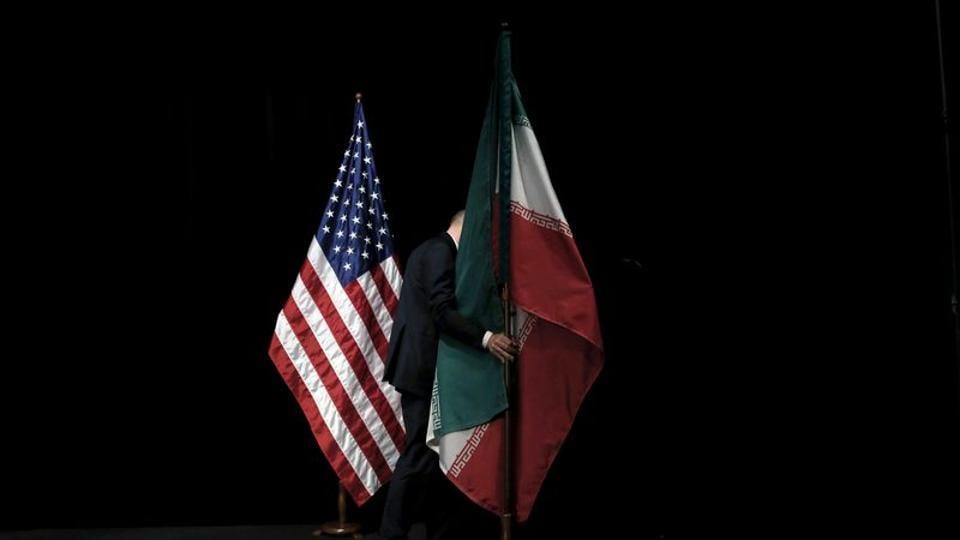
After 16 months of arduous and noisy negotiations, the United States (US) and Iran this week exchanged their responses to the European Union’s “final draft” for the revival of the Joint Comprehensive Plan of Action (JCPOA, or the Iran Nuclear Deal). The other six signatories have already approved the text. The observers are encouraged by the two negotiating sides eschewing the mutual blame game this time, taking this as a sign that the final deal is well within reach.
To recapitulate, Iran has single-mindedly and furtively pursued a vertically integrated nuclear programme, creating extensive nuclear infrastructure involving reactors and uranium enrichment facilities. Although Tehran denies any nuclear weapon ambitions, its many detractors suspect its intentions. These fears are also fanned by the Iranian Shia theocracy’s assertiveness, threats to obliterate Israel, support to the proxy militias abroad and the development of extensive missile and drone capabilities.
The JCPOA was originally put in place in 2015 to ensure that Iran’s nuclear programme is confined to its avowed peaceful intentions under the International Atomic Energy Agency’s supervision. In return, the US and the Western countries agreed to lift the economic sanctions and assets freeze which had impeded Iran.
However, in 2018, the US under President Donald Trump walked out of the JCPOA and imposed “maximum pressure” on Iran through extensive economic sanctions, crippling the country’s economy. On his assumption in January 2021, President Joe Biden called for the US to rejoin the JCPOA, but these negotiations got embroiled in severe complications and even got suspended before their recent revival.
Although its precise terms are yet to be unveiled, the revival of the nuclear deal would have profound implications — particularly on nuclear non-proliferation, gulf geopolitics and the global oil and gas market.
First, lifting most if not all economic sanctions would facilitate Iran’s economic reintegration with the global mainstream. An immediate impact would be near doubling its oil exports to 2.5 mbpd – stabilising the global market and easing the price pressure. The cooling oil prices would also help the US and the European governments, many of whom are teetering at the precipice of stagflation as they brace for a winter of discontent with energy shortages exacerbating record inflation.
Iran, with an 84 million population and nominal Gross Domestic Product estimated at $200 billion, is a fairly large country. With the release of the frozen funds, estimated at $60 billion, Iran would be in the market for fulfilling nearly 45 years of pent-up demand for infrastructure, fast moving consumer goods, technology, services, etc. It could become an attractive economic destination, provided politics does not play spoilsport.
Domestically, the hardliners in both Iran and the US are certain to see the JCPOA-2 as a nuclear sell-out. Although Iran has had to give up several of its demands, its hardline rulers are likely to project the deal as a triumph of their “uncompromising” policies. In the US, the Republicans, led by resurgent Trump, are opposing it, putting President Biden and his Democratic party on the defensive in the run-up to the Congressional mid-term elections in November. If Trump is re-elected in 2024, he may turn the policy 180 degrees to quit the JCPOA-2 and reimpose the sanctions. Israelis, many of whom regard nuclear Iran to be “an existential threat”, also go to the polls on November 1.
The JCPOA-2 could disrupt the recent evolution of West Asian geopolitics. In their Pavlovian response, the regional Iran-agnostic powers, particularly Israel, perceive the deal as the gullible westerners being duped by the fabled Persian guile and doubletalk. Although some Gulf Arabs may seek accommodation with rising Iran, the majority are likely to feel betrayed by the “unreliable” US and look for other foreign powers as substitutes. If Iran persists with its regional policies of supporting the militias, it may accelerate the regional polarisation against a resurgent Iran. Their loss of oil and gas revenues as Iran, traditionally the second largest producer in OPEC (Organization of Petroleum Exporting Countries), resumes its place is likely to add to their angst.
What does this emerging scenario presage for India? As Iran’s neighbour and the world’s third-largest crude importer, India has big stakes. On balance, we would be a marginal beneficiary of the JCPOA-2, mainly from more moderate oil and gas prices. As India remained on the sidelines of the JCPOA saga, largely complied with the US sanctions, is perceived as an ally of the pro-US concert of the regional powers and participated in the I2U2 outfit, we do not hold any significant IOUs vis a vis Iran.
We have belatedly woken up to revive the Chabahar port project with a ministerial visit to Iran last week, shifting its focus from connecting Afghanistan to the International North-South Transport Corridor with Russia. There has been no bilateral VVIP visit exchanged since 2018 and the bilateral trade was only $1.9 billion in 20221-22, nearly a ninth of $17 billion in 2018-19 when we were Iran’s second-largest trading partner. Iran was then our second largest crude supplier and the largest market for our rice.
From this low, we have only upward to go. The speed of our recovery would require deft economic diplomacy: We need to preserve the recent gains in our ties with the Gulf Cooperation Council states while undertaking Iran-specific initiatives leveraging our proximity, large market and mutual economic complementarity.
We could begin by holding a joint commission session on ways to implement such ideas as integrating our hydrocarbon economies, creating more robust bilateral financial and logistical architecture and negotiating a Comprehensive Economic Partnership Agreement.
Mahesh Sachdev is a former diplomat
The views expressed are personal


