India is already considered a low middle-income country and, given its economic growth momentum, over the next decade it will cross over squarely into upper middle-income territory. And, even beyond the numbers, there are several sectors such as airlines, airports, hotels, telecom, and the space programme, where this progress is visibly apparent. That we in India have been able to make this progress in the 70 years since gaining our Independence, while preserving our core democratic values and identity, is a tribute to our leadership and our peoples. This needs to be celebrated. However, despite all this progress and the vast resources at our command, considerable challenges remain ahead of us.
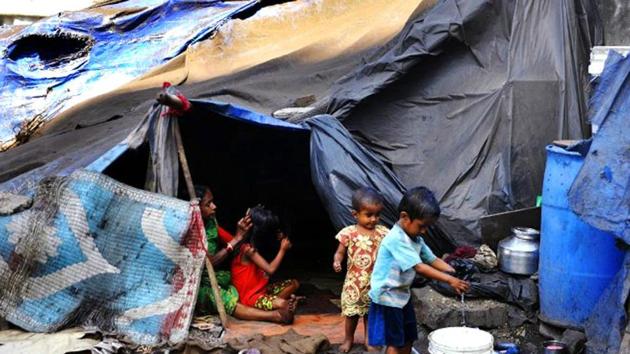
Due to our sustained efforts as a country life expectancy has doubled from just 35 years in 1950 to almost 70 years today, and over the last two decades alone, infant deaths have halved. However, our health system returns about 5% of our population or 60 million people to poverty each year. Of the 25 million children who are born each year, about half will not achieve their full potential height and mental capacity because of poor nutrition. And, tragically, close to one million will not even live beyond their first birthday. Because of the Swachh Bharat Abhiyan and other efforts, millions of our people now have access to toilets. Unfortunately, about 75% of the sludge from them still flows into our rivers, untreated.
Because of our sustained rates of growth, we have emerged as one of the world’s largest economies, and have sharply reduced the numbers of people living in abject poverty. However, over 90% of our population continues to be at levels of income that would globally be regarded as low-income. Developing economies like ours need an adequate depth and spread of financial access to fully realise their growth potential. As a result of our financial sector reforms and rapid technological progress, we now have a very modern financial system. However, against a requirement of 150% to 200% of Credit-to-GDP, we have remained at close to 60% as a country, with large regions having numbers which are as low as 10%, acting as perhaps the most important constraint on their growth and development.
{{/usCountry}}Because of our sustained rates of growth, we have emerged as one of the world’s largest economies, and have sharply reduced the numbers of people living in abject poverty. However, over 90% of our population continues to be at levels of income that would globally be regarded as low-income. Developing economies like ours need an adequate depth and spread of financial access to fully realise their growth potential. As a result of our financial sector reforms and rapid technological progress, we now have a very modern financial system. However, against a requirement of 150% to 200% of Credit-to-GDP, we have remained at close to 60% as a country, with large regions having numbers which are as low as 10%, acting as perhaps the most important constraint on their growth and development.
{{/usCountry}}It is clear that unless these and other similar issues facing us are addressed urgently and fully, we will not be able to realise our complete potential as a country. Our policymakers are well aware of this and have developed and implemented several durable solutions to address them. However, these are complex challenges, and given all the constraints that we have as a country, it becomes imperative for us to constantly look for newer ways in which they can be addressed to improve people lives, and stimulate equitable progress, by combining transformative approaches with incremental ones.
In these columns, an attempt will be made to curate and share the best ideas in these fields which have the ability to be pivots around which big changes can happen. Ideas included in these columns will be chosen for current and future applicability to environments such as ours and the goal will be to inform, start a debate, and spark meaningful conversations. These ideas will sought to be drawn from the physical sciences and technology when looking at a range of issues such as the role of gut-bacteria in the development of infants to drone-based spectroscopic soil mapping for farmlands; from economics and systems design thinking for issues such as health financing and design of health systems, and inequality and economic growth; and from fields such as anthropology and psychology for issues such as the development of new rituals and mechanisms by nurses in order to persuade mothers to breastfeed their babies.
Unlike many other countries, we in India are fortunate that we have the required intellectual capital and implementation capabilities to adopt and deliver on the solutions to address these problems effectively. Therefore, while it is indeed true that our decision makers and citizens face many constraints, there are no fundamental reasons why the goals we have set for ourselves as a country cannot be achieved. The path forward, however, will need to combine all of our accumulated wisdom of the past with these and other pivotal ideas for the future, if we are to get to them.
Nachiket Mor is India Country Director, Bill & Melinda Gates Foundation
The views expressed are personal