Sometimes, more interesting than actual history is what you could call “what if” history. It’s often referred to as counterfactual story-telling. A delightful book I have just read situates itself somewhere between a what-if account and a realisation that it almost did happen. In fact, it seems the cast of characters involved — the dramatis personae, you could call them — wanted it to happen. But it did not.
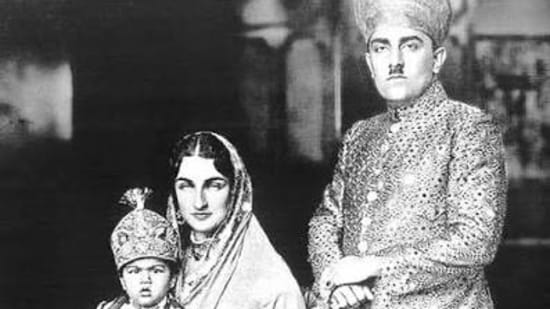
I am referring to the little known fact that in the 1930s, after the Turkish government abolished the caliphate, serious efforts were made to pass it onto the family of the Nizam of Hyderabad. Had that happened the centuries old caliphate, that stretched back 1300 years, could have become an Indian institution.
This amazing story is the riveting subject Imran Mulla describes in his book, The Indian Caliphate: Exiled Ottomans and the Billionaire Prince. Let me offer you a brief, edited account.
Also Read | Footwear as footnotes of India’s history and present
Let’s start with Shaukat Ali of the Ali brothers and the Khilafat Movement of the 1920s. When he became aware that the last Caliph, Abdulmejid, was living in impecunious exile on the French Riviera, he persuaded the seventh Nizam of Hyderabad, Mir Osman Ali Khan, to support him. Not much later he arranged a marital union between the Ottoman and Asaf Jah families. The Nizam’s eldest grandson and, later, heir, Mir Himayat Ali Khan — better known as Prince Azam Jah — was chosen to marry the last Caliph’s daughter, Princess Durrushehvar. The Hyderabadi groom was 24. The Turkish bride 18. At the same time, Azam Jah’s younger brother, Mir Shujaat Ali Khan — known as Prince Moazzam Jah — was betrothed to a junior Turkish princess, Niloufer.
“The joint wedding ceremony was held at the Palais Carabacel on 12 November (1931)”, Mulla writes. “Both princes wore richly-embroidered robes of Indian cloth, with turbans on their heads and garlands of flowers hung around their necks in the normal Indian way … Locals practically besieged the Palais Carabacel, fascinated by the prospect of an exotic Islamic wedding. Azam and Moazzam Jah drove from the Negresco (their hotel) to the villa, each in their own convertible Mercedes — both cars yellow, Hyderabad’s princely colour, and covered in flowers. Large hooters were placed on the front of each and hooted all the way to the villa.”
{{/usCountry}}“The joint wedding ceremony was held at the Palais Carabacel on 12 November (1931)”, Mulla writes. “Both princes wore richly-embroidered robes of Indian cloth, with turbans on their heads and garlands of flowers hung around their necks in the normal Indian way … Locals practically besieged the Palais Carabacel, fascinated by the prospect of an exotic Islamic wedding. Azam and Moazzam Jah drove from the Negresco (their hotel) to the villa, each in their own convertible Mercedes — both cars yellow, Hyderabad’s princely colour, and covered in flowers. Large hooters were placed on the front of each and hooted all the way to the villa.”
{{/usCountry}}The wedding was a small affair, Mulla says, and Abdulmejid, the Caliph, personally conducted it. Negotiations over the financial settlement continued through the ceremony. “Hyderabad’s two princes knelt for more than 30 minutes before propped up pictures of their brides. Eventually, the contract was signed. With aching knees, they rose at last. The brides donned their veils and there were several rounds of photos”. Afterwards, there was a small tea party.
Also Read | Review: Who Owns the Past? by Shaan Kashyap
Now this was a time when Abdulmejid was desperate to secure the continuation of the caliphate. There were many who wanted the title, including King Fuad of Egypt. But it seems the wily Shaukat Ali persuaded Abdulmejid to bestow it upon the eldest male child born of the union of Azam Jah and Durrushehvar, that is to say, his grandson. Abdulmejid, Mulla suggests, was rather enamoured of the idea. Its appeal was significantly enhanced by the Nizam’s legendary fortune. The impoverished caliphate needed money. It was skint!
Mulla writes of an alleged deed between the two houses to seal the arrangement, but gamely admits it was inauthentic. However, he argues both wanted the outcome it intended. It would not only have united the Ottoman and Asaf Jah families in the history and tradition of the caliphate, but it would also have rooted the institution in Indian soil and given an unprecedented importance to Indian Islam. But it was not to be. The British were not in favour.
However, proof of this tale is that in Khuldabad, which used to be part of old Hyderabad, Mir Osman Ali Khan, who was still Nizam when Abdulmejid died, built an Ottoman-style mausoleum to house the last Caliph’s mortal remains. He wanted to be buried in India. But that too was not to be.
Karan Thapar is the author of Devil’s Advocate: The Untold Story. The views expressed are personal