
 E-Paper



View: Why do the US agencies handle terrorist Pannun with kid gloves
A section of the Indian national security apparatus believes that west is playing Khalistani card to pressurise India now that Kashmir card is no longer tenable

 Prefer HTon Google


India designated terrorist G S Pannun and his proscribed SFJ organization are scheduled to hold a so-called referendum for the first time in San Francisco on January 28.
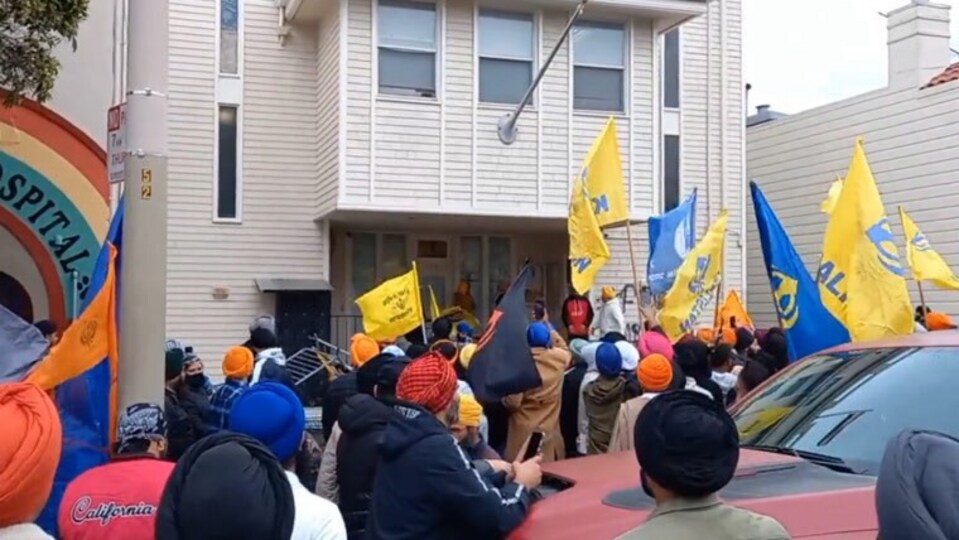
After two such exercises in Canada, this is the first so-called referendum in the US with radical Sikhs trying to project religious discrimination towards their community in India.
Apart from this, the so-called Khalistani Sikhs will also do their usual protest outside Indian diplomatic missions in Canada on January 26.
While first the Canadian government and then the US Department of Justice has accused India of carrying out black operations against what they call disgruntled Sikh activists, the larger question is why the law enforcement and intelligence agencies of these two countries are looking the other way to defacing of Indian temples in these two countries by Khalistanis instigated by likes of Pannun.
Why are the two countries allowing insurrection and religious radicalization under the garb of right to dissent?
Although the motive of Justin Trudeau government is purely political and designed to appease his Sikh vote bank, the inaction on part of US federal law enforcement and intelligence agencies is intriguing as the objective perhaps is to pressurize India as there is no political gain to Washington.
The US Department of Justice has indicted an Indian in a plot to assassinate Pannun under directions of a government official who has previously served in an Indian paramilitary force. Prior to this, PM Trudeau had accused India of orchestrating the murder of Khalistan Tiger Force terrorist Hardeep Singh Nijjar in Surrey, Vancouver on June 18 in a statement to Parliament on September 18. It has been four months since Trudeau’s statement but the Canadian law enforcement agencies are still to provide evidence to India in support of the Canadian PM claim.
Over the past years, Indian intelligence and national security agencies have informed their US and Canadian counterparts about the role played by Khalistanis in targeting Indians in Punjab apart from the support these terrorist elements receive from Pakistan either directly or through their diplomatic missions in both the countries.
For the record, India has taken up the matter with Canadian intelligence, the FBI and the CIA but to no avail as the radical Sikhs proudly display the assassination of former Indian PM Indira Gandhi by her Sikh security guards in 1984 and threaten to assassinate Prime Minister Narendra Modi, External Affairs Minister S. Jaishankar and the two top Indian envoys posted in Canada and US.
A section of the Indian national security apparatus believes that west is playing the Khalistani card to pressurize India now that the Kashmir card is no longer tenable after the abrogation of Article 370 and 35 A.
That garrulous Pannun is under control of the US enforcement was quite evident when he was nowhere to be seen during Prime Minister Narendra Modi’s three day trip to New York and Washington in June 2023. After PM Modi’s state visit, Pannun is back to his bombastic self and has been issuing threats to Indian leadership, airports and airlines. Many within the Indian intelligence community wonder whether Pannun is actually a cat’s paw of US federal agencies.


