A farmer in Maharashtra wants to know how much rain will fall over the next three to ten days of the kharif season. An engineer wants to know how intense the monsoon downpours can become in 2070, to build storm drains now that must last for decades. Science can answer these two questions with different levels of confidence, with implications for how South Asia should prepare.
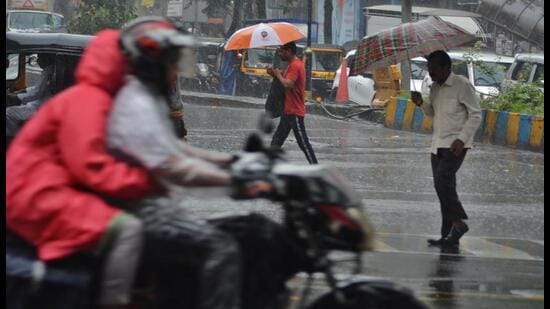
The monsoon depends on the temperature contrast between land and ocean, sea surface temperatures in the Pacific and Indian Oceans, the Himalayas steering winds, and aerosols from air pollution over the Indo-Gangetic Plain that reflect sunlight and can serve as cloud seeds. Monsoon rain is produced by convective clouds a few kilometres across, while global climate models calculate winds, temperature, and humidity on meshes with cells that are 10-100 kilometres wide. The turbulent motions of clouds fall through the mesh, and errors in their coarse representation compound into errors in temperature and rainfall simulations worldwide. Monsoon predictions are particularly uncertain, because its rainfall is the net result of several competing influences: A small error in any one of them can change where and how much it rains. Climate models usually predict too little rain over the Indian subcontinent and too much over the surrounding ocean, with seasonal totals off by tens of percent in some places. Trends are even more challenging. Most models have failed to reproduce the observed 5-10% decline in monsoon rainfall between 1950 and 2000, in part because rising greenhouse gas and aerosol concentrations exert competing influences that models struggle to capture. This should, however, change soon.
More than 40 years of satellite and ground observations give Artificial Intelligence (AI) hundreds of thousands of snapshots to learn how the atmosphere evolves from one day to the next. AI weather models now surpass conventional forecasts on many measures, and do so in minutes on graphics processing units (GPUs) rather than hours on supercomputers. They may soon produce more reliable rainfall predictions for India, including predictions of the active and break phases of the monsoon that farmers need for planting decisions. They can also improve forecasts of heat waves. The challenge is that the most dangerous events, such as record-breaking humid heat waves with nights that stay warm, are rare in the training data in any one location. But they may have occurred in other locations, and AI can learn from them and transfer the learned relations between locations.
{{/usCountry}}More than 40 years of satellite and ground observations give Artificial Intelligence (AI) hundreds of thousands of snapshots to learn how the atmosphere evolves from one day to the next. AI weather models now surpass conventional forecasts on many measures, and do so in minutes on graphics processing units (GPUs) rather than hours on supercomputers. They may soon produce more reliable rainfall predictions for India, including predictions of the active and break phases of the monsoon that farmers need for planting decisions. They can also improve forecasts of heat waves. The challenge is that the most dangerous events, such as record-breaking humid heat waves with nights that stay warm, are rare in the training data in any one location. But they may have occurred in other locations, and AI can learn from them and transfer the learned relations between locations.
{{/usCountry}}The monsoon of the coming decades will look different from the past. A warmer atmosphere holds more moisture, leading to intensification of rainfall extremes: In a world two or three degrees warmer, a once-in-a-decade downpour will be 15-20% more intense, and once-in-a-century events will exceed anything so far recorded. No data exist to train AI systems for such a climate. We must continue to rely on physics-based climate models here, perhaps in hybrid models with AI for selected processes. Nor will the uncertainties yield to more computing alone.
Modelling globally how nanometre-sized aerosols seed micrometre-scale cloud droplets, which then collide and grow into raindrops, will remain beyond the reach of supercomputers for the foreseeable future. So it remains uncertain where rainfall intensity increases most, whether and by how much the monsoon onset shifts, and how active and break cycles change. Long-range planning needs that information, and it will take scientific creativity to provide it.
Until recently, only a few countries had the supercomputers and institutions needed for frontier weather prediction and climate modelling. AI and fast GPUs change that. University groups and startups can now train and adapt AI weather models for regional needs. Additionally, the GPUs that run AI models also run a new generation of climate models built for them, including one developed by one of us, on university clusters or in the cloud rather than in supercomputing centres. India has what it takes: a large pool of software and machine-learning talent, more than 45,000 shared GPUs under the IndiaAI Mission, and the longest observational record of the monsoon anywhere. The predictions India needs can be produced in India.
For the coming seasons, the task is to make forecasts more accurate and usable. That means more observations (radar, rain gauges, ocean buoys), because AI forecasts are only as good as the data feeding them. It also means systems that bridge the last mile and trigger action: apps advising farmers, and warning and risk management systems such as Ahmedabad’s heat action plan.
For the coming decades, the task is to build for what is known and stay flexible where the details are still emerging. Storm drains and reservoirs built or upgraded today should be sized for rainfall extremes 15-20% more intense than in the past, with margins that can be raised as projections improve. Where a given district falls within that range is for the next generation of models, and of Indian climate scientists, to work out. Getting the information to the farmer, the engineer, and the district planner, in the form each needs, is a task for entrepreneurs as much as for science.
The farmer can expect better answers soon. The engineer must build now, with room for changes as the answers improve.
Tapio Schneider is Theodore Y Wu professor of environmental science and engineering at Caltech and mentor at Safexpress Centre for Data, Learning and Decision Sciences at Ashoka University. Sandeep Juneja is director of Safexpress Centre for Data, Learning and Decision Sciences, Ashoka University. The views expressed are personal