
 E-Paper



Photos: Restoration plans for Shahjahan’s hunting lodge in Delhi’s Jaunti village
The state archaeology department has stepped up efforts to conserve a 17th century hunting lodge built by Mughal emperor Shahjahan at Jaunti village in outer Delhi. The department, in collaboration with the Kanjhawala sub-division magistrate (SDM) office, has started a survey which is on its last lap and is likely to be completed by next week. According to officials the survey will help experts assess the damage to the structure and count the occupants who have to be relocated from the premises.
Updated on: Jul 13, 2018 1:37 PM IST

Share via


Copy link

1/7
 View Photos in a new improved layout
Updated on Jul 13, 2018 1:37 PM
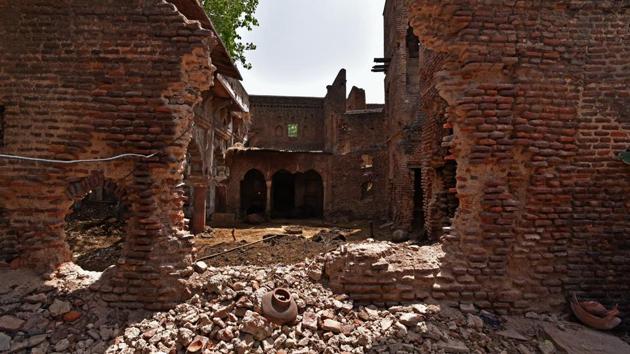
Jaunti village near Kanjhawala in outer Delhi, is unlike the capital’s other urbanised villages. Jaunti has at its heart a crumbling 17th century ‘shikargah’ or hunting lodge that will now be restored by Delhi’s archaeology department. The remains of the fortress — fluted sandstone columns, halls, arches, lakhori brick walls and pyramidal roofs — will be strengthened as part of the plan for the village's integrated development. (Anushree Fadnavis / HT Photo)
2/7
 View Photos in a new improved layout
Updated on Jul 13, 2018 1:37 PM
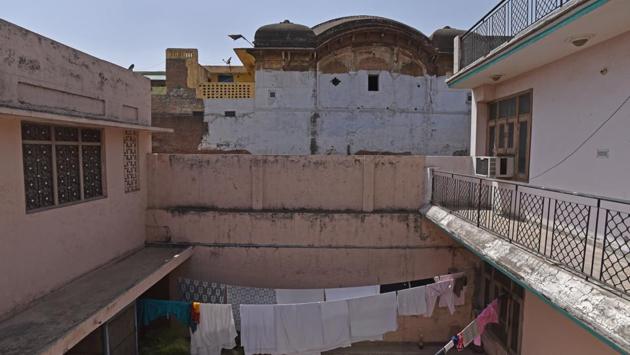
The shikargah in Jaunti village was built by Shahjahan in outer Delhi. The village now falls on the Delhi-Haryana border, about 10km from Mundka Metro station. Besides its historical heritage, the nondescript Jaunti village was also the epicentre of the Green Revolution in the 1960s. (Anushree Fadnavis / HT Photo)
3/7
 View Photos in a new improved layout
Updated on Jul 13, 2018 1:37 PM
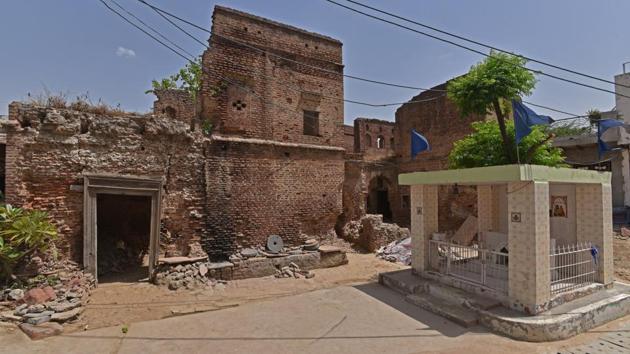
Standing on an elevated land, Shahjahan’s shikargah was once a double-storeyed fortress surrounded by a wall. Only a part of the fortification remains now and the main gateway has collapsed. At least 69 families have lived in and around this Mughal era royal forest house for years. However, a recent spate in construction activity has damaged its original architecture. (Anushree Fadnavis / HT Photo)
4/7
 View Photos in a new improved layout
Updated on Jul 13, 2018 1:37 PM
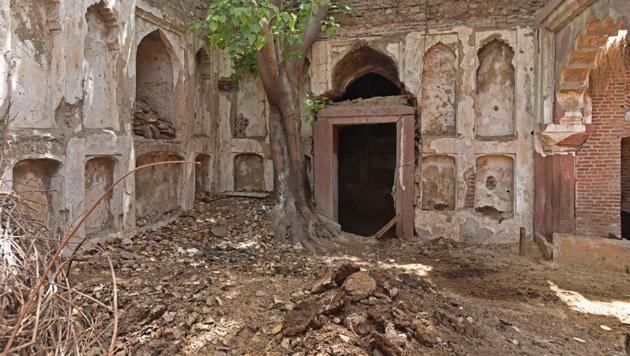
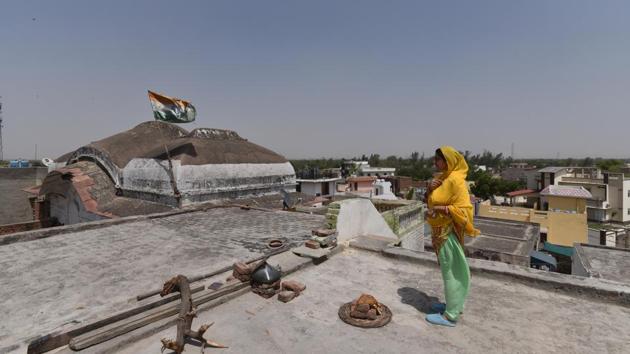
District Magistrate of Delhi and other officials visit Aam Khas. Its remains comprise brick masonry work with generous use of red sandstone. A section of the fortress — central vaulted chamber with domed pyramidical roof — has survived but major elements have caved in. The domed compartment is now used to stash cow dung cakes. (Anushree Fadnavis / HT Photo)
5/7
 View Photos in a new improved layout
Updated on Jul 13, 2018 1:37 PM
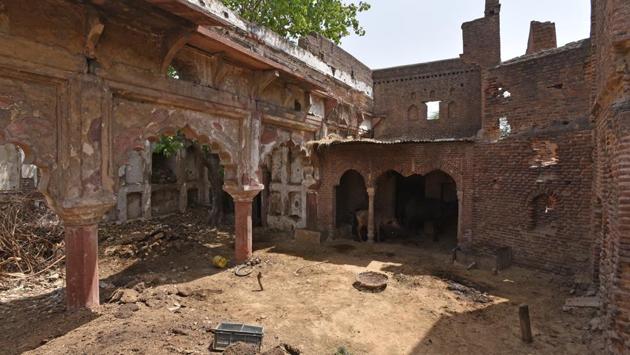
The plan for the village’s redevelopment was initiated three years ago when north-west Delhi MP Udit Raj adopted it under Saansad Adarsh Gram Yojana. Rekha Vohra, the director of the Jaunti project, said the plan expects to achieve its target this time as the district administration is on board. “The project was stuck because of multiplicity of authorities,” Vohra said. (Anushree Fadnavis / HT Photo)
6/7
 View Photos in a new improved layout
Updated on Jul 13, 2018 1:37 PM
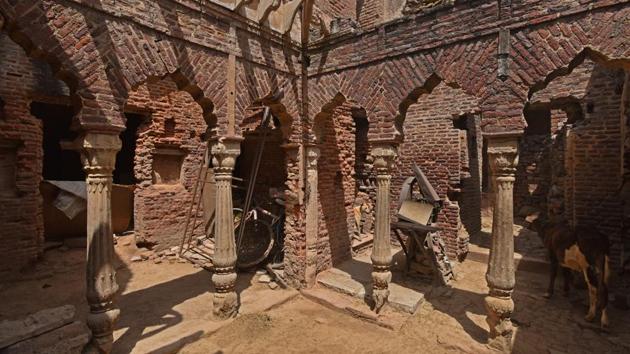
A view of the interiors of Aam Khas. Vikas Maloo, head of the archaeology department said the survey is on its last lap and is likely to be completed by next week. Once the assessment in collaboration with SDM office is done, a blueprint to uplift the area will be prepared—a move that experts believe will help in finding out which part of the structure needs conservation. (Anushree Fadnavis / HT Photo)
7/7
 View Photos in a new improved layout
Updated on Jul 13, 2018 1:37 PM


