
 E-Paper



Photos: Amid trade war, floods compound Nebraska farmers’ woes
In Nebraska, the farmers are already hurt by the US-China trade war but this year they are also reeling from devastating floods, which have ravaged crops and left little time to plant for the next harvest. Damages are estimated at more than $800 million, about $400 million in the livestock industry and $440 million in crops. Now, in the wake of the disaster, growers have been granted extensions on credit payments and loans, as well as the possibility in some cases to renegotiate loans at lower interest rates.
Updated on: May 13, 2019 1:58 PM IST

Share via


Copy link

1/8
 View Photos in a new improved layout
Updated on May 13, 2019 1:58 PM
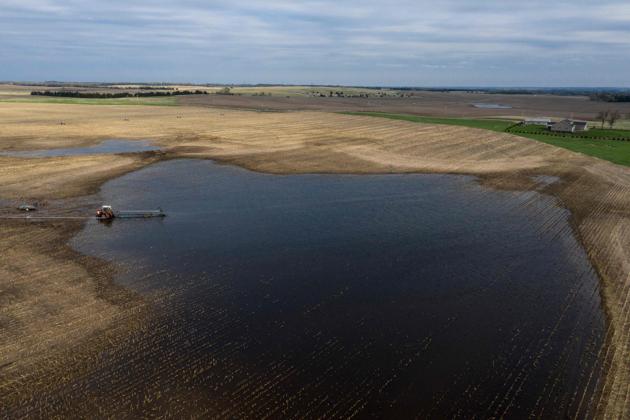
A tractor pumps water from a flooded field, near Orchard, Antelope County Nebraska. Already hurt by the US-China trade war, farmers in Nebraska are reeling from this year’s devastating floods, which ravaged crops and left little time to plant for the next harvest. Damage from the March rains in the Midwest is visible across the landscape north of Omaha, the state’s biggest city: trees have fallen, growing fields are caked in mud and rivers are at elevated levels. (Johannes Eisele / AFP)
2/8
 View Photos in a new improved layout
Updated on May 13, 2019 1:58 PM
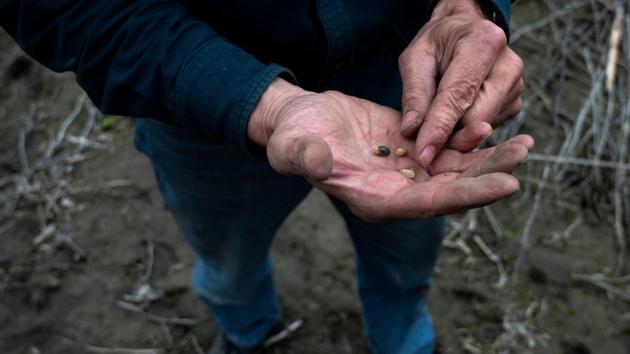
Clare Duda inspects the rotten soybeans in a field. Damages are estimated at more than $800 million, about $400 million in the livestock industry and $440 million in crops. “It’s not like we’ve got a lot of alternatives out here. You either get your crop in the spring, or you are out of income for the entire year,” said Ruth Ready, adding that the floods shrank this season’s usable acreage, threatening the next harvest. (Johannes Eisele / AFP)
3/8
 View Photos in a new improved layout
Updated on May 13, 2019 1:58 PM
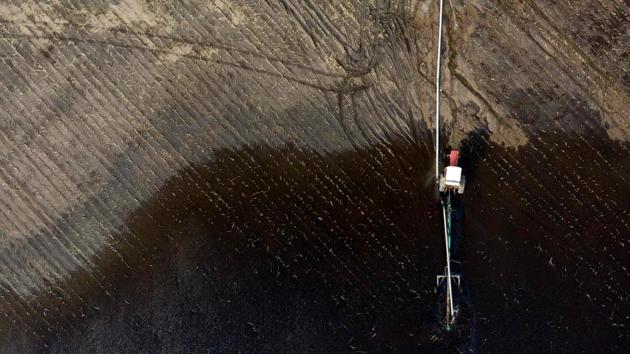
An aerial image of a tractor pumping water from a flooded field. Of Nebraska’s 93 counties, 81 have declared states of emergency, said Steve Wellman, director of the Nebraska Department of Agriculture. “So 85 percent of the state of Nebraska has been impacted by either flooding or blizzard conditions from the middle of March,” he said. (Johannes Eisele / AFP)
4/8
 View Photos in a new improved layout
Updated on May 13, 2019 1:58 PM
Clare and Gayle Duda, corn and soy farmers in nearby Ponca Hills, said they were facing a similar situation. “We planted 300 acres and we were only able to harvest five acres,” or just two hectares, said Clare, adding that losses were hard to bear without revenue to make up for the investment in the crop. Due to the floods the soil gets saturated and whole of the planting process is hampered. (Johannes Eisele / AFP)
5/8
 View Photos in a new improved layout
Updated on May 13, 2019 1:58 PM
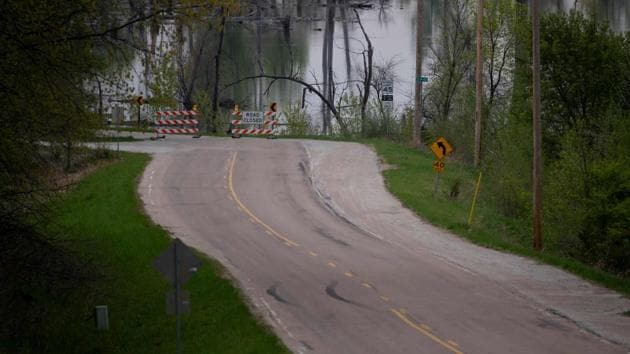
A sign reads, ‘road closed,’ near Omaha, Nebraska, as the Missouri River continues to flood, making neighbourhoods uninhabitable and cutting off public services. The floods came as farm incomes have fallen about 50 percent since 2013 due to low crop prices, leading to debt levels not seen since the 1980s. In the wake of the disaster, growers have been granted extensions on credit payments and loans, as well as the possibility in some cases to renegotiate loans at lower interest rates. (Johannes Eisele / AFP)
6/8
 View Photos in a new improved layout
Updated on May 13, 2019 1:58 PM
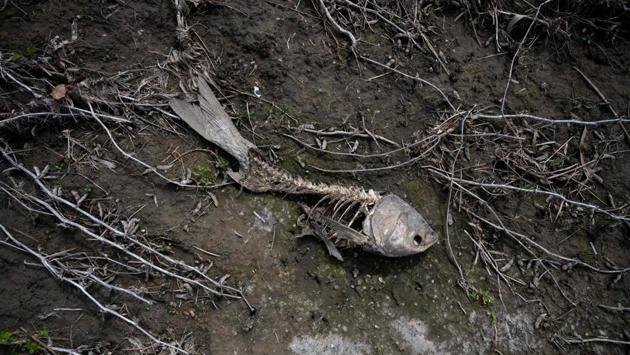
A skull of a washed ashore fish lies amid destroyed soybeans at the farm. Animals have died in the floods and others perished after being sickened by bad water. “I know people who lost a lot of their animals because they were stranded in the floods,” said Jim Dinklage, a farmer in Orchard. “You couldn’t have access to them.” (Johannes Eisele / AFP)
7/8
 View Photos in a new improved layout
Updated on May 13, 2019 1:58 PM
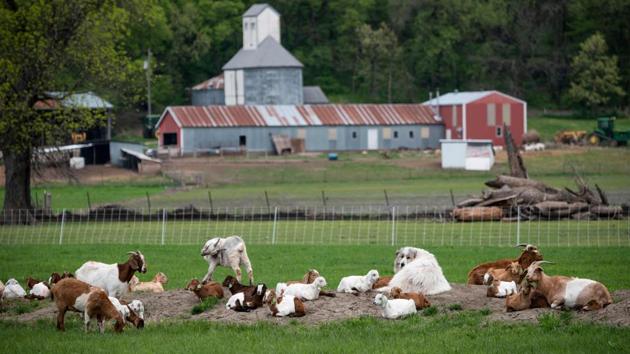
Goats seen in a farm near Omaha. The growers have fixed costs on land and machinery that do not lessen even if output is lower. In many cases, farmers already purchase seeds for the season. Plus, transport costs have essentially doubled due to the dismal state of the roads. But there is a more fundamental hit to the region’s economic capacity, with nutrient-rich soil developed over generations suddenly stripped away. (Johannes Eisele / AFP)
8/8
 View Photos in a new improved layout
Updated on May 13, 2019 1:58 PM


