
 E-Paper



Photos: Chapal Rani, the last living Bengali jatra female impersonator
Chapal Bhaduri spent a lifetime playing mythical heroines and goddesses on stage. On his 80th birthday, the legendary female Jatra impersonator of Bengal, arguably the last in a long tradition, talks about his life, love of an bygone era. He was the last in a long line of exalted Bengali queens in Jatra, a folk art form that traces its origins to the 16th century Bhakti movement but branched out into mythical as well as secular-political forms in the latter half of the 19th century. Today, Bhaduri has withdrawn into a decaying four-storey building off Beadon Street in Kolkatan-- a dusty old-age home where only few know of his fame.
Updated on: Jul 31, 2018 12:02 PM IST

Share via


Copy link

1/8
 View Photos in a new improved layout
Updated on Jul 31, 2018 12:02 PM
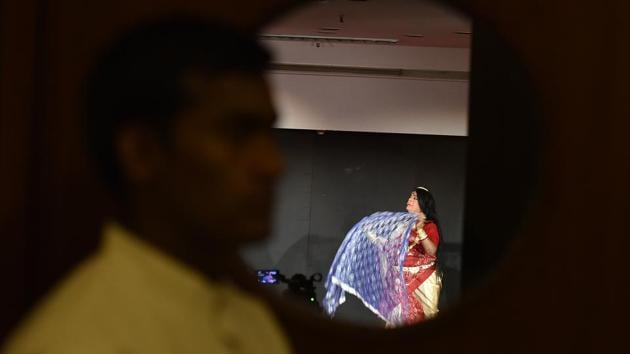
Chapal Bhaduri has spent a lifetime playing mythical heroines and goddesses on stage, and for years was the lone reigning star of the Bengali jatra theatre. Bhaduri was born in one of Kolkata’s most prominent theatre families-- his mother was actor Prabha Devi, and uncle, actor-director Shishir Bhaduri. For 20 years, Bhaduri, known better as Chapal Rani, ruled the Jatra stage, playing everything from Kaikeyi in the Ramayana to Razia Sultan. (Raj K Raj / HT Photo)
2/8
 View Photos in a new improved layout
Updated on Jul 31, 2018 12:02 PM
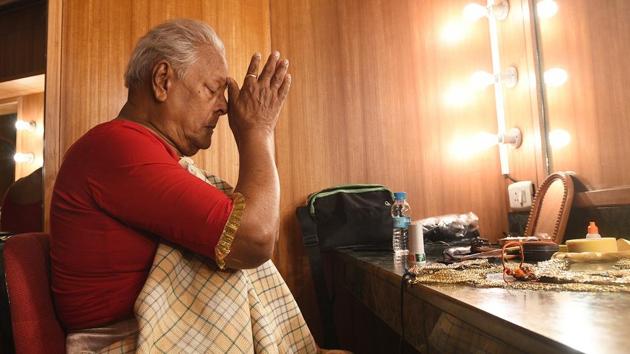
Theatre wasn’t always easy for Bhaduri. The first time on stage, he trembled in the wings, dressed in flared trousers, a bright red shirt and a waistcoat over a stuffed brassiere. “The auditorium felt like a surging ocean about to engulf me. I took one step forward, one back. Just then, a group of young men gathered around me, they had mistaken me for a woman – one of them pushed me onto the stage, and that’s how my career began.” (Raj K Raj / HT Photo)
3/8
 View Photos in a new improved layout
Updated on Jul 31, 2018 12:02 PM
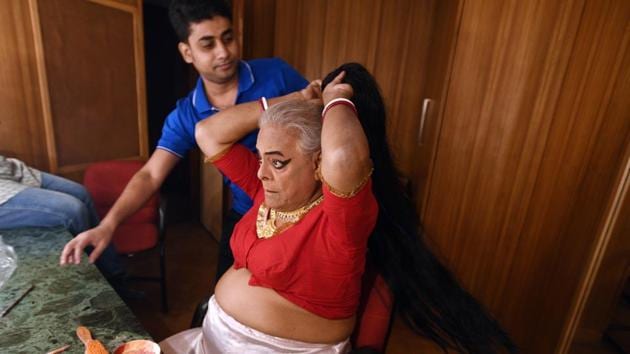
Before every show, Bhaduri has an elaborate ritual for transforming into a woman. He studiously observed women to pick up their quirks and behaviour – once he stayed in Sonagachi to etch the role of a sex worker, and another time, took inspiration from Bollywood legend Helen’s outfit. (Raj K Raj / HT Photo)
4/8
 View Photos in a new improved layout
Updated on Jul 31, 2018 12:02 PM
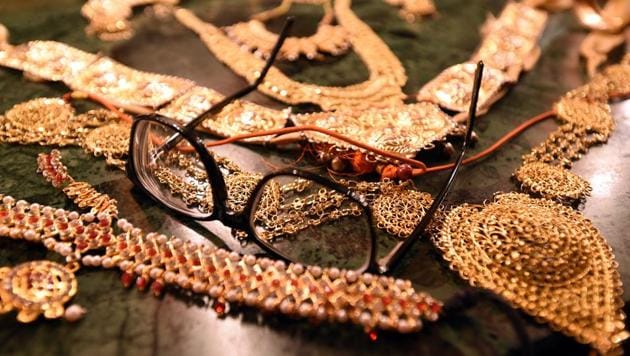
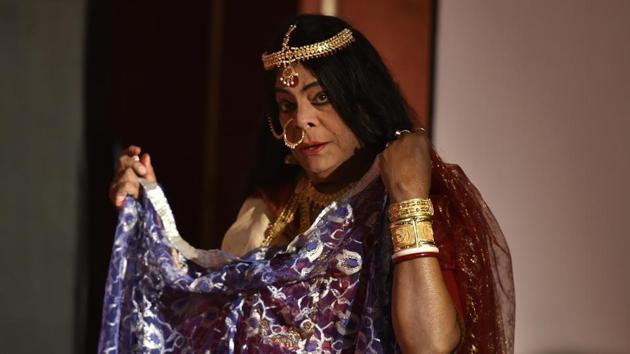
He pioneered the Jatra make-up, and the outfits he wore quickly became the rage across rural Bengal. His fans were young men who wanted to be with him, and young women who wanted to be like him. Bhaduri was the last of exalted Bengali queens in Jatra, a folk art form that traces its origins to the 16th century Bhakti movement but branched out into mythical as well as secular-political forms in the latter half of the 19th century. (Raj K Raj / HT Photo)
5/8
 View Photos in a new improved layout
Updated on Jul 31, 2018 12:02 PM
Bhaduri’s reign was long. He was on stage till 1974. The next 20 years were spent in the wilderness as Bhaduri travelled through Bengal, stayed for long stretches in the holy city of Tarapith, and suffered some devastating personal blows, but penury finally forced him back to Kolkata and to performance. (Raj K Raj / HT Photo)
6/8
 View Photos in a new improved layout
Updated on Jul 31, 2018 12:02 PM
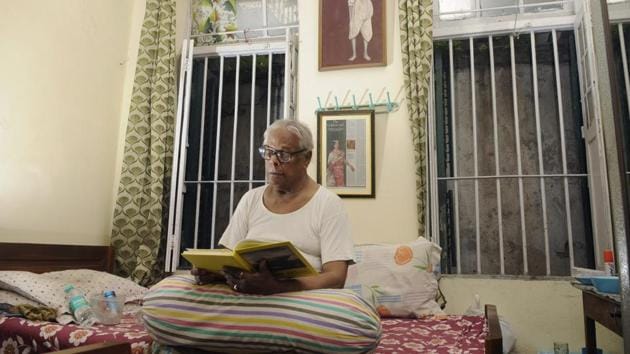
After a lifetime of performing as mythical warrior queens and angry goddesses, he has withdrawn into a cramped, airless room in a dusty old-age home where few know of his fame. The Ramkrishna Old Age Home has been Bhaduri’s home for the last nine months, after he walked out of his niece’s home following a bitter altercation. (Samir Jana / HT Photo)
7/8
 View Photos in a new improved layout
Updated on Jul 31, 2018 12:02 PM
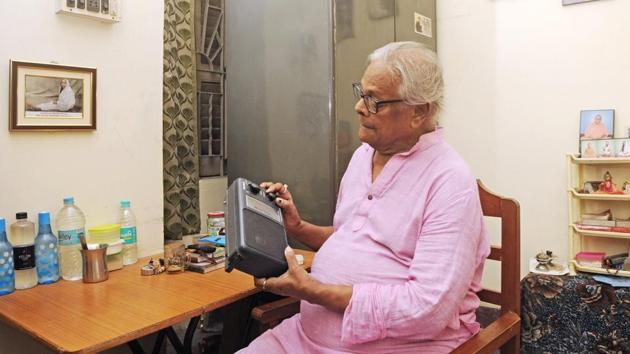
Bhaduri has little contact with the outside world, save the radio. He misses his fellow actors, and friends most of whom are dead. He said, “I don’t talk to anyone, and don’t make new friends – what if they don’t recognise me, or refuse to acknowledge me?” (Samir Jana / HT Photo)
8/8
 View Photos in a new improved layout
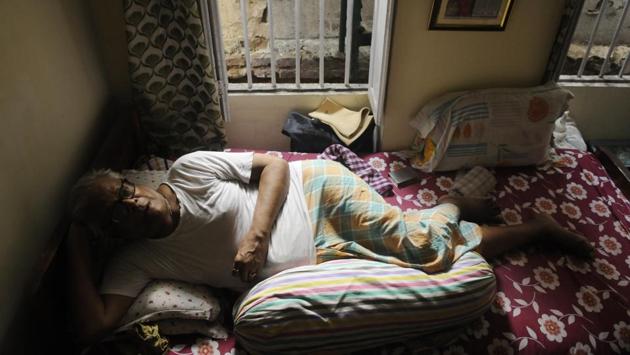
Updated on Jul 31, 2018 12:02 PM


