
 E-Paper



Photos: In-house employment for Tihar inmates, for a better life outside
The thousands of inmates at Tihar jail work in its various units, making a wide range of items such as cakes, LED bulbs and furniture. The number of these factories which has risen to 36 over the years has an annual turnover of about ₹35 crore. And from every inmate’s daily wage 25% is deducted and sent to the Victim’s Welfare Fund which goes to families or victims of crimes committed by the inmates. With over 15,000 inmates, Tihar the most crowded prison in India is using in-house employment as a means of rehabilitation and a better life once released.
Updated on: Jun 25, 2018 3:49 PM IST

Share via


Copy link

1/9
 View Photos in a new improved layout
Updated on Jun 25, 2018 3:49 PM
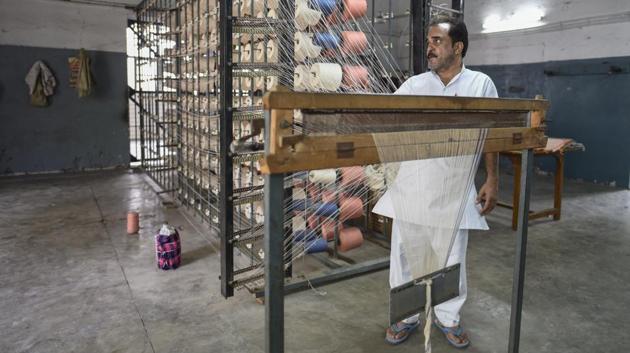
An inmate of Tihar jail works at weaving unit inside jail number 2 in New Delhi. From cakes and biscuits, LED bulbs, pickles, and furniture to blankets, power looms and designer clothes, thousands of prisoners spread across the jails’s 400 acres work across different units. Learning skills in the prison means hope for a better life once outside. (Burhaan Kinu / HT Photo)
2/9
 View Photos in a new improved layout
Updated on Jun 25, 2018 3:49 PM
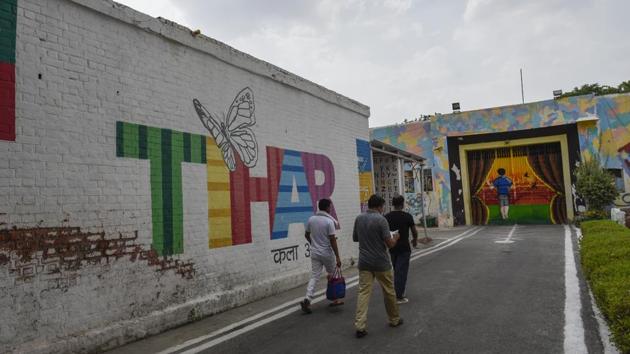
An exterior view of Tihar jail number 2. According to Ajay Kashyap, director general (prisons) the aim is not to make profit, but to reform prisoners. He said, when inmates work in these factories they earn a living, and their training here by the staff or fellow inmates increases their chances of rehabilitation. (Burhaan Kinu / HT Photo)
3/9
 View Photos in a new improved layout
Updated on Jun 25, 2018 3:49 PM
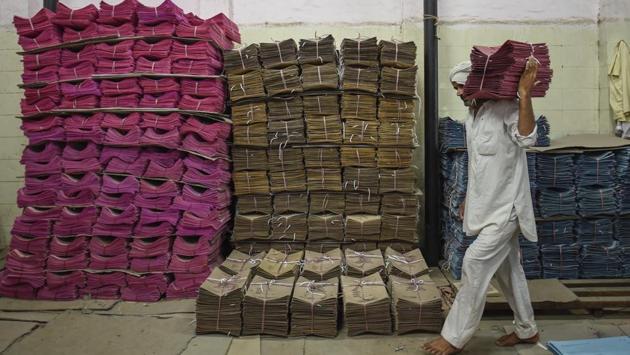
The Tihar jail’s paper making unit is among the earliest factories set up in the jail, a number that now stands at 36. In the early 1960s when the prison was only a few years old, a paper manufacturing and an oil extraction unit were set up. Paper is recycled into folders by inmates and used in government offices, the six lower courts, the Delhi High Court and the Supreme Court. (Burhaan Kinu / HT Photo)
4/9
 View Photos in a new improved layout
Updated on Jun 25, 2018 3:49 PM
Inmates work on the packing of roasted nuts in its bakery unit. The prison’s deputy superintendent Dheeraj Mathur said that inmates manufacture their own cooking oil from mustard seeds. The food for over 15,000 prisoners is not made in ghee or refined oil but it is prepared in their own Tihar oil, which is also sold in the market. (Burhaan Kinu / HT Photo)
5/9
 View Photos in a new improved layout
Updated on Jun 25, 2018 3:49 PM
The weaving unit is one Tihar jail’s largest factories. With at least 4,000 prisoners working in shifts, the 36 factories have an annual turnover of about ₹35 crore. Prison officials say that finding talent in inmates has never been a problem –from a graduate of the country’s premier engineering institute to a former minister or a skilled carpenter, one finds all sorts here. (Burhaan Kinu / HT Photo)
6/9
 View Photos in a new improved layout
Updated on Jun 25, 2018 3:49 PM
An inmate showcases products made in the weaving unit. Apart from the elderly, the unwell and those who choose not to work, every inmate can find employment here. For a day’s work, a skilled worker makes ₹321, a semi-skilled worker gets ₹180, while a trainee makes ₹200. And from every inmate’s daily wage, 25% is deducted towards the Victim’s Welfare Fund which goes to families or victims of the inmates’ crimes. (Burhaan Kinu / HT Photo)
7/9
 View Photos in a new improved layout
Updated on Jun 25, 2018 3:49 PM
An officer said the prison administration has recently tied up with experts to improve the finishing of the furniture manufactured here. Tables, chairs and desks made at the carpentry unit are sent to about 2,000 schools run by the Delhi government and three municipal bodies in the city. (Burhaan Kinu / HT Photo)
8/9
 View Photos in a new improved layout
Updated on Jun 25, 2018 3:49 PM
For every product manufactured at the jail’s different factories, there are shops set up at across the city that sell it. Most shops have been set up at court complexes and Delhi Haat. Over the last one year, jail officers have been in the process of rejuvenating the factories and fine tuning products for a niche market. (Burhaan Kinu / HT Photo)
9/9
 View Photos in a new improved layout
Updated on Jun 25, 2018 3:49 PM


