
 E-Paper



Photos: On the frontline of the human-elephant conflict in Karnataka
The southern state of Karnataka, home to India's largest elephant population with more than 6,000 jumbos, 20% of the country's total is at the frontline of incidents of conflict between man and animal as a growing human population encroaches on the elephants’ traditional habitats. The state reports a rate of 30 to 40 elephant related human deaths anually. Across the country elephant deaths are also reported due to electric fences, angry locals and accidents on railway cutting through ancient migratory routes. For now, there appears to be no concrete plan against these losses.
Updated on: Aug 04, 2018 11:24 AM IST

Share via


Copy link

1/9
 View Photos in a new improved layout
Updated on Aug 04, 2018 11:24 AM
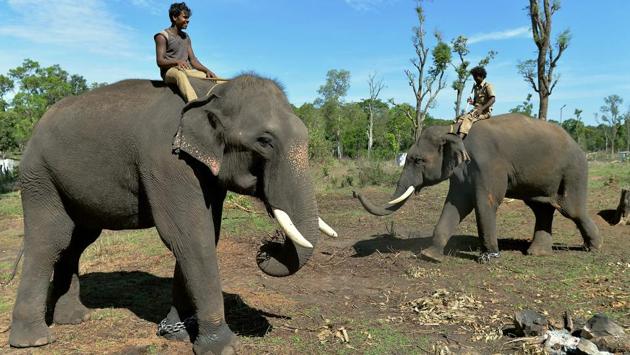
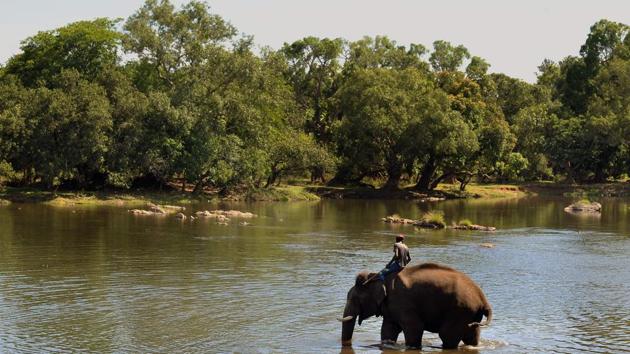
Mahouts ride tamed elephants at the Dubare Elephant Camp in Kodagu District, about 250 kms west of Bangalore. As India’s 1.3-billion population grows, people are encroaching into habitats where until now the elephant, not man, had been king, with painful effects for both parties. The government told parliament in 2017 that 1,100 people had been killed in the previous three years. (Manjunath Kiran / AFP)
2/9
 View Photos in a new improved layout
Updated on Aug 04, 2018 11:24 AM
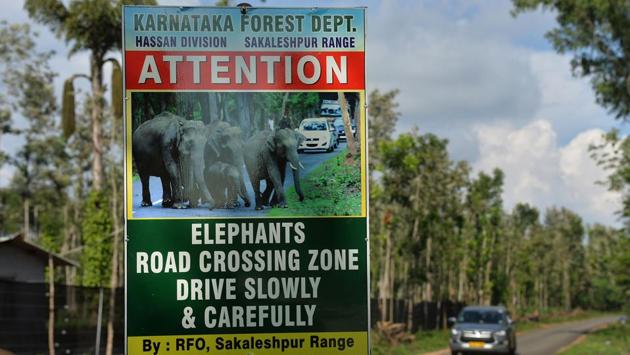
The elephants too are paying a heavy price with around 700 fatalities in the last eight years. Most were killed by electric fences, poisoned or shot by locals angry at family members killed or crops destroyed, and accidents on railway cutting through ancient migratory routes. And Karnataka, home to India’s largest elephant population with more than 6,000 - 20% of the total- is on the frontline. (Manjunath Kiran / AFP)
3/9
 View Photos in a new improved layout
Updated on Aug 04, 2018 11:24 AM
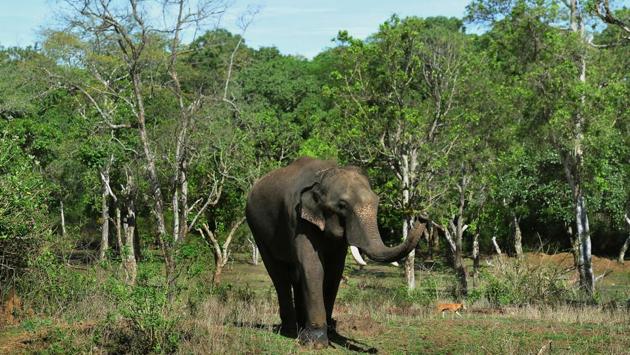
The government, like many other stakeholders in this complex situation, appears undecided about what best to do. “It is very difficult to escape our population or development pressure,” a senior government official told AFP on anonymity. “Unless it’s addressed, all of us just have to learn to live with the reality of such encounters.” (Manjunath Kiran / AFP)
4/9
 View Photos in a new improved layout
Updated on Aug 04, 2018 11:24 AM
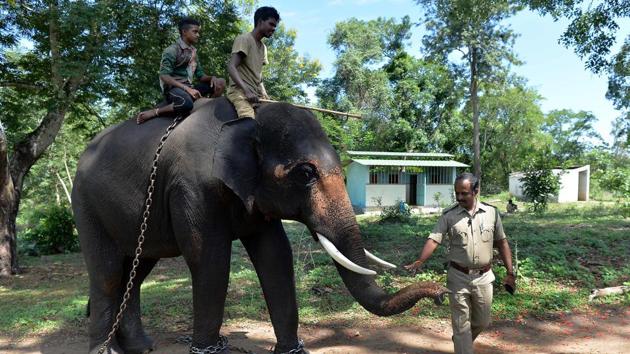
A forestry official pats Ranjan, a tamed elephant at the Dubare Elephant Camp. Here in Karnataka, forest rangers, mounted on elephants themselves, capture problem pachyderms, of which there are more and more, and bring them to this camp. J.C. Bhaskar, an employee here, describes it “like a jail” but it is more of a rehabilitation and training centre. (Manjunath Kiran / AFP)
5/9
 View Photos in a new improved layout
Updated on Aug 04, 2018 11:24 AM
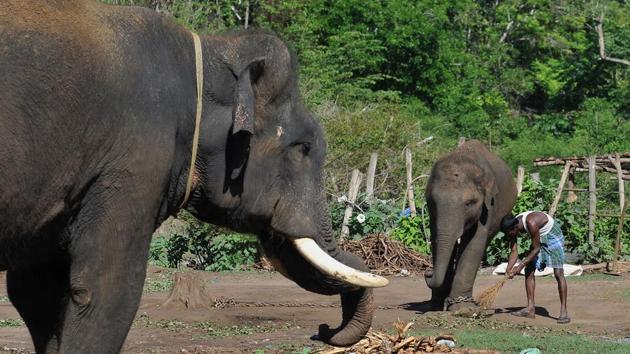
A mahout sweeps to clean the surroundings where an elephant and a calf are kept at the Dubare Elephant Camp. Spots for new arrivals are readied before they are captured; hay and leaves are spread beforehand. After the resting period, mahouts start taming and training the elephants. (Manjunath Kiran / AFP)
6/9
 View Photos in a new improved layout
Updated on Aug 04, 2018 11:24 AM
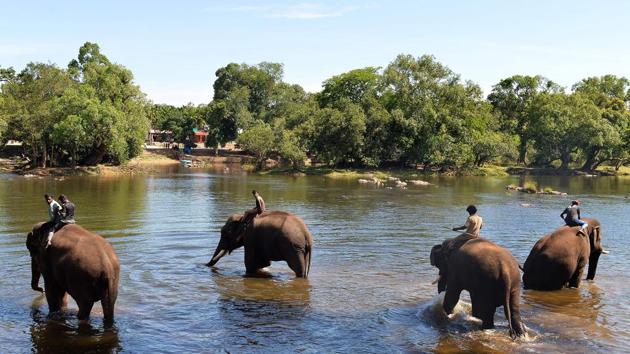
The 28 jumbos at the camp also draw tourists, with thousands visiting the lush, riverside camp each year, stroking the animals and enjoying being squirted with water. However, while such relocations may assuage local anger, officials and activists acknowledge it is only a stopgap solution. (Manjunath Kiran / AFP)
7/9
 View Photos in a new improved layout
Updated on Aug 04, 2018 11:24 AM
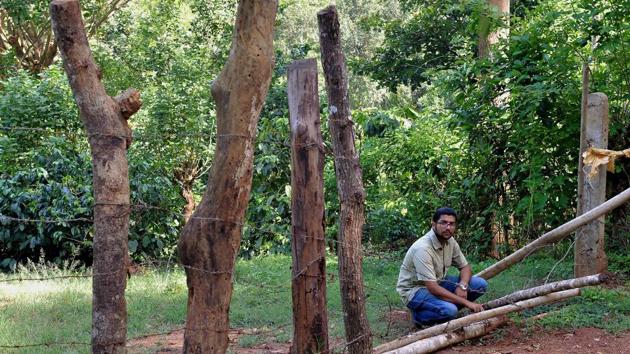
Vinod Krishnan, a research affiliate of the Nature Conservation Foundation, shows a part of a fence at a coffee estate that was trampled by elephants in Kechammana Hosakote village in Hassan District. The only effective method he says is better information-sharing. “Everything else has already been tried unsuccessfully. This includes deep trenches, normal or solar-powered fences and even fire crackers.” (Manjunath Kiran / AFP)
8/9
 View Photos in a new improved layout
Updated on Aug 04, 2018 11:24 AM
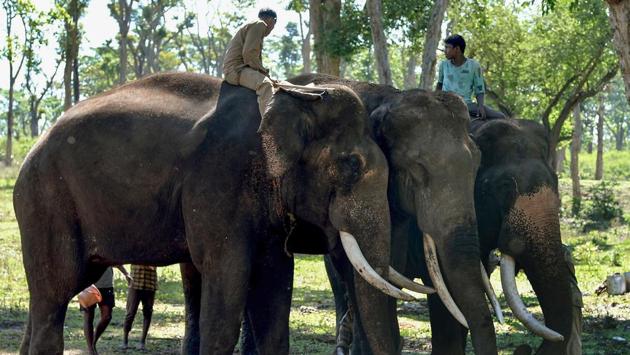
Mahouts block a wild bull elephant at the Dubare Elephant Camp. Krishnan’s group has developed a simple yet effective system around local villages allowing sightings to be immediately verified and passed on. “We set up display boards around key elephant routes and set up SMS services for early warnings about an elephant’s presence, which has significantly reduced such chance encounters,” he said. (Manjunath Kiran / AFP)
9/9
 View Photos in a new improved layout
Updated on Aug 04, 2018 11:24 AM


