
 E-Paper



Photos: Photographers in Kashmir as witnesses to the region’s conflict
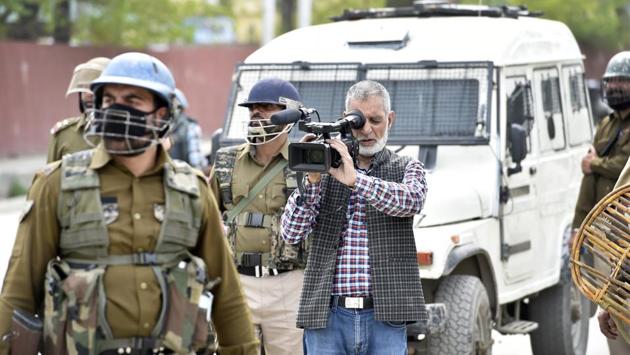
Civilian deaths in Jammu and Kashmir rose by a staggering 167% in 2016 compared to 2015 as the conflict in the Valley between civilian protests, the militants and the army deepened. In light of such advances, now more than ever journalists and photographers documenting the conflict and their narratives of the region are put to question and often silenced with beatings and harassment by the authorities. Despite the dangers, these men and women brave each day as they head out to the sites, becoming witnesses that by and large understand Kashmir and the challenges it faces.
Updated on: May 01, 2018 5:57 PM IST

Share via


Copy link

1/13
 View Photos in a new improved layout
Updated on May 01, 2018 5:57 PM
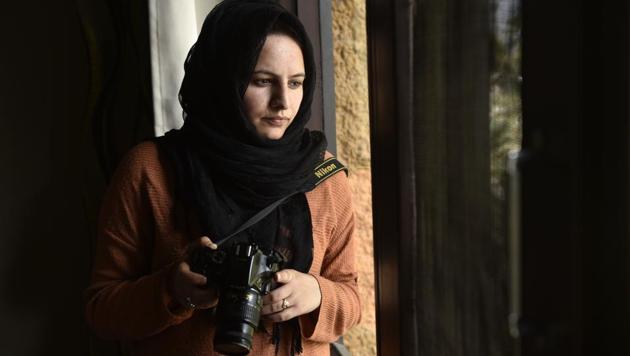
“When the CRPF shoots a Kashmiri you have to tell that and when a Kashmiri shoots a Kashmiri you have to show that too,” said Masrat Zahra, a freelance photographer in Srinagar. Between the gun, the protests and the casualties in the Kashmir conflict, photographers documenting the region remain constant witnesses. And yet, they are harassed and one of them, Kamran Yousuf, was even arrested for six months. (Ajay Aggarwal / HT Photo)
2/13
 View Photos in a new improved layout
Updated on May 01, 2018 5:57 PM
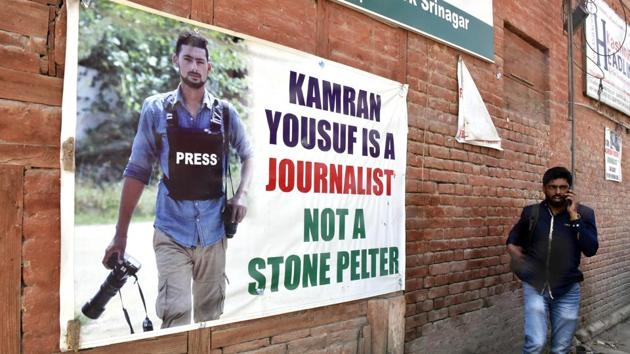
Kamran Yousuf was arrested on September 5, 2017. The National Investigation Agency (NIA) chargesheet stated that he was not a “real journalist” because he had not covered “any developmental activity of the government” in his career. Yousuf was later released on bail in March. His fraternity however feels he was picked up because his photographs, covering various aspects of the Kashmir protests, were run in the Valley’s largest circulated paper. (Ajay Aggarwal / HT Photo)
3/13
 View Photos in a new improved layout
Updated on May 01, 2018 5:57 PM
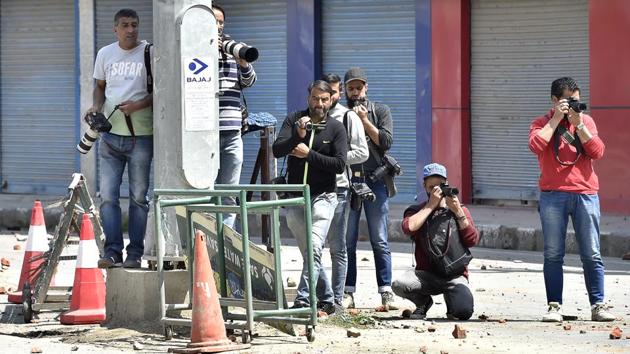
For the photographers reporting the conflict, their day begins and ends with looking for and clicking trouble. Most Kashmiri photographers work with local papers or with an international, or a national agency, updating the scene almost every hour. (Ajay Aggarwal / HT Photo)
4/13
 View Photos in a new improved layout
Updated on May 01, 2018 5:57 PM
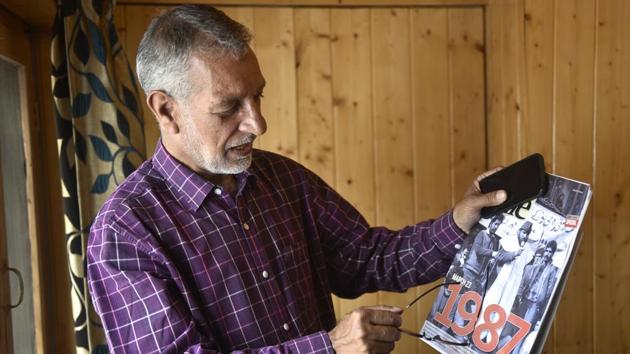
Meraj-ud-din of Associated Press (AP) shows a copy of the 2016 anniversary issue of Srinagar-based magazine Kashmir Life dedicated to the 1987 elections. In the late 80’s and early 90’s Meraj-ud-din, then with Reuters, photographed the watershed elections that, perceived in much of Kashmir to be rigged, drove its leaders and the generation that followed, away from the electoral process. (Ajay Aggarwal / HT Photo)
5/13
 View Photos in a new improved layout
Updated on May 01, 2018 5:57 PM
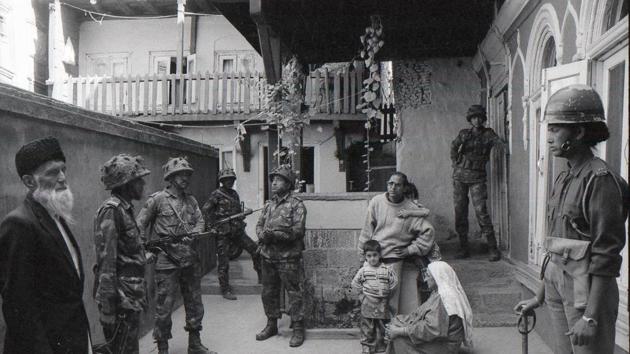
A family in Alikadal, Srinagar, waits while their home is searched by the Indian Army, 1993. Meraj-ud-din shot the photo of Yusuf Shah (Syed Salahuddin) campaigning in 1987 in a shroud. A later image of Yasin Malik, flamed protests against Meraj in Jammu and saw his home ransacked. He has been beaten 11 times by security forces in the course of his work. After the eleventh beating, Meraj stopped counting. (Courtesy Meraj-ud-din)
6/13
 View Photos in a new improved layout
Updated on May 01, 2018 5:57 PM
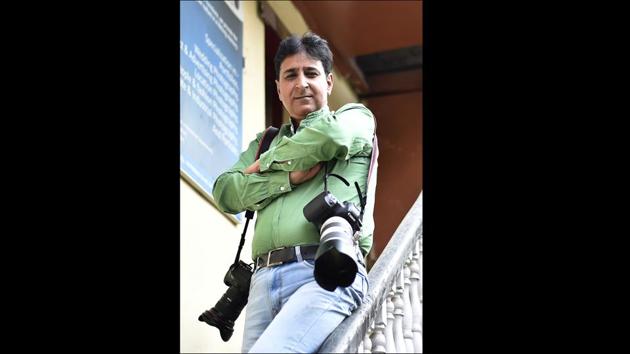
Former Reuters photographer Fayaz Kabli at his office in Srinagar. “So it was politics that came first, not the gun. The Kashmiri story so far is the gun came to the Valley and it changed everything. The gun became the news point and the photograph sought in Kashmir post the ’90s,” said Kabli, who now teaches photojournalism in a school in Srinagar. (Ajay Aggarwal / HT Photo)
7/13
 View Photos in a new improved layout
Updated on May 01, 2018 5:57 PM
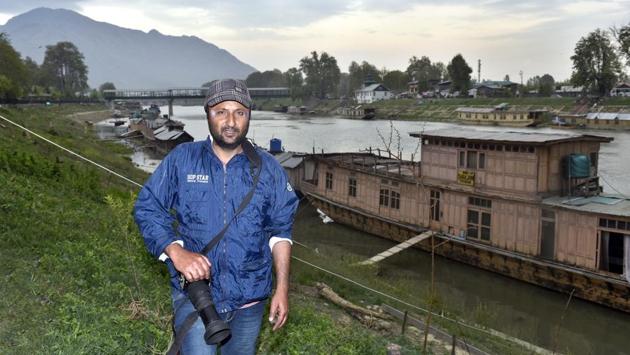
Nissar ul Haq, whose face has been partially blistered due to continuous exposure to teargas said “Three things frighten us now. The awaam (people), the police and the army. As we near the encounter site, our fate is almost as unpredictable as that of the militants. A man without a weapon fears the man with one. But the funny thing is,” he said patting his camera, “I think they fear this too.” (Ajay Aggarwal / HT Photo)
8/13
 View Photos in a new improved layout
Updated on May 01, 2018 5:57 PM
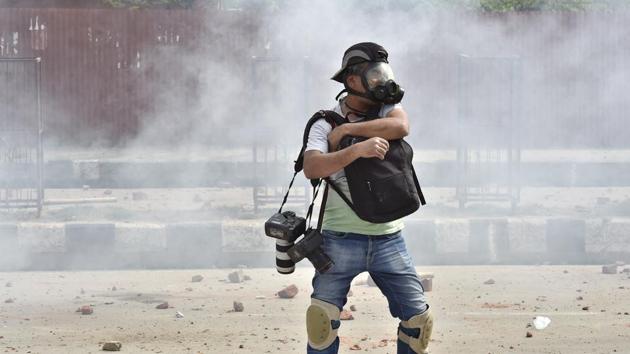
Beside the constant dangers associated with their profession, the photographers face the pressure of demonstrating daily, one’s neutrality in a profession that is under attack due to the impact of a photograph and the huge numbers of people in the field.There are more than 10 local papers in the Valley and as many photo agencies. (Ajay Aggarwal / HT Photo)
9/13
 View Photos in a new improved layout
Updated on May 01, 2018 5:57 PM
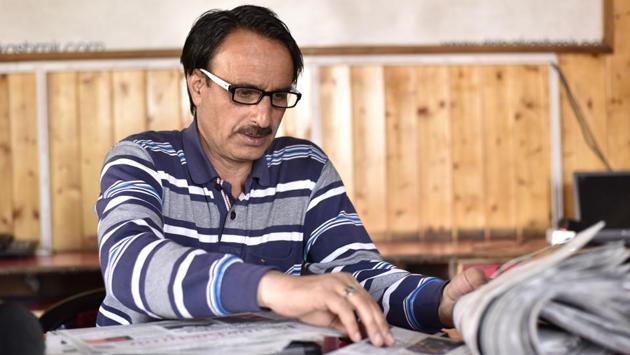
Farooq Javed Khan, president of the Kashmir Press Photographers Association flips through a newspaper at Rising Kashmir’s office in Srinagar. “Questions are constantly thrown at us about our work. For a newspaper photo, in case of a death, we try not to show the body so people say, ‘you never show the body because you don’t want to show,” Khan said. (Ajay Aggarwal / HT Photo)
10/13
 View Photos in a new improved layout
Updated on May 01, 2018 5:57 PM
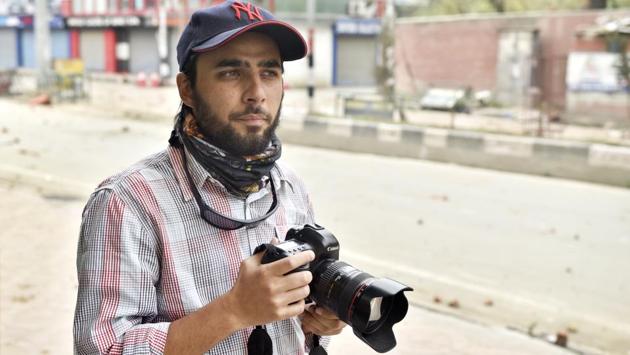
Ahmer Khan, an independent photo and radio journalist during a protest. Advising young photographers, Farooq Khan talks of documenting sides of Kashmir other than the conflict. “Show Kashmir’s culture, its nature,” said Farooq. His advice however has only few takers as most of them believe a day shooting papier mache handicrafts or the Tulip Garden cannot build an alternative reality of the region. (Ajay Aggarwal / HT Photo)
11/13
 View Photos in a new improved layout
Updated on May 01, 2018 5:57 PM
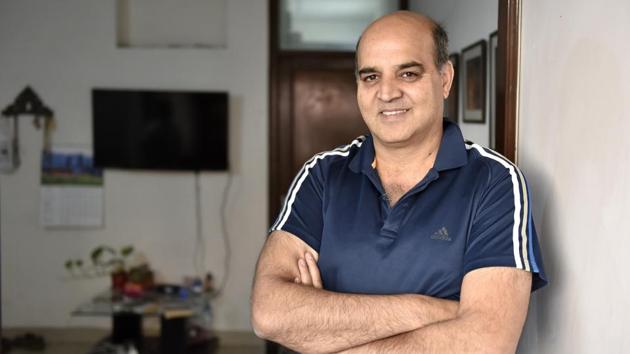
According to Sheikh Mushtaq, a formers Reuters journalist for whom Kabli has shot many assignments, the caption is like the first paragraph of a reporter’s story. “The brief for us both was always to be fair. In Reuters, the best photo was used even if it hurt the militants, or upset India or Pakistan,” he said. (Ajay Aggarwal / HT Photo)
12/13
 View Photos in a new improved layout
Updated on May 01, 2018 5:57 PM
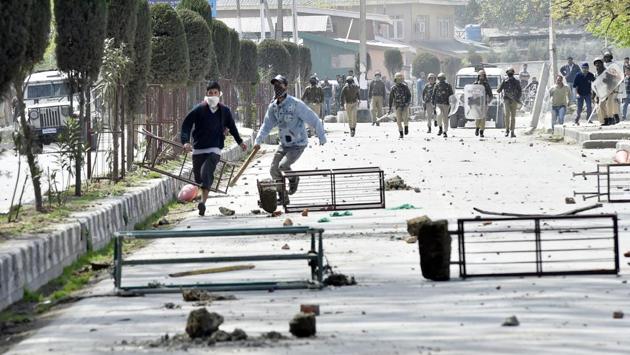
Students of Amar Singh Degree College clash with security personnel outside their college after four days of shutdown over the Shopian killing, in Srinagar on April 5, 2018. Kabli similarly feels the profession is best served if he, a photographer, does his job impartially. “The reason I have never felt any pressure is we were taught to mention, first and foremost, both sides in the caption – the police story and the militant story,” he said. (Ajay Aggarwal / HT Photo)
13/13
 View Photos in a new improved layout
Updated on May 01, 2018 5:57 PM


