
 E-Paper



Photos: Beijing witnesses biggest sandstorm in decades
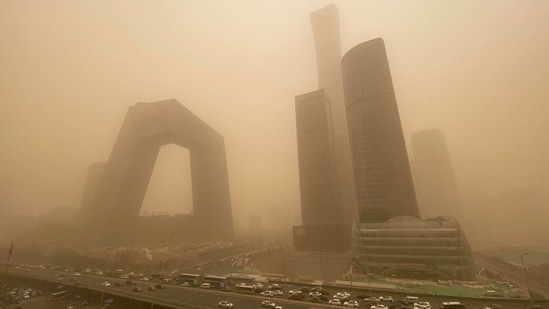
On March 15, pollution levels in Beijing surged off the charts as the worst sandstorm in a decade descended on China's capital from the Gobi desert. According to Chinese weather agencies, the poor air quality on a sandstorm sweeping across northern China arrived from northern Mongolia, where authorities there said it had left several dead, before being carried south by winds and reducing visibility in Beijing to less than 500 metres. Experts believe that lack of rain or snow recently made the ground extra dry which eventually resulted in a severe sandstorm.
Published on: Mar 16, 2021 3:30 PM IST


Share via


Copy link

1/9
 View Photos in a new improved layout
Published on Mar 16, 2021 3:30 PM
High-rise buildings engulfed in a thick layer of smog in the central business district of Beijing during a sandstorm on March 15. Beijing was cloaked in thick smog on March 15 with pollution levels surging off the charts as the worst sandstorm in a decade descended on China's capital from the Gobi desert. (Leo Ramirez / AFP)
2/9
 View Photos in a new improved layout
Published on Mar 16, 2021 3:30 PM
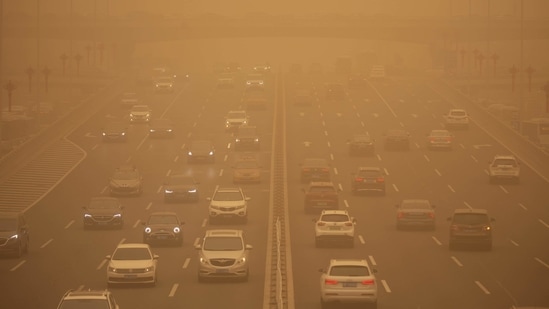
Vehicles are seen on an expressway during the sandstorm in Beijing, on March 15. (Mark Schiefelbein / AP)
3/9
 View Photos in a new improved layout
Published on Mar 16, 2021 3:30 PM
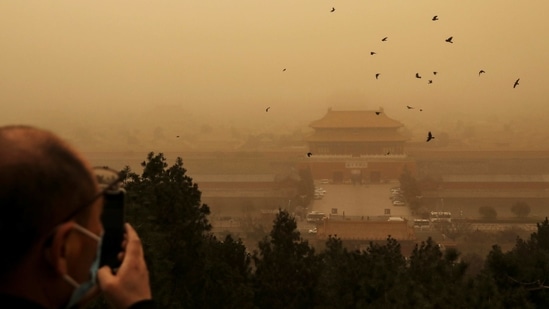
A visitor wearing a face mask films birds flying past the Forbidden City at Jingshan Park during the sandstorm, in Beijing, on March 15. Residents used goggles, masks and hairnets to protect themselves from the choking dust and sand, with landmarks including the Forbidden City partly obscured behind an apocalyptic-looking haze. (Tingshu Wang / REUTERS)
4/9
 View Photos in a new improved layout
Published on Mar 16, 2021 3:30 PM
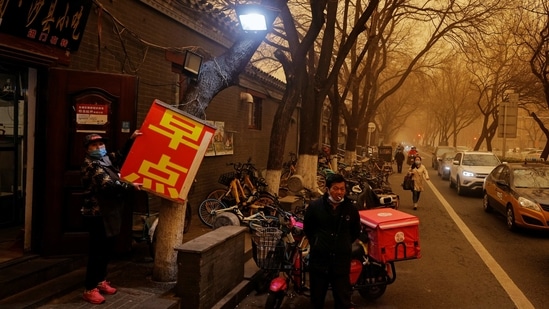
A woman hangs a sign outside a shop during the morning rush hours in Beijing, on March 15. Hundreds of flights were cancelled due to the sandstorm and the city government ordered schools to cancel outside sport and events and advised the public to stay inside where possible. (Thomas Peter / REUTERS)
5/9
 View Photos in a new improved layout
Published on Mar 16, 2021 3:30 PM
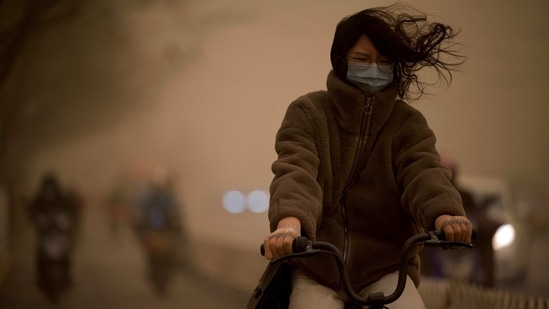
A woman cycles along a street during the sandstorm in Beijing, on March 15. Chinese weather agencies blamed the poor air quality on a sandstorm sweeping across northern China from northern Mongolia, where authorities there said it had left several dead, before being carried south by winds and reducing visibility in Beijing to less than 500 metres, AFP reported. (Noel Celis / AFP)
6/9
 View Photos in a new improved layout
Published on Mar 16, 2021 3:30 PM
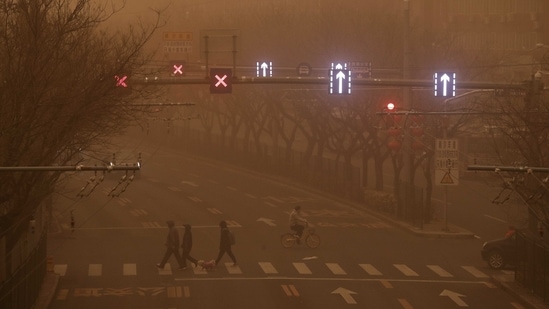
Commuters cross a street during the sandstorm in Beijing, on March 15. Under heavy skies, which draped buildings in an eerie glow, residents fretted over the health risks of a storm which compounded days of hazardous PM 2.5 pollution in Beijing. (Andy Wong / AP)
7/9
 View Photos in a new improved layout
Published on Mar 16, 2021 3:30 PM
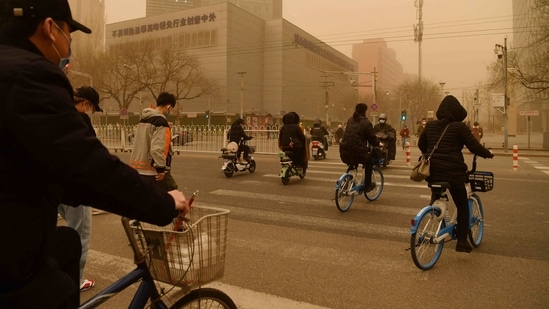
Cyclists cross a road during the sandstorm in Beijing, on March 15. Pan Xiaochuan, a Beijing-based environmental health expert, told AFP that the lack of recent rain or snow meant the ground was extra dry and made the sandstorm "very fierce." (Greg Baker / AFP)
8/9
 View Photos in a new improved layout
Published on Mar 16, 2021 3:30 PM
A woman walks her dogs during the sandstorm in Beijing, on March 15. Beijing said last year it expected fewer and weaker sandstorms to hit northern China due to its reforestation efforts, AFP reported. (Ng Han Guan / AP)
9/9
 View Photos in a new improved layout
Published on Mar 16, 2021 3:30 PM


