
 E-Paper



Photos: Western US braces for record heat wave
Much of the American West has been blasted with sweltering heat this week as a high pressure dome combines with the worst drought in modern history to launch temperatures into the triple digits, toppling records even before the official start of summer.
Published on: Jun 19, 2021 4:41 PM IST


Share via


Copy link

1/8
 View Photos in a new improved layout
Published on Jun 19, 2021 4:41 PM
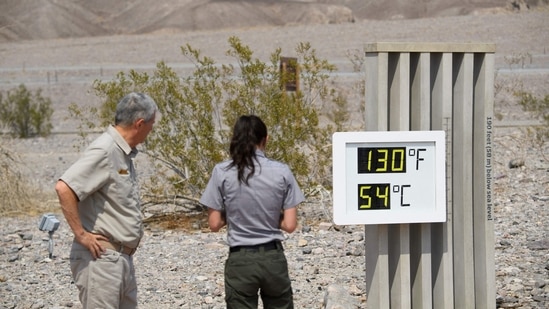
Park staff take pictures of a thermometer display showing temperatures of 130 Degrees Fahrenheit (54 Degrees Celsius) at the Furnace Creek Visitor's Center at Death Valley National Park in June 17 in Furnace Creek, California. Much of the western United States is braced for record heat waves this week, with approximately 50 million Americans placed on alert June 15 for "excessive" temperatures, which could approach 120 degrees Fahrenheit (50 degrees Celsius) in some areas. (Patrick T. Fallon / AFP)
2/8
 View Photos in a new improved layout
Published on Jun 19, 2021 4:41 PM
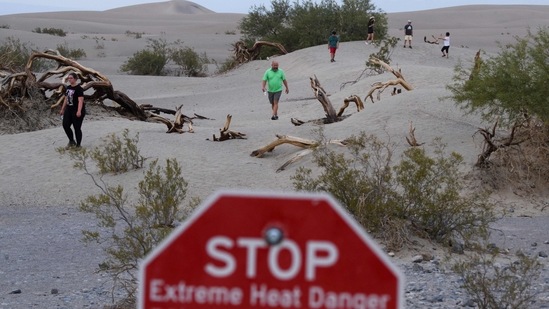
Extreme heat danger signage stands as visitors walk along sand dunes at sunset inside Death Valley National Park in June 17 in Inyo County, California. The U.S National Park Service has warned of extreme summer heat, urging tourists to carry extra water and "travel prepared to survive" in the hottest, lowest, and driest national park featuring steady drought and extreme climates. (Patrick T. Fallon / AFP)
3/8
 View Photos in a new improved layout
Published on Jun 19, 2021 4:41 PM
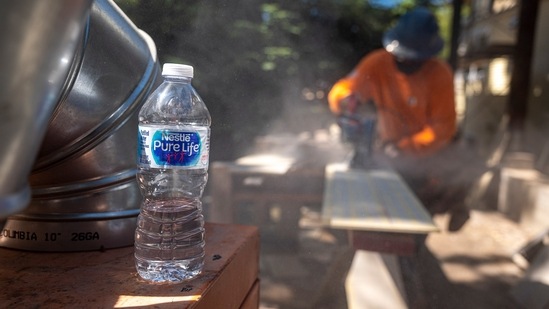
A water bottle placed nearby as a contractor uses a saw to cut siding for a house under construction in Walnut Creek, California on June 17. The triple-digit heat wave gripping the western US is also straining power supplies, risking large scale blackouts. (David Paul Morris / Bloomberg)
4/8
 View Photos in a new improved layout
Published on Jun 19, 2021 4:41 PM
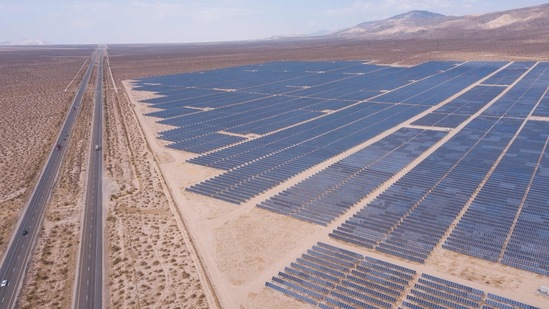
An aerial image shows vehicles driving on the California 14 Highway as solar panels, part of an electricity generation plant, stand on June 18 in Kern County near Mojave, California. The California ISO, which oversees the state's power generation, extended a Flex Alert asking customers to conserve electricity amid concerns of power outages during the heat wave. (Patrick T. Fallon / AFP)
5/8
 View Photos in a new improved layout
Published on Jun 19, 2021 4:41 PM
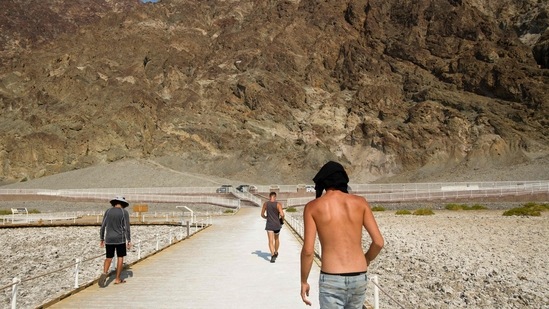
Visitors walk by the salt flats of Badwater Basin inside Death Valley National Park on June 17 in Inyo County, California. The heat comes from a high pressure system over the West, a buckle in the jet stream winds that move across the US and vast swaths of soil sucked dry by a historic drought, Marvin Percha, a senior meteorologist for the National Weather Service in Phoenix told AP. (Patrick T. Fallon / AFP)
6/8
 View Photos in a new improved layout
Published on Jun 19, 2021 4:41 PM
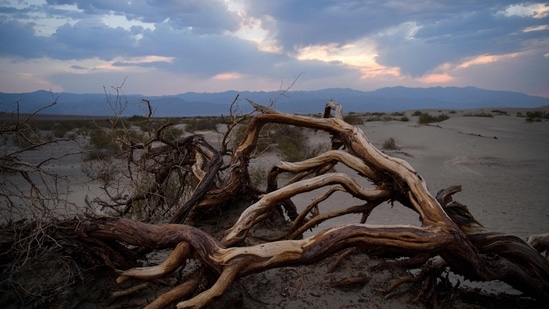
Branches rest along sand dunes as clouds pass overhead at sunset inside Death Valley National Park in June 17 in Inyo County, California. Another aggravator is a two-decade-long dry spell that some scientists refer to as a “megadrought”, that has sucked the moisture out of the soil through much of the region. Researchers said in a study published last year in the journal Science that man-made climate change tied to the emission of greenhouse gases can be blamed for about half of the historic drought. (Patrick T. Fallon / AFP)
7/8
 View Photos in a new improved layout
Published on Jun 19, 2021 4:41 PM
People ride on tubes at Six Flags Hurricane Harbor water park in Concord, California on June 17. The hot weather can be tied to the drought drying out the landscape. Normally, some of the sun’s heat evaporates moisture in the soil, but scientists say the Western soil is so dry that instead that energy makes the air even warmer. (David Paul Morris / Bloomberg)
8/8
 View Photos in a new improved layout
Published on Jun 19, 2021 4:41 PM


