
 E-Paper



Photos: A hermit haven emerges along the vanishing Dead Sea in Israel
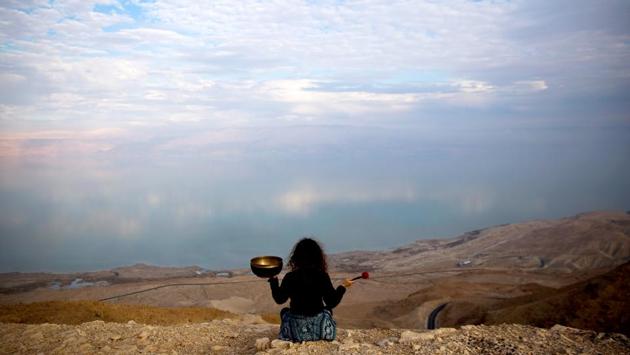
The Dead Sea's salt-rich waters are vanishing and its shores are being devoured by sinkholes, making Metzoke Dragot beach one of the last unspoiled spots at the lowest point on the planet. The lake which has drawn monks, small Jewish sects, early Christians, travellers and tourists who enjoy floating in the highly-buoyant water and covering themselves with its mineral-rich mud is now also home to hermits seeking refuge from the modern rat-race.
Updated on: Mar 1, 2018 10:10 AM IST


Share via


Copy link

1/10
 View Photos in a new improved layout
Updated on Mar 1, 2018 10:10 AM
A naked man covered in mud lies on a beach, while nearby a dreadlocked recluse reads from the Book of Exodus and a woman strikes a low soothing note from a Tibetan singing bowl. It’s sunset at the Metzoke Dragot beach by the Dead Sea, one of the last unspoiled spots at the lowest point on the planet where the New Age melds with a biblical vista in danger of becoming a paradise lost. (Ronen Zvulun / REUTERS)
2/10
 View Photos in a new improved layout
Updated on Mar 1, 2018 10:10 AM
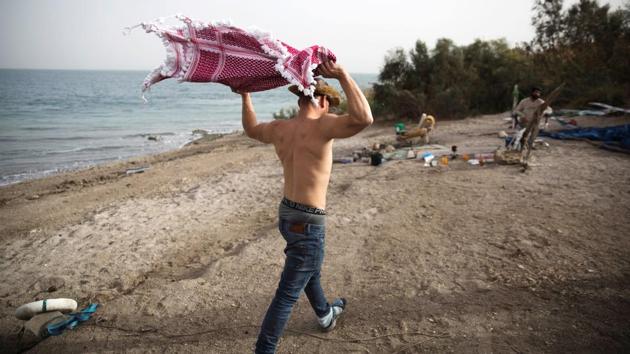
Levi holds a keffiyeh, an Arab head scarf, as he walks along the shore of the Dead Sea. A rocky trail leads down the desert road to Metzoke Dragot. The beach is in the northern part of the Dead Sea that borders Israel, the West Bank and Jordan. Over centuries the ancient lake has drawn monks, early Christians, Jewish sects, travelers seeking spiritual elation and tourists who enjoy floating and mud-baths. (Ronen Zvulun / REUTERS)
3/10
 View Photos in a new improved layout
Updated on Mar 1, 2018 10:10 AM
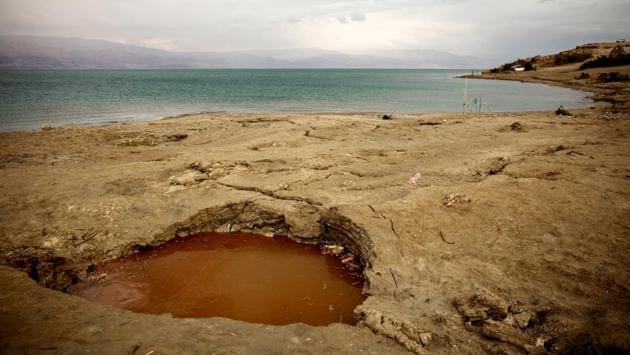
But in recent years, beaches have shut down as signs warning against sinkholes have sprung up along the shoreline. The sinkholes are a result of mineral mining and the interaction between freshwater and a salt layer, buried deep beneath the surface. As fresh water dissolves the salt, it creates an underground void, leading to sudden collapses on the surface. (Ronen Zvulun / REUTERS)
4/10
 View Photos in a new improved layout
Updated on Mar 1, 2018 10:10 AM
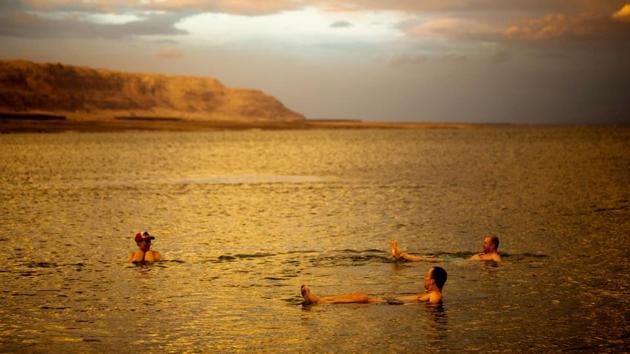
Tourists from Poland float in the Dead Sea during sunset near Metzoke Dragot. During high season in winter when the heat is bearable, tourists flock here for getaways. Sufferers from chronic skin diseases, such as psoriasis and eczema, routinely make pilgrimages drawn by claims of the Sea’s miraculous healing properties. (Ronen Zvulun / REUTERS)
5/10
 View Photos in a new improved layout
Updated on Mar 1, 2018 10:10 AM
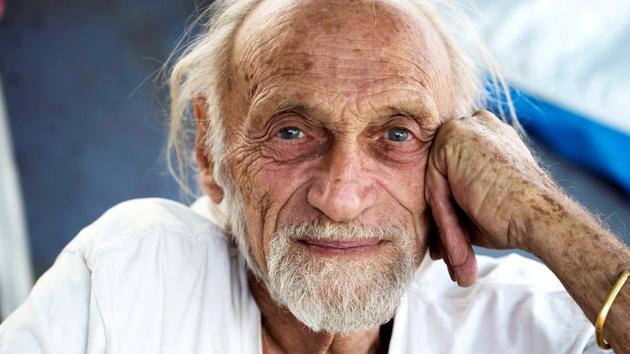
Baruch sits near his tent on the shore of the Dead Sea. And there are also those who choose to stay - indefinitely. These hermits seek refuge from modern day life and hope to avoid the rat race. (Ronen Zvulun / REUTERS)
6/10
 View Photos in a new improved layout
Updated on Mar 1, 2018 10:10 AM
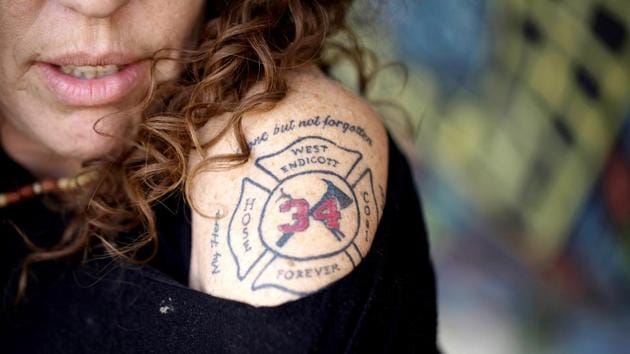
Jade, a former fire-fighter from New York, arrived here for therapeutic purposes with the intention of going back to her home in Jerusalem but has been living by the beach for a year now. Her Zula or makeshift camp is lined with crystals, herbs growing in pots, books and packets of food she brings once a week from Jerusalem. (Ronen Zvulun / REUTERS)
7/10
 View Photos in a new improved layout
Updated on Mar 1, 2018 10:10 AM
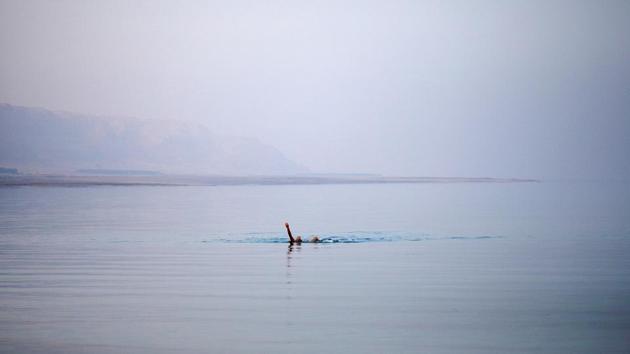
However, the Sea is disappearing at a rate of more than a metre a year, mainly because its natural water sources, which flow south through the Jordan River valley from Lebanon and Syria, have been diverted for farming and drinking water. (Ronen Zvulun / REUTERS)
8/10
 View Photos in a new improved layout
Updated on Mar 1, 2018 10:10 AM
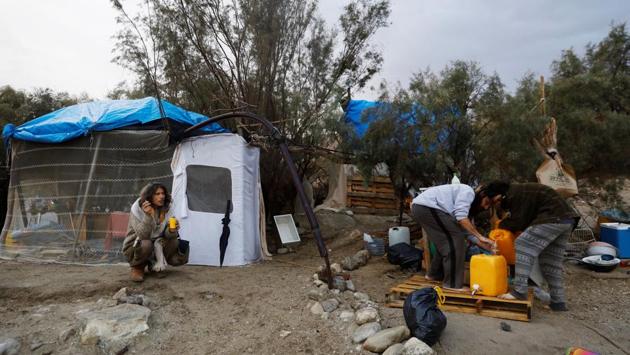
Avraham (L) sits near his makeshift camp as Bar (R) and his friend pour water into a container, on the shore of the Dead Sea. Today, a handful of Zulas, Hebrew slang for a hangout, dot the beach. They are mostly built with branches, tarp and old sheets that provide the beach’s hermits cover from the baking sun. (Ronen Zvulun / REUTERS)
9/10
 View Photos in a new improved layout
Updated on Mar 1, 2018 10:10 AM
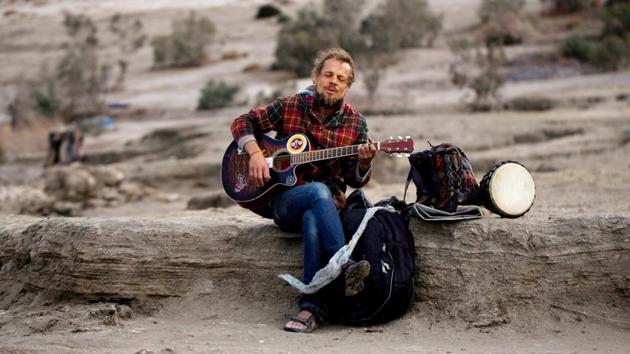
Zina, a tourist from Belarus, plays his guitar as he sits on the shore. “Half the world is hi-tech. I’m with the other half,” said Mark, another hermit living here. Often relying on the kindness of strangers for food, they live on the beach without electricity or a mobile phone. (Ronen Zvulun / REUTERS)
10/10
 View Photos in a new improved layout
Updated on Mar 1, 2018 10:10 AM


