
 E-Paper



Photos: Costumes, Geishas and Yakuza at Japan’s Sanja Matsuri festival
For three days in May every year, nearly two million visitors descend on the charged streets of Asakusa in Tokyo for Sanja Matsuri celebrations. Over the course of these days, groups of men, women and children carry portable shrines between Senso-ji Temple and the nearby shrine in honour of the three men who built the temple. Main attractions include costumed dancers, performances of the Taiko Japanese drums, Geishas as well as plenty of Yakuza members out and about in just their underwear.
Updated on: May 22, 2018 2:28 PM IST

Share via


Copy link

1/11
 View Photos in a new improved layout
Updated on May 22, 2018 2:28 PM
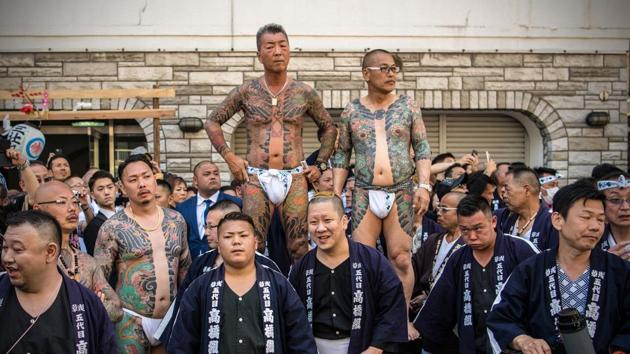
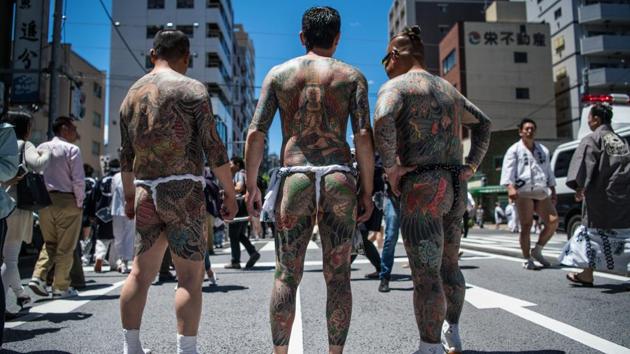
Japanese men sporting irezumi tattoos, associated with a life in the Yakuza, wait for the arrival of a mikoshi (portable shrine) near Asakusa Temple on the third and final day of Sanja Festival in Tokyo, Japan. Sanja Matsuri is one of Japan’s major festivals and held annually in the Asakusa area of Tokyo. (Carl Court / Getty Images)
2/11
 View Photos in a new improved layout
Updated on May 22, 2018 2:28 PM
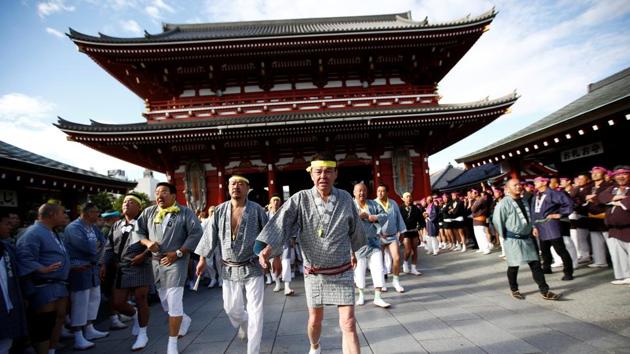
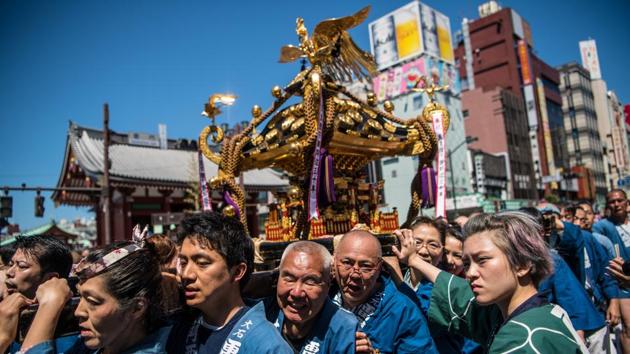
People make their way to carry a mikoshi, at the Senso-ji Temple. The festival is held in celebration of the three founders of the temple, who are enshrined next door in Asakusa Shrine. Nearly two million people visit Asakusa over the festival, making it one of Tokyo’s most popular. (Kim Kyung-Hoon / REUTERS)
3/11
 View Photos in a new improved layout
Updated on May 22, 2018 2:28 PM
At the centre of the festival are three large mikoshi representing the founders, which are paraded along the streets on the final day of the festival. Competition is fierce between the groups, dressed in matching costumes, hoisting each shrine on their shoulders. (Kim Kyung-Hoon / REUTERS)
4/11
 View Photos in a new improved layout
Updated on May 22, 2018 2:28 PM
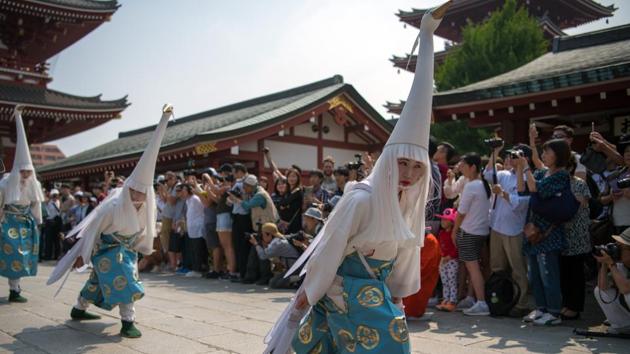
Participants in swan costumes perform a dance during the first day of the festival on May 18. The day is filled with official parades, music and food stalls along Asakusa’s streets. There are dances and Shinto prayers for a good harvest and prosperity. (Carl Court / Getty Images)
5/11
 View Photos in a new improved layout
Updated on May 22, 2018 2:28 PM
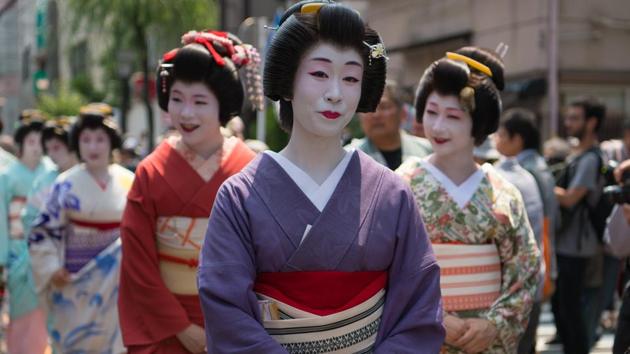
A procession of Geishas takes part in a festive parade. Icons of Japan’s past, the Geisha’s pose with visitors and also put on special ticketed performances during these days. These are ranked among the country’s top ten Geisha shows. (Carl Court / Getty Images)
6/11
 View Photos in a new improved layout
Updated on May 22, 2018 2:28 PM
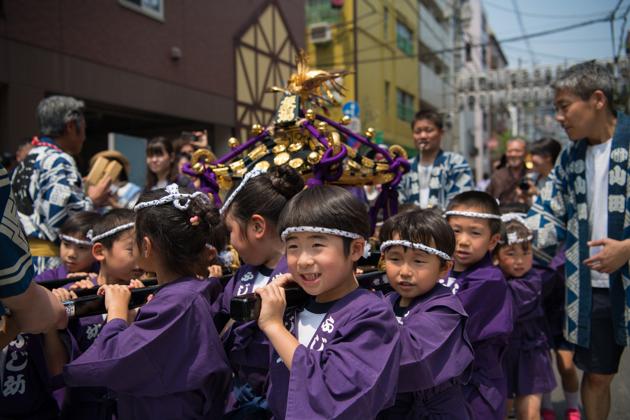
On the second day, nearly a hundred portable shrines from the district’s 44 neighbourhoods, in which Shinto deities (kami) are symbolically placed are carried to Senso-ji Temple and Asakusa Shrine to be blessed before being paraded around shops and homes to spread luck and prosperity. Special mikoshi exist for children and women. (Carl Court / Getty Images)
7/11
 View Photos in a new improved layout
Updated on May 22, 2018 2:28 PM
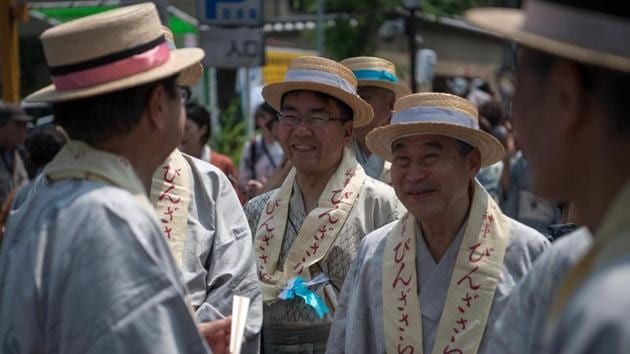
The streets fill up with participants in period costumes, many dressed in traditional Edo era styles. Participants dress in costumes that match their roles in the parade, as officials, musicians or dancers. (Carl Court / Getty Images)
8/11
 View Photos in a new improved layout
Updated on May 22, 2018 2:28 PM
The festival is a rare show of strength when gang members strip down to their fundoshi (sumo underwear) and make their presence known in the crowds. One hundred Yakuza members rally together to carry their own portable shrine and gang members also pose for the public showing off their body art. (Carl Court / Getty Images)
9/11
 View Photos in a new improved layout
Updated on May 22, 2018 2:28 PM
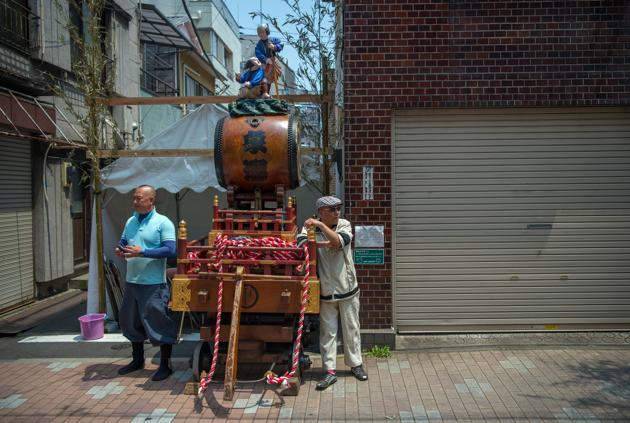
Men wait by a traditional drum used in Taiko during the festival. Musicians playing flutes and beating drums accompany the floats and shrines through the streets. The Binzasara Mai dance performed at the main shrine uses a special accordion like instrument made of bamboo strips. (Carl Court / Getty Images)
10/11
 View Photos in a new improved layout
Updated on May 22, 2018 2:28 PM
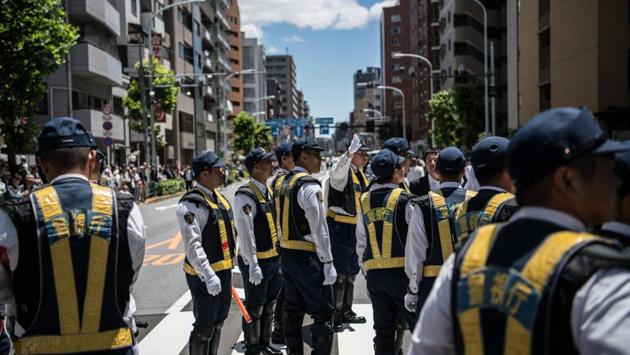
Police officers attempt to control the procession during the third and final day. Despite their presence, there is no confrontation between police and the Yakuza during the festival. (Carl Court / Getty Images)
11/11
 View Photos in a new improved layout
Updated on May 22, 2018 2:28 PM


