
 E-Paper



Photos: Emaciated teen, the face of famine in Yemen inches to recovery
A year on from the photo of Saida Ahmed Baghili's emaciated frame that made headlines internationally, symbolising the humanitarian crisis in war-torn Yemen, the teenager now at home with her family is barely recognisable and on the steep road to recovery.
Updated on: Nov 02, 2017 2:15 PM IST

Share via


Copy link

1/7
 View Photos in a new improved layout
Updated on Nov 02, 2017 2:15 PM
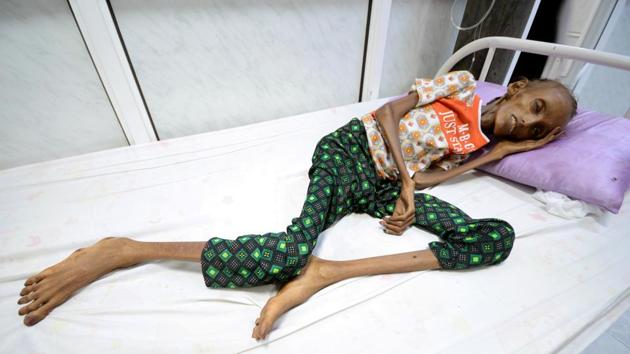
Saida Ahmed Baghili, 18, lies on a bed at the al-Thawra hospital in Yemen on October 24, 2016. Saida is now barely recognisable a year on from the photo of her emaciated frame that came to symbolize the country’s humanitarian crisis. (Abduljabbar Zeyad / REUTERS)
2/7
 View Photos in a new improved layout
Updated on Nov 02, 2017 2:15 PM
Saida (R), now 19, and recovering from severe malnutrition, stands by her 12-year-old sister Jalila inside their family’s hut in al-Tuhaita district of Hodeidah, Yemen on October 20, 2017. Baghili now weighs 36kg according to her father, more than triple the 11kg she weighed last October when Reuters first met her at the hospital in Sana’a, where she was undergoing treatment for severe malnutrition. (Abduljabbar Zeyad / REUTERS)
3/7
 View Photos in a new improved layout
Updated on Nov 02, 2017 2:15 PM
Saida holds a toy aircraft at her family’s hut in al-Tuhaita on October 20, 2017. Baghili’s plight reflects that of many families in the Arabian Peninsula’s poorest country, where a two-and-a-half-year war between a Saudi-led Arab coalition and Iran-allied Houthis has claimed 10,000 lives. A quarter of the 28 million population are starving, according to the UN, with half a million children under the age of 5 severely malnourished (Abduljabbar Zeyad / REUTERS)
4/7
 View Photos in a new improved layout
Updated on Nov 02, 2017 2:15 PM
Saida Ahmed Baghili, then 18, stands on a scale at the al-Thawra hospital on November 26, 2016. There Saida was unable to talk, let alone carry her ghostly, skeletal frame, now stronger after weeks of specialist care and rest. ‘Saida’s body got better because she’s eating better, but she’s still having trouble swallowing,’ her father Ahmed Baghili said this month. (Abduljabbar Zeyad / REUTERS)
5/7
 View Photos in a new improved layout
Updated on Nov 02, 2017 2:15 PM
Saida (2nd L), sits for a photograph with her father and siblings in Hodeidah on October 20, 2017. Ahmed Baghili is only able to supply the basics for his family of 10, who live in a parched village on the Red Sea coast. He says he doesn’t have enough money to send Saida for further treatment and fears for her health. Her last appointment with a doctor was in December. (Abduljabbar Zeyad / REUTERS)
6/7
 View Photos in a new improved layout
Updated on Nov 02, 2017 2:15 PM
Saida strokes a calf as her sisters Amal (front), and Jalila play on a swing near their family’s hut. Saida is able to help her father tend to a farmer’s cattle in exchange for milk, with their income boosted by Ahmed making deliveries on his motorcycle and donations from humanitarian organizations. (Abduljabbar Zeyad / REUTERS)
7/7
 View Photos in a new improved layout
Updated on Nov 02, 2017 2:15 PM


