
 E-Paper



Photos: Fear and defiance mark life for Pakistan’s minority Hazaras
In the southwestern city of Quetta, the Pakistan’s Hazara community has high walls around the neighbourhoods, designed not only to protect them from extremist militants but also serve as a constant reminder of the threat they face. They have several checkposts for security, which makes them feel totally cut off from other communities but despite suffering tragedies and incidents, they strive for peace and development and want to grow as a community.
Updated on: Jul 10, 2019 10:19 AM IST

Share via


Copy link

1/10
 View Photos in a new improved layout
Updated on Jul 10, 2019 10:19 AM
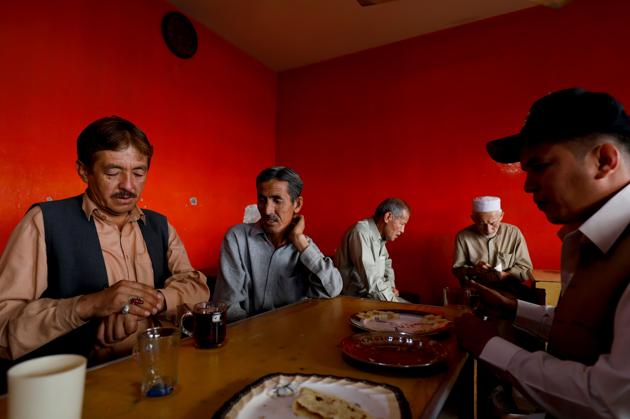
Hazara men have tea and breakfast at a local restaurant in Mariabad, Quetta, Pakistan. Hazaras, said to be descendants of the Mongols who swept out of central Asia to rule the subcontinent for many centuries, are easily distinguishable in Pakistan by their facial features. That has made them vulnerable to attacks by groups such as Pakistan’s banned Lashkar-e-Jhangvi (LeJ), and Sunni militant group Islamic State, which has attacked them in both Pakistan and neighbouring Afghanistan, also home to many Hazaras. (Akhtar Soomro / REUTERS)
2/10
 View Photos in a new improved layout
Updated on Jul 10, 2019 10:19 AM
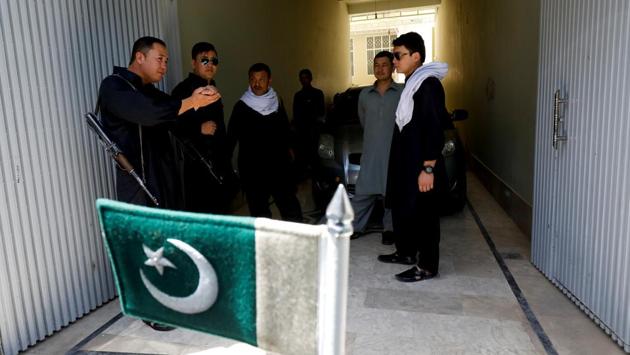
Pakistan's national flag attached to a vehicle is seen as armed guards, who provide security for Abdul Khaliq Hazara, politician and chairman of the Hazara Democratic Party (HDP), chat with each other at his residence. Soldiers and security checkpoints greet visitors to Hazara town, one of two large guarded neighbourhoods in the capital of Baluchistan, a province where religious and sectarian groups often target the mostly Shia Hazaras with bombs and guns. (Akhtar Soomro / REUTERS)
3/10
 View Photos in a new improved layout
Updated on Jul 10, 2019 10:19 AM
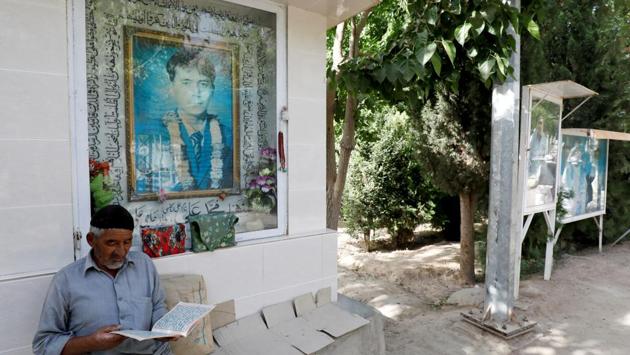
A Hazara man reads the Koran along a passageway with photos of deceased victims who lost their lives during bomb attacks, at the graveyard. Despite improved security in recent years, partly because most Hazaras have moved into the guarded enclaves, hardline Sunni militants keep up attacks, such as a blast in April that killed 24 people, among them eight Hazaras. (Akhtar Soomro / REUTERS)
4/10
 View Photos in a new improved layout
Updated on Jul 10, 2019 10:19 AM
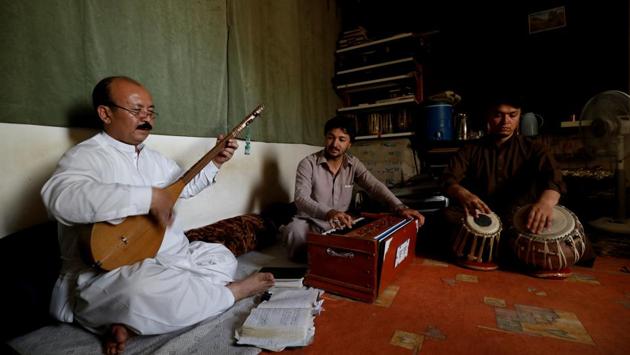
Mir Hussain Changazi (L) from Hazara community plays Hazargi instrument Damboora, as he sings traditional songs along with Fida Hussain playing Harmonium and Zia Noorband on Tabla, as they practice at Aahanga musical academy. (Akhtar Soomro / REUTERS)
5/10
 View Photos in a new improved layout
Updated on Jul 10, 2019 10:19 AM
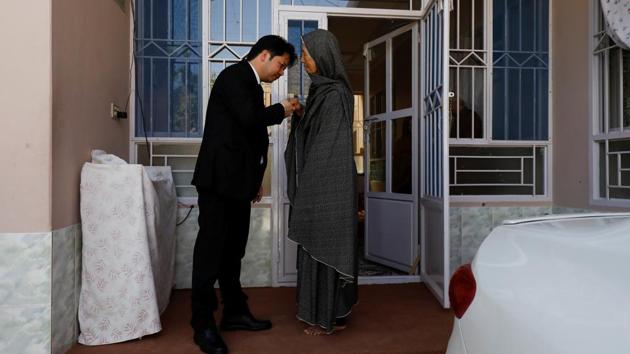
Sardar Sahil, 30-year-old Hazara lawyer and rights activist, kisses his mother's hand before leaving for office. “We are living under siege for more than 1-1/2 decades due to sectarian attacks,” he said. “I kiss my mother’s hand and she kisses me too and says goodbye with her prayers and good wishes,” he added. Sahil carries a pistol whenever he leaves home, and relies on his faith as a second layer of security. (Akhtar Soomro / REUTERS)
6/10
 View Photos in a new improved layout
Updated on Jul 10, 2019 10:19 AM
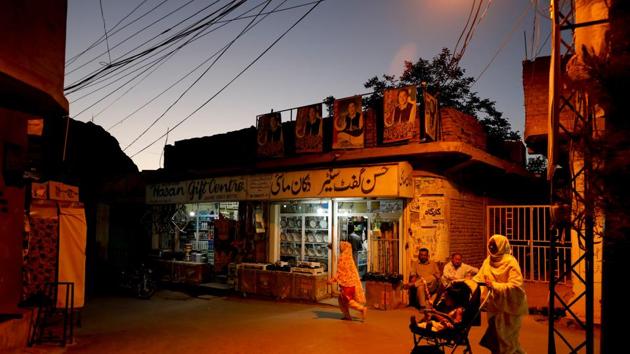
Resident walk past a shop during sunset hours along a street in Mariabad. Many community businesses that flourished in Quetta’s bustling wholesale markets have shuttered and relocated to Hazara Town or Mari Abad, another Hazara neighbourhood. But the community is defiant. Some still venture out into Quetta in search of work, while others keep businesses running. (Akhtar Soomro / REUTERS)
7/10
 View Photos in a new improved layout
Updated on Jul 10, 2019 10:19 AM
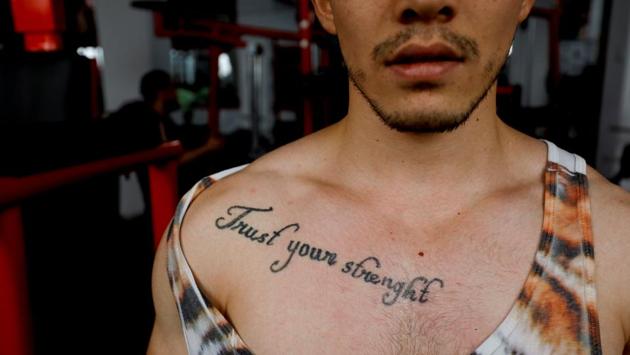
Naveed Ali Hazara, 23, poses for a photograph at a gym. "We are doing body-building; firstly to build health and secondly, as sports gives you extra strength and keeps us away from drugs," Naveed said. (Akhtar Soomro / REUTERS)
8/10
 View Photos in a new improved layout
Updated on Jul 10, 2019 10:19 AM
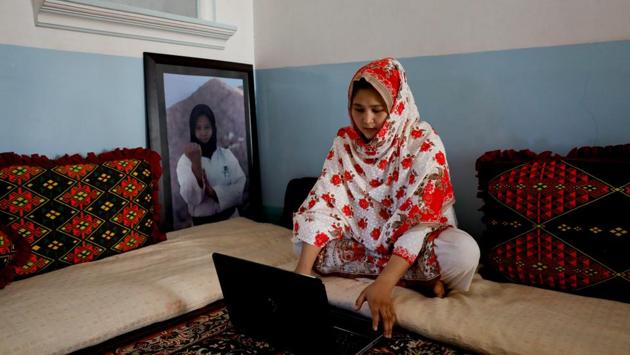
Nargis Hazara, 20, martial arts specialist, works on her computer as she sits beside her portrait at her home. Domestic media often portray the Hazaras as targets of sectarian attacks or holding sit-ins to demand greater protection, but the community is developing and growing, said Nargis, who last year became Pakistan’s first winner of an Asian Games medal in karate. (Akhtar Soomro / REUTERS)
9/10
 View Photos in a new improved layout
Updated on Jul 10, 2019 10:19 AM
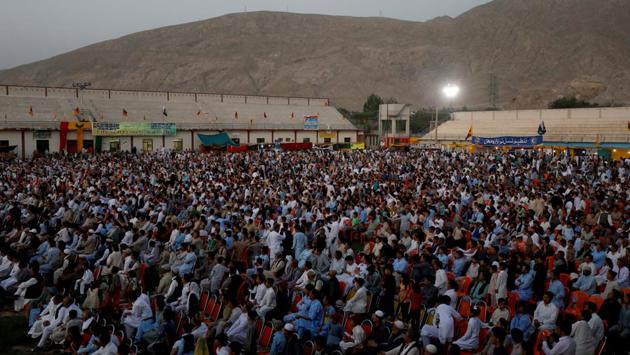
People watch traditional music performance during the Hazara Culture Day celebration at the Qayum Papa Stadium. The community held its first Hazara Culture Day to celebrate and showcase its history, music and traditions as it strives to keep its protests peaceful, despite unrest stirred up by militants looking to pit people of different sects against each other, said Abdul Khaliq Hazara, chairman of the Hazara Democratic Party (HDP), which has two provincial assembly representatives. (Akhtar Soomro / REUTERS)
10/10
 View Photos in a new improved layout
Updated on Jul 10, 2019 10:19 AM


