
 E-Paper



Photos: Hawaii’s Kilauea volcano lava reaches Pacific Ocean
Kilauea volcano, one of the world’s most active, opened new fissures on the ground on May 3, marking the latest phase of an eruption cycle that has continued nearly non-stop for 35 years. Hawaii residents coping with Kilauea's volcanic eruption faced a potentially deadly new hazard on Sunday as authorities warned that lava flow had reached the Pacific Ocean could produce noxious clouds of acid fumes, steam and tiny, glass-like particles. The volcano also notched its first serious injury after spitting lava that hit a local resident in the leg.
Updated on: May 21, 2018 12:15 PM IST

Share via


Copy link

1/9
 View Photos in a new improved layout
Updated on May 21, 2018 12:15 PM
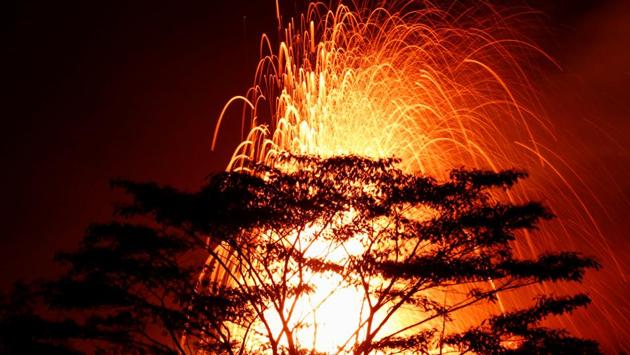
Kilauea volcano that has been oozing lava, spewing and exploding on Hawaii’s Big Island has taken a more hazardous tun, sending rivers of molten rock pouring into the Pacific Ocean Sunday and launching lava skyward that caused the first major injury. (Terray Sylvester / REUTERS)
2/9
 View Photos in a new improved layout
Updated on May 21, 2018 12:15 PM
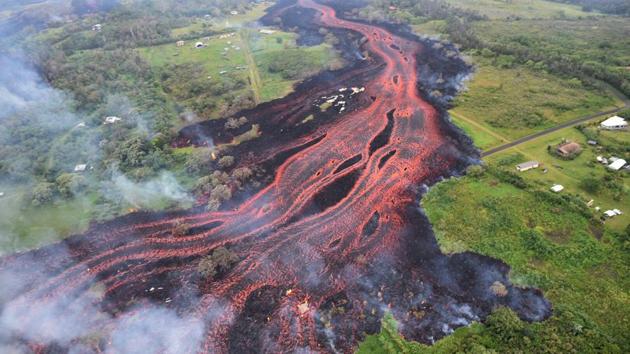
Lava flows from fissures near Pahoa, Hawaii. The volcano began erupting more than two weeks ago and has since burned down dozens of homes, forced people to flee and shot up plumes of steam from its summit that led officials to distribute face masks to protect against ash particles. (US Geological Survey / AP)
3/9
 View Photos in a new improved layout
Updated on May 21, 2018 12:15 PM
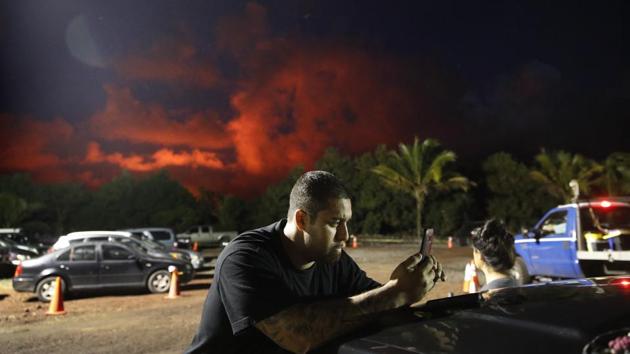
Evacuee Michael Hauanao, 32, watches a clip on a phone showing volcanic activity at a makeshift donation centre as clouds turn red from lava flow in the Leilani Estates subdivision. Lava flows have picked up speed in recent days, spattering molten rock that hit a man in the leg. (Jae C. Hong / AP)
4/9
 View Photos in a new improved layout
Updated on May 21, 2018 12:15 PM
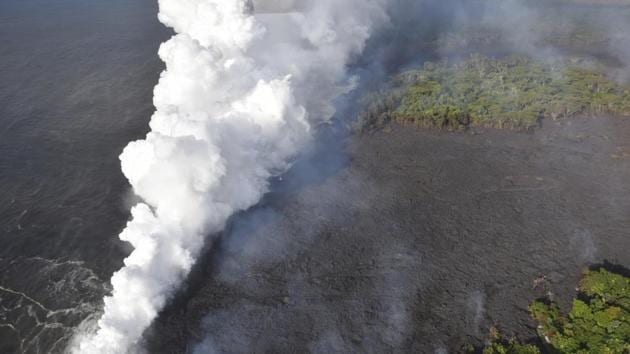
Lava from fissure 20 is seen entering the ocean near Pahoa, Hawaii on Sunday. The interaction of lava and seawater has created a cloud of steam laced with hydrochloric acid and fine glass particles that can irritate the skin and eyes and cause breathing problems. (US Geological Survey / AP)
5/9
 View Photos in a new improved layout
Updated on May 21, 2018 12:15 PM
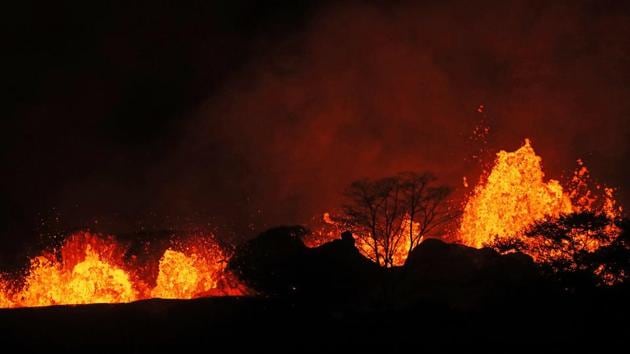
Kilauea, one of the world’s most active volcanoes, began extruding red-hot lava and sulphuric acid fumes through newly opened fissures on the ground along its eastern flank on May 3, marking the latest phase of an eruption cycle that has continued nearly non-stop for 35 years. (Jamm Aquino / Honolulu Star-Advertiser / AP)
6/9
 View Photos in a new improved layout
Updated on May 21, 2018 12:15 PM
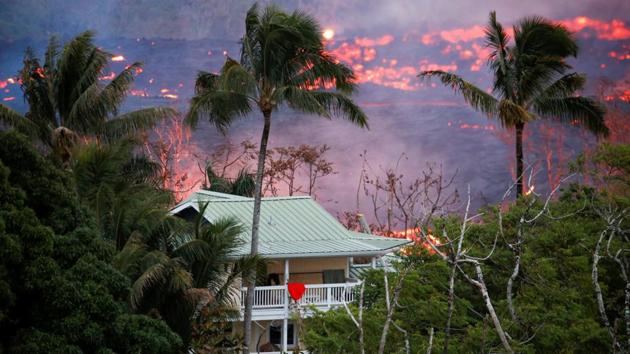
Lava flows near a house on the outskirts of Pahoa. The lava haze, or “laze,” extended as far as 24 kilometers west of where the lava gushed into the ocean on Big Island’s southern coast. (Terray Sylvester / REUTERS)
7/9
 View Photos in a new improved layout
Updated on May 21, 2018 12:15 PM
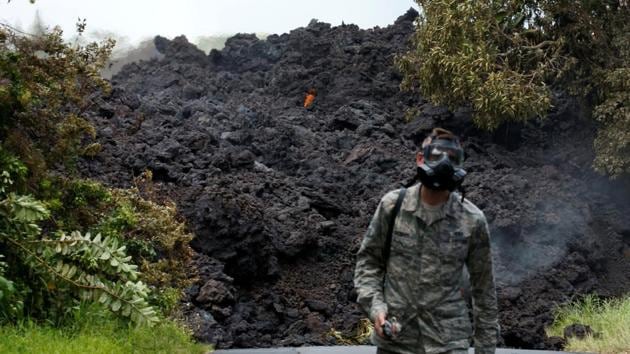
Senior Airman John Linzmeier, of the Hawaii National Guard, walks away from a lava flow on Highway 137 south-east of Pahoa. The occurrence of new lava-spewing vents, now numbering at least 22, have been accompanied by flurries of earthquakes and periodic eruptions of ash, volcanic rock and toxic gases from the volcano’s crater. (Terray Sylvester / REUTERS)
8/9
 View Photos in a new improved layout
Updated on May 21, 2018 12:15 PM
US Air National Guardsmen, Orlando Corpuz (L) and John Linzmeier survey cracks on the road in Leilani Estates followed by the eruption. The Hawaii National Guard has warned of additional mandatory evacuations if more roads become blocked. (Jae C. Hong / AP)
9/9
 View Photos in a new improved layout
Updated on May 21, 2018 12:15 PM


