
 E-Paper



Photos: Raw sewage in Harare’s streets brings cholera outbreak to Zimbabwe
Zimbabwe, which was promised by its new president Emmerson Mnangagwa a turn from the country’s collapsed economy into a middle-class one by 2030, now facing a deadly a cholera outbreak which has killed more than 30 people and sickened more than 7,000 in the capital Harare. This has reminded many in Zimbabwe of the 2008 disaster which killed over 4,000 people. With water and sanitation largely worse than before, hopes bank on a quick intervention by donors and the government, which if it comes, can help Zimbabwe avoid a repeat of its decade old outbreak.
Updated on: Sep 24, 2018 12:28 PM IST

Share via


Copy link

1/10
 View Photos in a new improved layout
Updated on Sep 24, 2018 12:28 PM
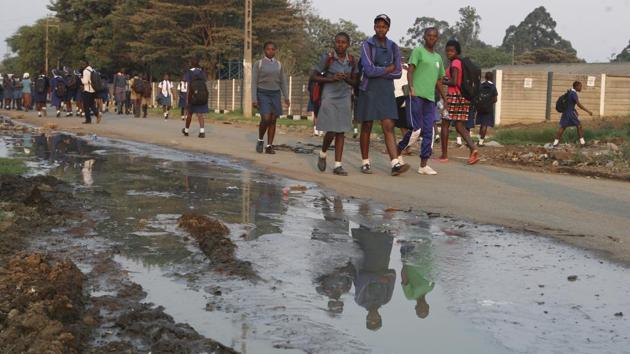
School children walk alongside raw flowing sewage which flows freely in some streets of Harare, Zimbabwe. A cholera outbreak has killed more than 30 people and sickened more than 7,000 as it spreads beyond the capital Harare, posing the latest crisis for a government that promised the troubled country a new dawn. (Tsvangirayi Mukwazhi / AP)
2/10
 View Photos in a new improved layout
Updated on Sep 24, 2018 12:28 PM
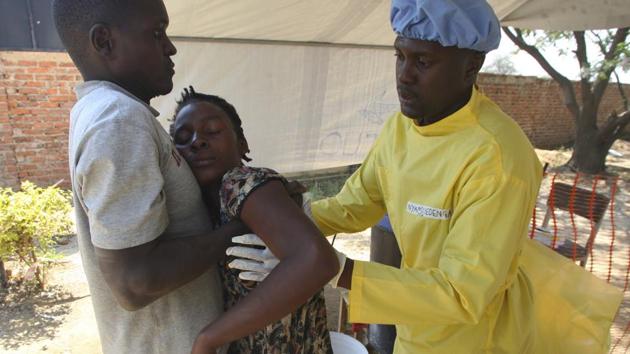
A sick woman suspected of suffering from cholera, is carried at a clinic in Harare. It’s a period of crisis for a government that pledges, somehow, to turn a collapsed economy into a middle-class one by 2030. As many residents of Harare hop-skip over fetid puddles, many are reminded of the outbreak a decade ago that killed over 4,000 people. Now water and sanitation are largely worse than before. (Tsvangirayi Mukwazhi / AP)
3/10
 View Photos in a new improved layout
Updated on Sep 24, 2018 12:28 PM
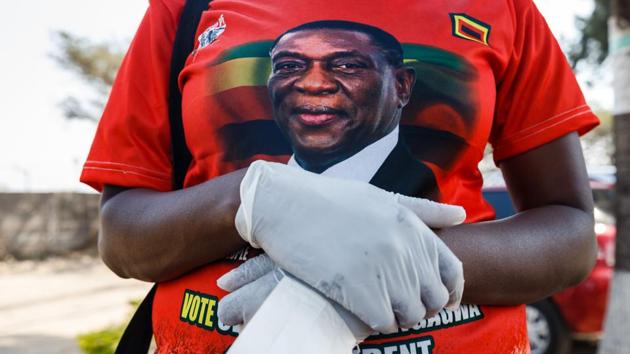
A supporter of Zimbabwe’s ruling party wears latex gloves as president Emmerson Mnangagwa visits a medical camp for people suffering from cholera in Harare. The outbreak has prompted the government to declare a public health emergency. These signs are not encouraging. Inflation has spiked. Mnangagwa, who took office after the fall of Robert Mugabe and for a while sent hopes soaring, now spends his time vowing to fight a “medieval” disease. (Jekesai Njikizana / AFP)
4/10
 View Photos in a new improved layout
Updated on Sep 24, 2018 12:28 PM
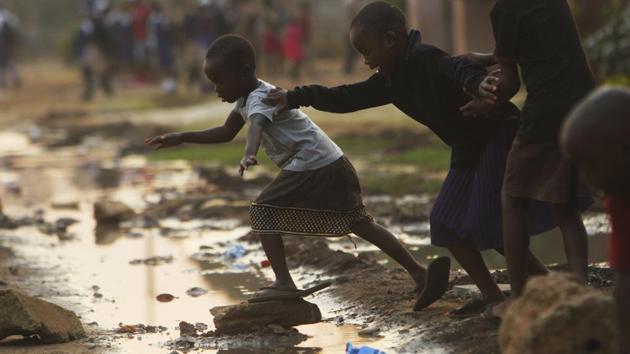
As the outbreak spreads beyond Harare, Zimbabweans see it as the new government’s first big test after a bitterly disputed election. Elizabeth Limamu, 66, told that she has lined a path of stones from the street to her home to avoid stepping in sewage that has pooled next to her yard, where some children play barefoot. On the other hand her neighbour locks her children inside as it’s not safe out. (Tsvangirayi Mukwazhi / AP)
5/10
 View Photos in a new improved layout
Updated on Sep 24, 2018 12:28 PM
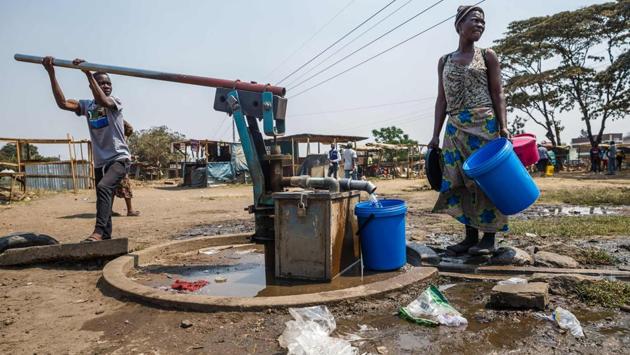
Norman Marambe said that the taps have been dry for months and when it comes, the water has a brown colour and smells. Some residents have resorted to drilling bore-holes or digging shallow wells and then locking them. Annatolia Chivanga said that if they don’t lock them thieves steal both the water and taps. (Jekesai Njikizana / AFP)
6/10
 View Photos in a new improved layout
Updated on Sep 24, 2018 12:28 PM
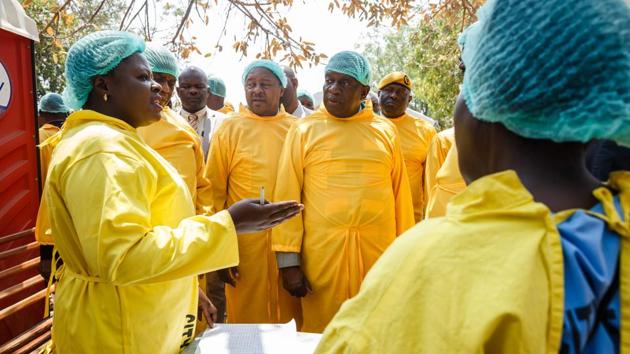
Mnangagwa speaks with medical staff as he visits a medical camp. The financially struggling government has launched a $57 million appeal amid some backlash. Some local non-governmental organizations are holding the government accountable for cholera deaths. Civil Society Health Emergency Response Coordinating Committee said that it is alarming and quite unusual for such a preventable disease to continue to claim valuable lives in this day and age. (Jekesai Njikizana / AFP)
7/10
 View Photos in a new improved layout
Updated on Sep 24, 2018 12:28 PM
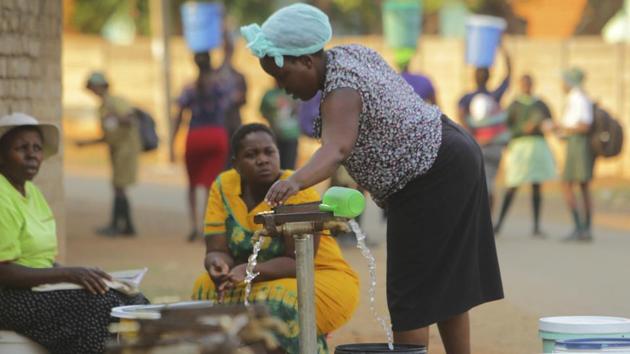
People collect treated water at a watering point in Harare. Finance Minister Mthuli Ncube’s crowd-funding initiative swelled public anger, with some questioning why a government that splashes on new cars and private jets should ask impoverished citizens to chip in. If quick intervention by donors and the government comes, it can help Zimbabwe avoid a repeat of the 2008 disaster but they agree risks remain if long-term measures aren’t taken. (Tsvangirayi Mukwazhi / AP)
8/10
 View Photos in a new improved layout
Updated on Sep 24, 2018 12:28 PM
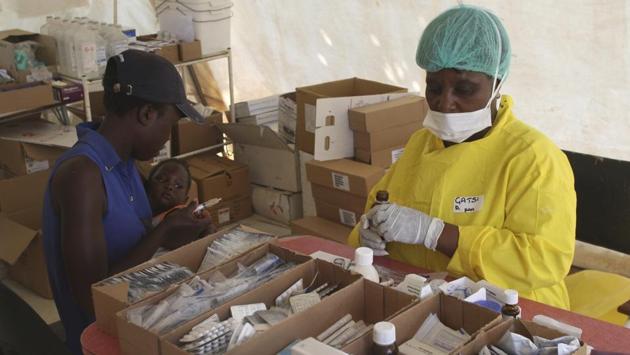
A mother receives treatment for her child suspected of suffering from cholera. Corruption has flourished amid the crisis. The Harare City Council said it suspended several officials after billionaire businessman Strive Masiyiwa wrote on Facebook that officials had inflated prices after his firm donated $10 million to buy medicine and health materials. Other crises are piling up with factories resembling scrapyards. (Tsvangirayi Mukwazhi / AP)
9/10
 View Photos in a new improved layout
Updated on Sep 24, 2018 12:28 PM
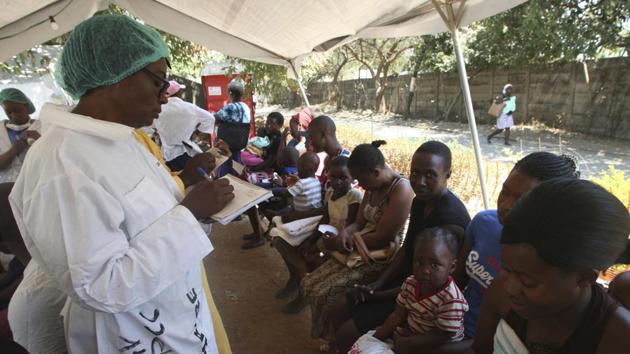
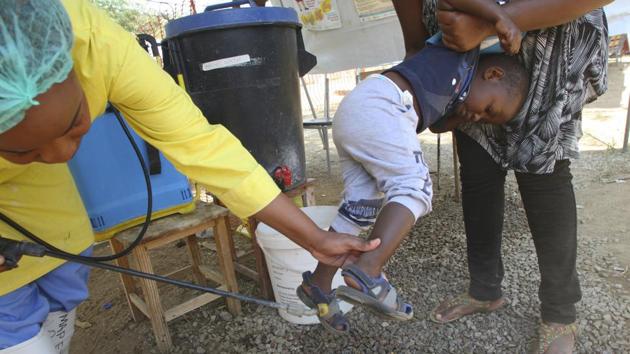
A health worker screens mothers and their children for symptoms of cholera in a quarantine area. Widespread unemployment has forced some to ignore cholera warnings. For days, police have battled to clear Harare’s streets of thousands of people hustling as vendors, saying it will help reduce the disease spreading. Some now play cat-and-mouse with police, wary of arrests and confiscations. Others have taken to vending at night. (Tsvangirayi Mukwazhi / AP)
10/10
 View Photos in a new improved layout
Updated on Sep 24, 2018 12:28 PM


