
 E-Paper



Photos: War adds to the battles Yemen’s cancer patients are fighting
Millions of Yemenis are at risk from hunger and cholera brought on by three years of war, an emergency that has also hit cancer patients, struggling to get treatment in a country where the economy and infrastructure have collapsed. The Saudi-led alliance has imposed stringent measures on maritime trade to Yemen in an effort to choke off arms supplies to the Houthis, who still control the most populous areas of the country including Sanaa. But the measures have also slowed the flow of desperately needed aid supplies. The World Health Organization says around 35,000 people have cancer in Yemen, with about 11,000 cases diagnosed each year.
Updated on: Aug 28, 2018 9:26 AM IST

Share via


Copy link

1/11
 View Photos in a new improved layout
Updated on Aug 28, 2018 9:26 AM
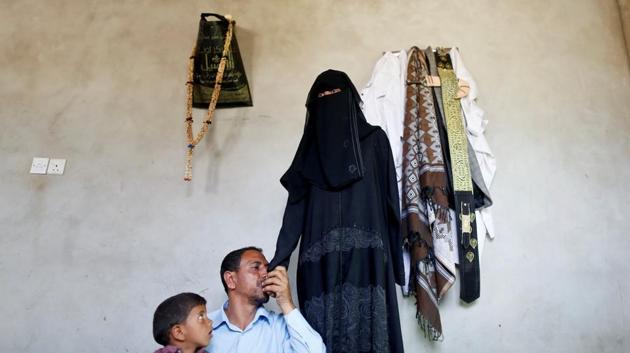
Khaled Ismael kisses the hand of his daughter, Radhiya, 17, who had her left arm amputated due to cancer, in Amran, Yemen. “I spent all our valuables and had to borrow a lot of money to cover the expenses,” Ismael said. “Because of our inability to travel abroad, my daughter did not get enough treatment and her arm had to be amputated,” he added. “The war has devastated our lives.” (Khaled Abdullah / REUTERS)
2/11
 View Photos in a new improved layout
Updated on Aug 28, 2018 9:26 AM
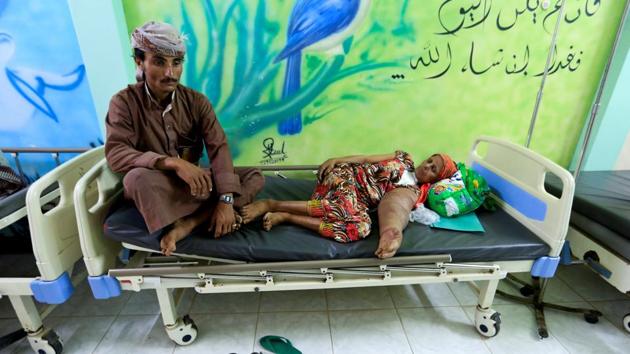
On Yemen’s western coast, Mohammed al-Hosami received support from the people of his village in al Mahwit to pay for his mother’s treatment in nearby Hodeidah. “There is no work or salary so we can’t afford transportation costs, and the village helped me with the payments for treatment and to take her there,” he said as a doctor tended to his mother. (Khaled Abdullah / REUTERS)
3/11
 View Photos in a new improved layout
Updated on Aug 28, 2018 9:26 AM
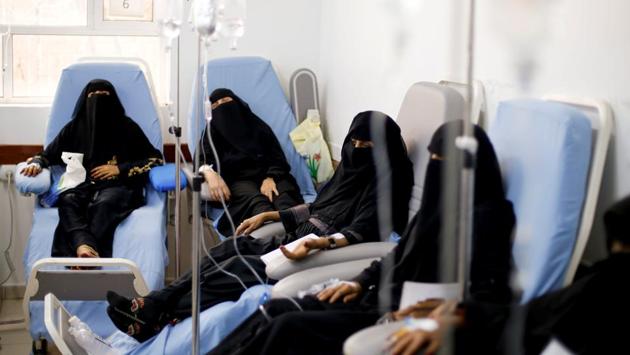
Millions of Yemenis are at risk from hunger and cholera brought on by three years of war, an emergency that has also hit cancer patients, struggling to get treatment in a country where the economy and infrastructure have collapsed. The World Health Organization (WHO) said around 35,000 people have cancer in Yemen, with about 11,000 cases diagnosed each year. (Khaled Abdullah / REUTERS)
4/11
 View Photos in a new improved layout
Updated on Aug 28, 2018 9:26 AM
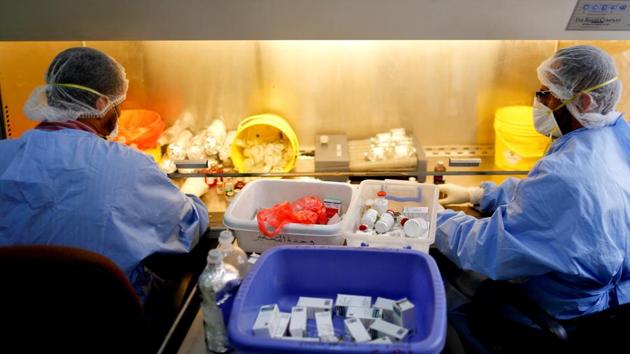
Chemists prepare medication dosages at The National Oncology Centre in Sanaa. “It is very difficult to find medicines, and if you find them in the market, they’re too expensive and citizens cannot afford them,” said Mohammed Al-Emad, accompanying a relative going for treatment in the capital. (Khaled Abdullah / REUTERS)
5/11
 View Photos in a new improved layout
Updated on Aug 28, 2018 9:26 AM
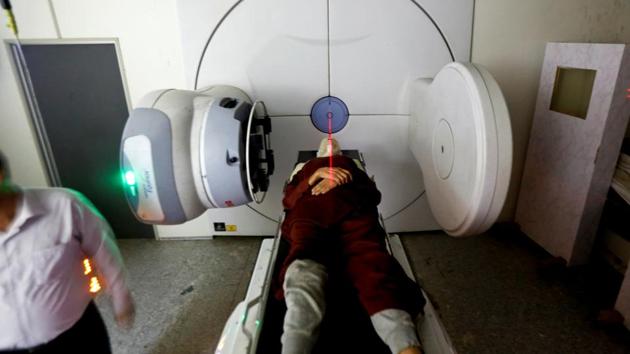
Yemen is embroiled in a war between a Saudi-led military coalition and the Iranian-aligned Houthi group. The fighting has crippled its economy and healthcare system, and unleashed the world’s most urgent humanitarian crisis with millions facing starvation and diseases such as cholera, diphtheria and malaria. (Khaled Abdullah / REUTERS)
6/11
 View Photos in a new improved layout
Updated on Aug 28, 2018 9:26 AM
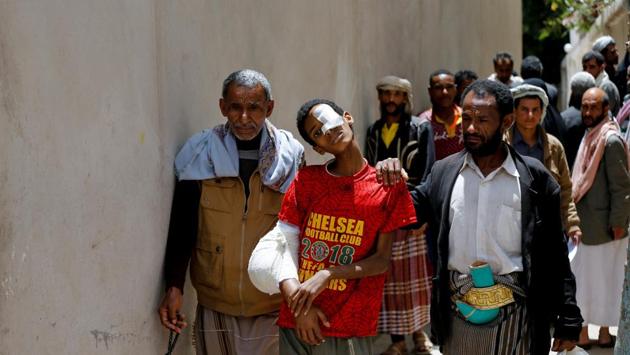
A boy with cancer is helped by his father at The National Oncology Centre. The Saudi-led alliance has imposed stringent measures on maritime trade to Yemen in an effort to choke off arms supplies to the Houthis, who still control the most populous areas including Sanaa. But the measures have also slowed the flow of desperately needed aid supplies. (Khaled Abdullah / REUTERS)
7/11
 View Photos in a new improved layout
Updated on Aug 28, 2018 9:26 AM
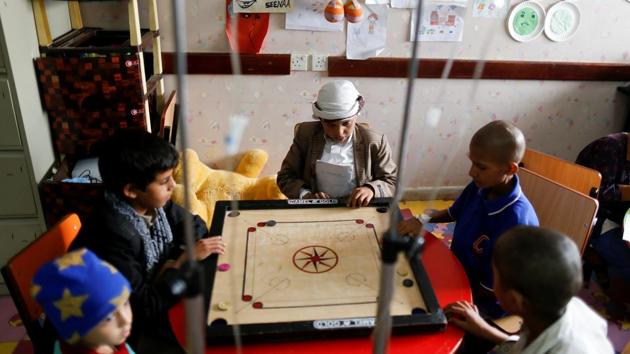
Children with cancer play as they receive chemotherapy at The National Oncology Centre. The centre in Sanaa admits around 600 new cancer patients each month. But it received only $1 million in funding last year from state entities and international aid groups, the head of the centre, Ahmed al-Ashwal, told Reuters. (Khaled Abdullah / REUTERS)
8/11
 View Photos in a new improved layout
Updated on Aug 28, 2018 9:26 AM
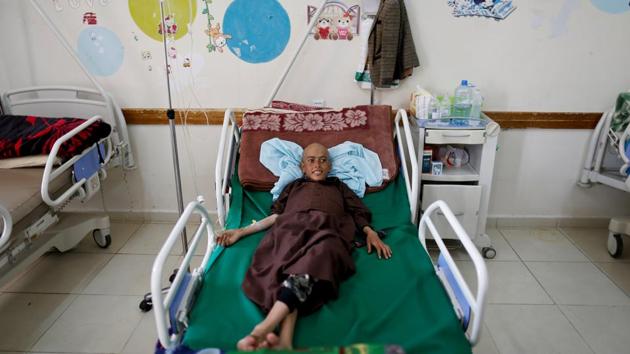
The few beds available at the centre are reserved for children. Other patients receive treatment intravenously, while sitting on dilapidated recliner chairs or in the waiting area. (Khaled Abdullah / REUTERS)
9/11
 View Photos in a new improved layout
Updated on Aug 28, 2018 9:26 AM
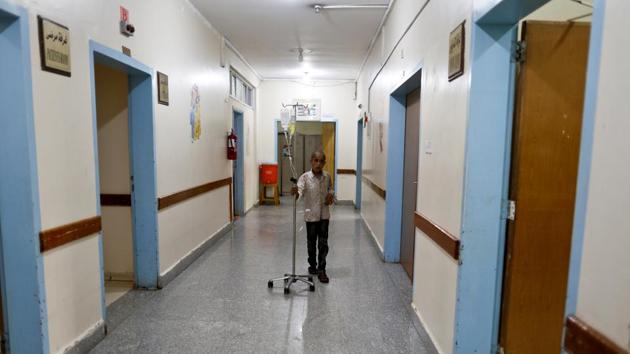
A boy who has cancer walks with an intravenous drip at The National Oncology Centre. The WHO said that prior to the conflict, the centre used to receive $15 million a year from the state and that the budget was used to purchase chemotherapy medications and anti-cancer drugs for oncology centres across the country. (Khaled Abdullah / REUTERS)
10/11
 View Photos in a new improved layout
Updated on Aug 28, 2018 9:26 AM
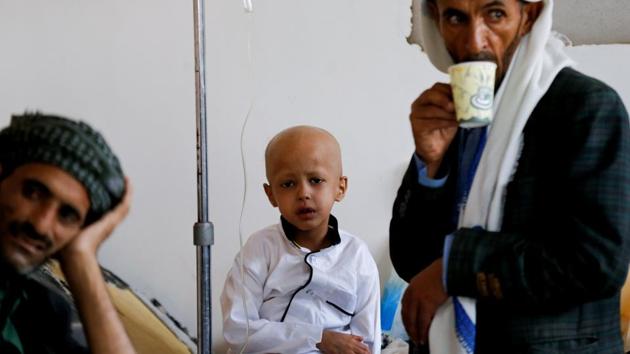
“Now, the National Oncology Centre is totally relying on the fund provided by international organizations, including WHO, and some charitable organizations or businessmen as the government fund has been disrupted for around two years,” it said in a statement emailed to Reuters. (Khaled Abdullah / REUTERS)
11/11
 View Photos in a new improved layout
Updated on Aug 28, 2018 9:26 AM


