
 E-Paper



Pierced prayers: Hindus gather in Malaysia, Singapore for Thaipusam festival
A devotee pulls a chariot during the Hindu festival of Thaipusam in Singapore February 9, 2017. (Edgar Su / REUTERS)
Published on: Feb 09, 2017 7:38 PM IST

Share via


Copy link

1/13

 View Photos in a new improved layout
Published on Feb 09, 2017 7:38 PM
A devotee pulls a chariot during the Hindu festival of Thaipusam in Singapore February 9, 2017. (Edgar Su / REUTERS)
2/13
 View Photos in a new improved layout
Published on Feb 09, 2017 7:38 PM
Devotees throw confetti during the procession of Thaipusam in Singapore on February 9, 2017. A Hindu festival, Thaipusam is dedicated to the deity Lord Murugan, who is particularly revered in southern India and among ethnic Tamil communities in South East Asia. (Edgar Su / REUTERS)
3/13
 View Photos in a new improved layout
Published on Feb 09, 2017 7:38 PM
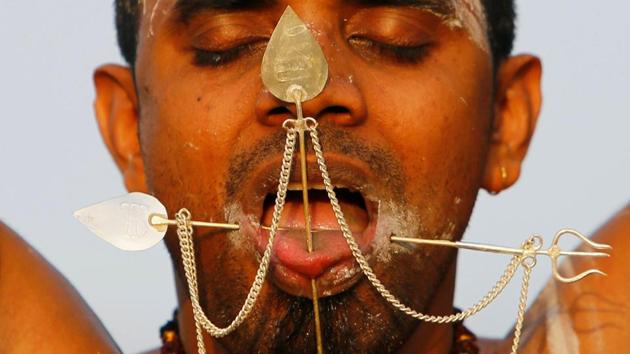
The festival is marked by men, carrying decorated structures called ‘kavadi’, dancing in circles to the beat of drums, and others with their cheeks pierced with skewers pulling chariots using cords attached to hooks on their backs during a grand procession. A devotee in Malaysia’s Batu Caves in Kuala Lumpur, takes part in the procession after piercing his cheeks and tongue, on February 9, 2017. (Lai Seng Sin / REUTERS)
4/13
 View Photos in a new improved layout
Published on Feb 09, 2017 7:38 PM
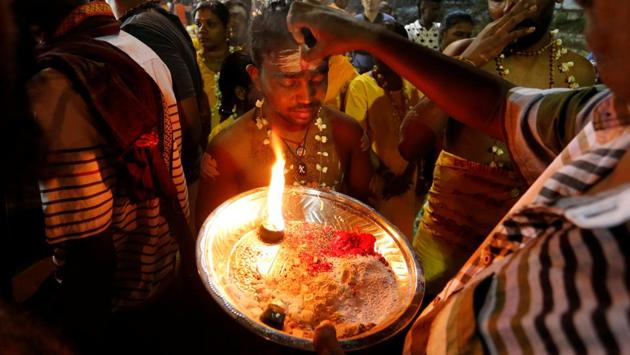
The annual festival has become a major cultural highlight and takes place on a grand scale at the Sri Subramaniar Swamy Devasthanam Temple at Batu Caves just outside of Kuala Lumpur, Malayasia. It commemorates the day when the goddess Parvathi gave her son Lord Murugan a powerful lance to fight evil demons. (Lai Seng Sin b/ REUTERS)
5/13
 View Photos in a new improved layout
Published on Feb 09, 2017 7:38 PM
A devotee has his body pierced as he prepares to carry a kavadi during Thaipusam in Singapore. Similar to Lent and the Vegetarian Festival in Thailand, Thaipusam represents a time of self-sacrifice and penance, as gratitude for boons fulfilled. (Edgar Su / REUTERS)
6/13
 View Photos in a new improved layout
Published on Feb 09, 2017 7:38 PM
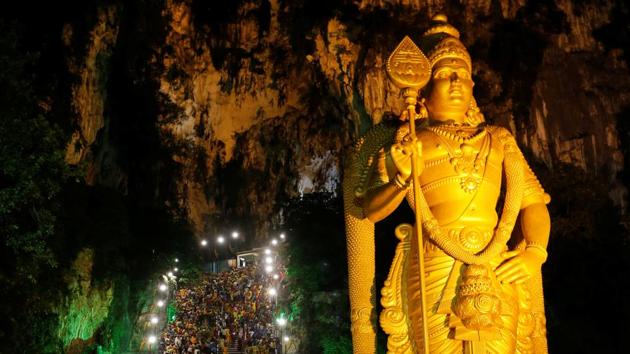
A large statue of Lord Murugan is illuminated as devotees climb the steps to Batu Caves in Kuala Lumpur, Malaysia on February 9, 2017. (Lai Seng Sin / REUTERS)
7/13
 View Photos in a new improved layout
Published on Feb 09, 2017 7:38 PM
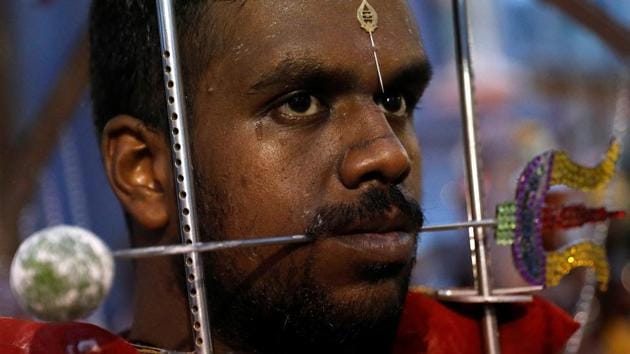
A devotee with a trident pierced through his mouth carries a kavadi as a part of the Thaipusam procession in Singapore. (Edgar Su / REUTERS)
8/13
 View Photos in a new improved layout
Published on Feb 09, 2017 7:38 PM
Children carry ‘kavadi’ milk pots during Thaipusam in Singapore. ‘Kavadi’ is a symbolic burdens that devotees carry, which can range from clay pots of milk to two-metre-high bowed metal frames decorated with peacock feathers and small statues of deities. (Edgar su/REUTERS)
9/13
 View Photos in a new improved layout
Published on Feb 09, 2017 7:38 PM
A devotee makes adjustments to his ‘kavadi’ in Singapore. The exact date of Thaipusam changes each year in the Gregorian calendar, as it is based on the full moon day in the month of Thai in the Hindu calendar. (Edgar Su / REUTERS)
10/13
 View Photos in a new improved layout
Published on Feb 09, 2017 7:38 PM
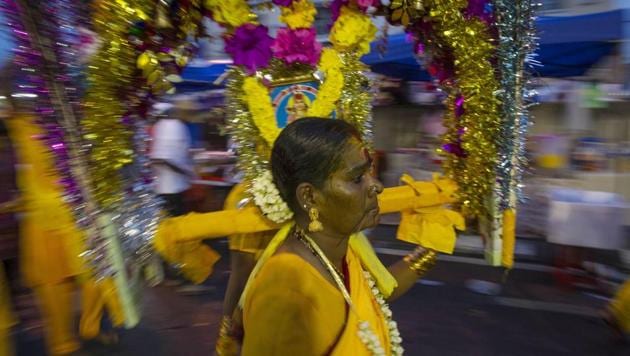
A woman carries her Kavadi during a procession of the Thaipusam at Batu Caves in Kuala Lumpur. For many, the festival is an opportunity to seek blessings, observe penance and offer thanks for fulfilling prayers. (Daniel Chan / AP)
11/13
 View Photos in a new improved layout
Published on Feb 09, 2017 7:38 PM
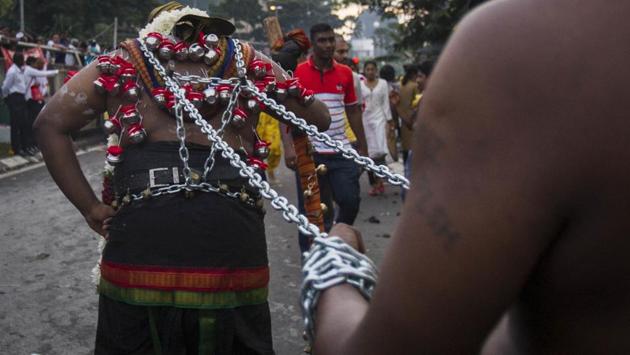
A Hindu devotee with hooks and chains dug into his back takes part in the Thaipusam festival in Kuala Lumpur. (Daniel Chan / AP)
12/13
 View Photos in a new improved layout
Published on Feb 09, 2017 7:38 PM
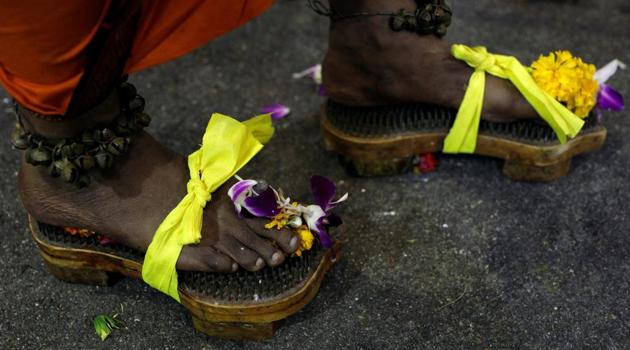
A group of men carry a palanquin with an idol of Murugan in Singapore. Prior to Thaipusam, devotees will typically hold daily prayer sessions, abstain from sex and stick to a strict vegetarian diet for weeks. (Edgar Su / REUTERS)
13/13
 View Photos in a new improved layout
Published on Feb 09, 2017 7:38 PM


