The Maharashtra Prohibition of People from Social Boycott (Prevention, Prohibition and Redressal) Act , 2016, took shape and was implemented in the state 3 years after the killing of Narendra Dabholkar, a rationalist who initiated it. On Tuesday, the Maharashtra Andhashradha Nirmoolan Samiti (MANS) observed the sixth death anniversary of Dabholkar, who was shot dead by two bike-borne assailants on August 20, 2013, at Omkareshwar bridge.
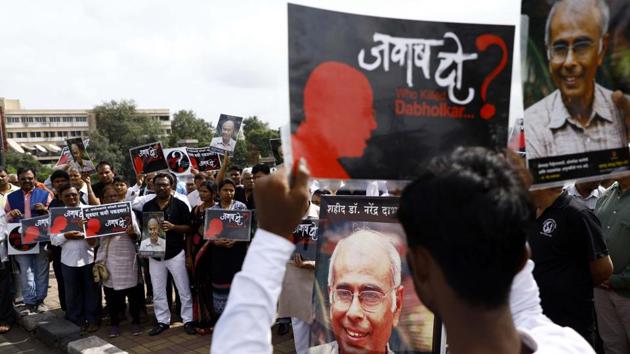
The act has affected several lives in the state and has led to the dismissal of eight-nine jaat (caste) panchayats with the help of police and judiciary. Jaat panchayats are groups of people who claim to be leaders of certain communities and try to run a quasi community-centric judiciary for its members.
In a few instances, the people who do not agree with or question the jaat panchayats have alleged that extortion and harassment by the community members.
“There have been over 30-35 cases under the social boycott act in Maharashtra. The first one was in Pune and the others followed,” said Nandini Jadhav, Pune head of MANS. “While most of these cases were filed by MANS, people have slowly started coming forward with complaints on their own as well,” said Milind Deshmukh, state principle secretary from Pune MANS.
The Maharashtra Prevention and Eradication of Human Sacrifice and other Inhuman, Evil and Aghori Practices and Black Magic Act, 2013, - another one of Dabholkar’s brainchild - has witnessed over 550 cases and has also led to several convictions. The convictions were achieved in cases registered at Nanded, Sangli, Kolhapur, Vidarbha, Jalgaon and Bhandara, according to people observing the case closely.
{{/usCountry}}The Maharashtra Prevention and Eradication of Human Sacrifice and other Inhuman, Evil and Aghori Practices and Black Magic Act, 2013, - another one of Dabholkar’s brainchild - has witnessed over 550 cases and has also led to several convictions. The convictions were achieved in cases registered at Nanded, Sangli, Kolhapur, Vidarbha, Jalgaon and Bhandara, according to people observing the case closely.
{{/usCountry}}“The social movement which was going on for over 25 years has led to successful implementation of the act. The activists of MANS are working on the ground to ensure its implementation. Youngster in colleges and police officials who felt that it is their responsibility to take action also helped spread awareness. All this has led to the massive impact of the act,” said Mukta Dabholkar, daughter of Dabholkar.
The occurrence of inter-caste marriages and dissent against jaat panchayats are at the root of social boycott faced by victims. The issue of Kanjarbhat community’s virginity test is one such example.
“The youth of the community itself made it possible and fought against it,” said Deshmukh. The college-going youth are a major part of the anti-superstition community of over a 1,000 members. The members invest their own funds to carry out ground-level activities.
“This is a crowdfunded trust. We hardly have any full-time workers who will need to be paid. We do not pay anything to the people who come to these functions. The only costs we have are that of -say this auditorium that we have booked today (Tuesday),” said Hamid Dabholkar, son of Dabholkar.
One of the initiatives started in the years after Dabholkar’s death was that of jut (naturally formed dreadlocks) nirmoolan (riddance). Spearheaded by Jadhav, the organisation has succeeded in freeing over 100 women of the dermatological condition which is considered to be sacred.
In the sixth year since Dabholkar’s death, his organisation believes that the essence of his work has continued to thrive and has grown.