Chandrashekhar Bhadsavle, an award-winning agricultural innovator from Maharashtra, has been invited by a former irrigation minister in Punjab to demonstrate his agricultural innovation in an effort to solve the stubble burning problem which is resulting in acute air pollution in New Delhi.
Addressing a press conference here on Tuesday, Bhadsavle said that he had received an invitation from Punjab’s former irrigation minister, Rana Gurjeet Singh, to demonstrate his Saguna Rice Technique (SRT) method of cultivation in Punjab.
An agriculture graduate with a Master’s degree in Food Microbiology from University of California, Davis, Bhadsavle is practising farming in Neral, Maharashtra. He is a recipient of Maharashtra government’s ‘Krishi Ratna’ and ‘Krishi Bhushan’ awards for excellence in agriculture.
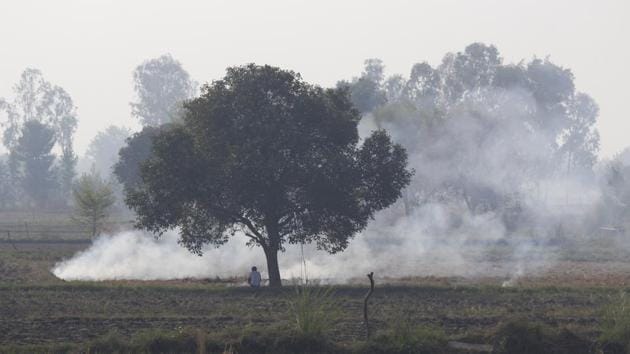
“My SRT technique will help stop the stubble burning in Punjab and Haryana which is the main cause of pollution in the national capital,” he claimed.
Bhadsavle said that the SRT method of farming is mainly used for rice cultivation although it can be used for any crop. It does not require stubble burning (as is being done every year in Punjab and Haryana) or ploughing the land, and is followed by nearly 3,000 farmers in Maharashtra.
The former minister, Rana Gurjeet Singh, said, “We are currently dealing with the stubble burning problem and hence, I approached Bhadsavle, as we are open to accept any good technique to resolve the issue. If the experience helps us, we will be able solve various problems. In January, I will be visiting Pune and then, I will extract more information about the project.”
{{/usCountry}}The former minister, Rana Gurjeet Singh, said, “We are currently dealing with the stubble burning problem and hence, I approached Bhadsavle, as we are open to accept any good technique to resolve the issue. If the experience helps us, we will be able solve various problems. In January, I will be visiting Pune and then, I will extract more information about the project.”
{{/usCountry}}“Singh has promised to give me five acres land on a pilot basis. The SRT method is eco-friendly and doesn’t require farmers to take recourse to the traditional technique of deliberately setting fire to the straw stubble, after harvest. Thereby, it does not contribute to the menace of air pollution and also enhances organic carbon and microflora of the soil. SRT farming avoids tilling completely and lets the residue of the earlier crop (in the rice crop’s case– paddy stubble) disintegrate into the soil with the help of weedicides and microbial cultures,” Bhadsavle said.
Scheduled to attend the annual Global Farmer Network, a collective of farmers “promoting trade, technology, sustainable farming, economic growth and food security,” in Mexico in January, 2020, Bhadsavle has also been invited by the Tuskegee University, Alabama, to interact with students and farmers there.
“Our faculty and students could benefit greatly from interacting with you, and learn much from your tremendous expertise and insights into the Saguna Rice Technique that you have developed,” Channa Prakash, dean and professor (Genomics and Biotechnology) said in a letter dated December 2.
He pointed out that Tuskegee University has a “historic legacy of research in farming dating back to the time of legendary scientist Dr George Washington Carver”.