Air pollution in Pune this Diwali is expected to be lower as compared to last year according to the Indian Institute of Tropical Meteorology’s (IITM) System of Air Quality and Weather Forecasting and Research (Safar). The highest pollution is likely to be registered in Katraj over the next three days, followed by Shivajinagar, Hadapsar and Lohegaon. Manjri on the city outskirts, will be the least polluted.
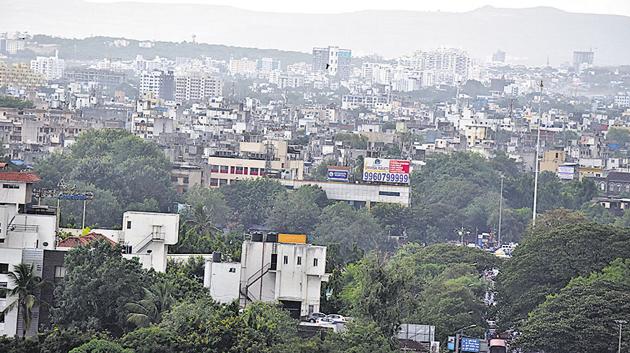
Scientists have forecast higher levels of particulate matter during October 19 – 21 when bursting of firecrackers will be at its peak.
The highest level of PM 10 (particles less than 10 microns) and PM 2.5 (particles less than 2.5 microns) are expected between 11 pm to 3 am on the nights of October 19 and October 20.
Safar recently released air quality forecast for Diwali 2017 for the period October 19 - 22. According to meteorologists, the continuing presence of the monsoon in Pune region is expected to work in favour of the city’s air quality as compared to the period during last year’s Diwali.
Scientists at Safar have pointed out that winds in Pune are generally in a south-westerly direction, but around Diwali the winds are mostly in a north-easterly direction.
Safar has predicted a drop in minimum temperature by 2 degrees Celcius as compared to previous days and the weather will be partly cloudy during Diwali.
{{/usCountry}}Safar has predicted a drop in minimum temperature by 2 degrees Celcius as compared to previous days and the weather will be partly cloudy during Diwali.
{{/usCountry}}A combination of several weather parameters play a role in controlling air pollution. Although air quality is expected to be better this Diwali, particulate matter in the air is likely to increase, Safar has noted.
City-based heat specialist Dr Sanjay Gaikwad told Hindustan Times that even when the air quality is moderate, people with lung or heart disease, and children in general, are likely to have some breathing discomfort. If the air quality drops to ‘poor’ levels there would be a rise in respiratory symptoms in children and senior citizens.