It was due to Hussein Sayeeduddin Dagar that Dhrupad vocal art music came to stay in Pune, the cultural capital of Maharasthra.
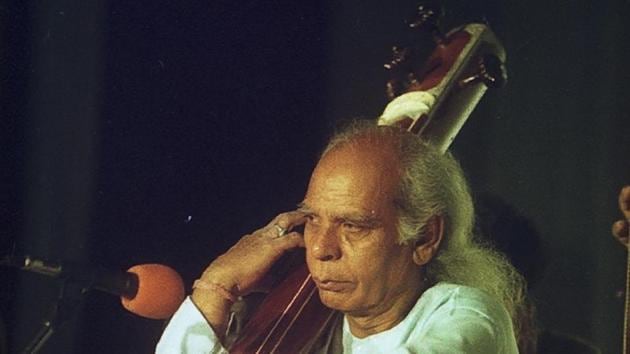
The youngest of the Dagar Saptak, lovingly called ‘chote’ by his elders and equals in the Dagar family, for many others he was only Sayeed Sahab and for students like Rohit Patel (grandson of legendary Ashok Kumar), Purnima and Pratima Kulkarni, he was the ultimate Guru of Dhrupad.
I lovingly called him Ustadji, something he had heartily accepted. But in the Alwar princely state he was known as Kunwar Satyadev Pande and treated as a member of the royal court.
The Dagar Saptak or the seven Dagar brothers today became history with their ‘Chote’ passing away of cancer late Sunday night in a private hospital in Pune. With his passing away, the seven strings of an ancient musical tradition has considerably weakened if not severed from the body of Indian culture. Even literally, with Ustadji’s passing I do not see who will be able to tune the Tanpura in the divines manner in which only he could among vocalists.
Ustadji had turned 80 in April this year and lived a musically rich, yet financially strenuous life, thanks to an almost natural suffering that genius has at the hands of mediocrity. The state of all dispositions cared little for this late genius because it has always been influenced by nepotism and not excellence.
“Subroto, I have lived in Pune for such a long time and made it my home to ensure that Dhrupad music makes a strong comeback in mainstream art music, yet I was invited to perform at the Sawai Gandharva music festival only once,” was Ustadji’s lament once when he was sharing his life and times with me in his bedroom quietly and chatting with me. As his student I had his special attention not only for music but also for extra-musical matters.
{{/usCountry}}“Subroto, I have lived in Pune for such a long time and made it my home to ensure that Dhrupad music makes a strong comeback in mainstream art music, yet I was invited to perform at the Sawai Gandharva music festival only once,” was Ustadji’s lament once when he was sharing his life and times with me in his bedroom quietly and chatting with me. As his student I had his special attention not only for music but also for extra-musical matters.
{{/usCountry}}I was once shocked to know that even as a prominent member of the family which introduced Dhrupad to Europe and other western countries, Ustadji had to spend a patch of his life working as a menial labourer at a mechanical engineering factory and his work was to collect nuts and bolts strewn on the shop floor. “Our ancestors taught us how to starve,” was the context that had once prompted Ustadji to share this piece of information with me which I do not know if anyone outside the family knows.